

 Librería Samer Atenea
 Kálamo Books
 Librería Elías (Asturias)
 Librería Kolima (Madrid)
 Librería Proteo (Málaga)
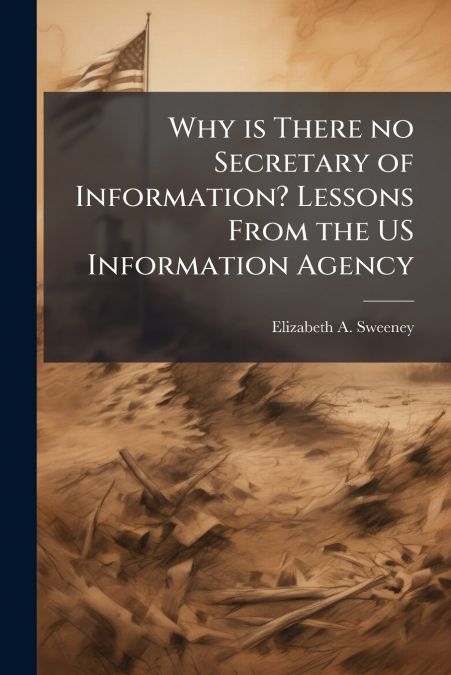
Information and the ability to wield it is a key aspect of national security. Two years after the United States Information Agency (USIA) was terminated and merged into the State Department, the terror attacks of September 11, 2001 reminded the US of the importance of information and public perception. Since then, there have been repeated studies recommending the creation and resourcing of a national information capability. Some of these proposals refer to the USIA as an example of how the nation got information right during the Cold War. While the USIA accomplished much to be proud of, it failed as an enduring information capability because it never achieved a legislated role in policy formulation and because it was seen primarily as a weapon of the Cold War. Understanding the challenges, evolution, and ultimate demise of the USIA provides insight into the best way to design the nation’s next strategic information organization. Proposals for a new information capability should look at the areas where the USIA failed in order to understand how to better equip a new information organization with the tools to secure the nation’s interests. The author argues that recent congressional proposals for a new strategic communication organization will fail to create an enduring information capability in two ways. First, if they do not elevate the new organization to the cabinet level ensuring it plays a formal role in foreign policy formulation and second, if they tie the organization’s origin and mission to a specific threat such as that posed by radical Islamists.This work has been selected by scholars as being culturally important, and is part of the knowledge base of civilization as we know it. This work was reproduced from the original artifact, and remains as true to the original work as possible. Therefore, you will see the original copyright references, library stamps (as most of these works have been housed in our most important libraries around the world), and other notations in the work.This work is in the public domain in the United States of America, and possibly other nations. Within the United States, you may freely copy and distribute this work, as no entity (individual or corporate) has a copyright on the body of the work.As a reproduction of a historical artifact, this work may contain missing or blurred pages, poor pictures, errant marks, etc. Scholars believe, and we concur, that this work is important enough to be preserved, reproduced, and made generally available to the public. We appreciate your support of the preservation process, and thank you for being an important part of keeping this knowledge alive and relevant.





