 Librería Samer Atenea
 Librería Aciertas (Toledo)
 Kálamo Books
 Librería Perelló (Valencia)
 Librería Elías (Asturias)
 Donde los libros
 Librería Kolima (Madrid)
 Librería Proteo (Málaga)
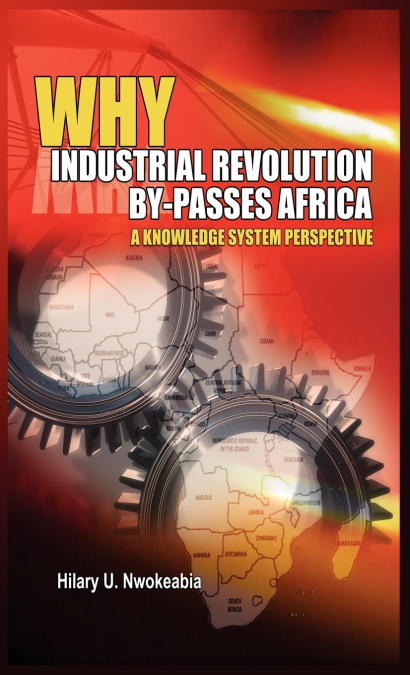
Why Industrial Revolution By-Passes Africa is a compelling analysis of the complex dimensions of development in Africa. It identifies and explains the failure of innovations and knowledge in Africa to generate industrial revolution in the continent using two main models: the motivation and growth-ladder models. Focusing on the indifference and secrecy among innovators in the continent, the book shows how the endemic indifference and unparalleled secrecy among African innovators hinders the continent from successfully going up a sustainable development ladder. It argues that with private and un-rewarded knowledge bearers innovating in isolation and dieing in the same fashion, the continent has experienced 'continuous but non-additive innovation system' as against 'continuous and additive innovation system'. Written with the general reader in mind, Why Industrial Revolution By-Passes Africa is an important addition to the current discussions on the problems of innovations, technology and industrialisation in Africa. ________________ Hilary U. Nwokeabia studied Economics and Computer Science at Hunter College of the City University of New York, USA, Econometrics at the New York University, USA and Development Economics at Strathclyde University, Glasgow Scotland. He has conducted research on different programmes and economic and social cooperation measures adopted at global level, with direct impact on individual or group of African countries. He was a key contributor in the design and evaluation of African Priority Programs for Economic Recovery (APPER), United Nation's New Agenda for Development of Africa (UNNADAF), the African Growth and Opportunity Act and New Partnership for Africa's Development (NEPAD), among others. He has been a core team member of United Nations flagship publications such as the World Economic Prospects, World Investment Report, Economic Report on Africa and Local Pathways to Global Development - World Bank. Based on own-name intellectual work he has also written articles and provided development advice on Africa's development strategies for members of his economic development clan in the Bretton Woods institutions, particularly the World Bank. Born in Achi in Enugu State of Nigeria, educated in Nigeria, the United States, and the United Kingdom, Hilary Nwokeabia has worked in Nigeria's Ministry of External Affairs, United Nations Headquarters in New York, United Nations Economic Commission for Africa in Addis Ababa, and the United Nations Conference on Trade and Development in Geneva. He has travelled extensively in North America, Europe, Asia and Africa. His private works are published in international journals.