 Librería Samer Atenea
 Kálamo Books
 Librería Elías (Asturias)
 Librería Kolima (Madrid)
 Librería Proteo (Málaga)
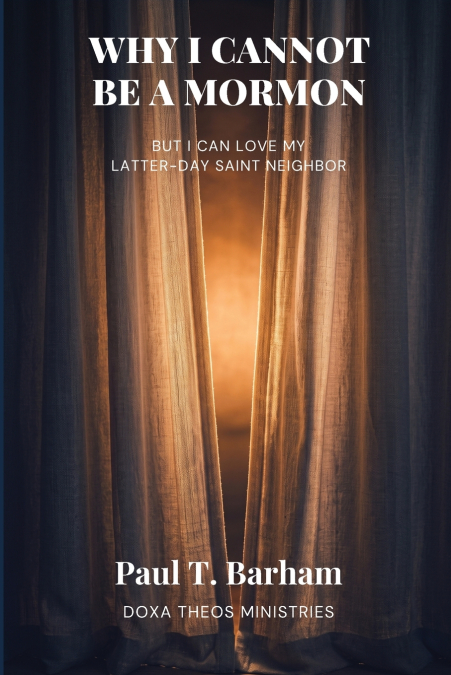
Are you a Christian who wants to understand what Latter-day Saints (also known as Mormons) actually believe, from their Church’s own scriptures, manuals, essays, and leaders? Are you a Latter-day Saint who wants to see how your beliefs compare with historic Christianity, so your commitment is an informed one?Why I Cannot Be a Mormon: But I Can Love My Latter-day Saint Neighbor is a careful comparative study of The Church of Jesus Christ of Latter-day Saints and historic Christian belief. Paul T. Barham sets LDS teaching, in its own words, beside what Catholic, Orthodox, and Protestant Christians have held for two thousand years, states the strongest Latter-day Saint answers fairly, and lets the reader weigh the evidence. The Bible is quoted from the NASB, LDS scripture from the Church’s current official editions, and more than 200 footnotes point readers to the sources so they can check every claim for themselves.The book unfolds in five sections:• Section I, How It Started: Joseph Smith before the Church, and how a farm boy’s account became a world religion.• Section II, The Question of Scripture: what LDS teaching says about the Bible, whether the Bible is trustworthy, and how the Book of Mormon, the Doctrine and Covenants, and the Book of Abraham hold up under the same tests.• Section III, Who Is God, Really?: a God who was once a man, premortal life, Jesus and Satan as brothers, the Holy Ghost, and the promise of exaltation.• Section IV, What I Would Have to Do to Be Saved: the temple, grace and works, and the spirit world and baptism for the dead.• Section V, Could I Trust the Story I Was Being Told?: the four First Vision accounts, priesthood authority, the doctrines the Church has changed, the biblical test of a prophet, and the 'burning in the bosom.' It closes with a chapter for the Latter-day Saint who is starting to wonder and the author’s own conclusion.'Same Words, Different Meanings' tables show exactly where familiar phrases such as 'I believe in Jesus Christ' or 'I’ve been baptized' part ways, and 'What Latter-day Saints Believe' boxes state LDS doctrine in the Church’s own terms. Appendices include a TL;DR collection of every comparison table, a glossary of LDS terms, a timeline of doctrinal change, a guide to the other Latter Day Saint churches, what archaeology has actually produced, a reading list, and practical help for anyone leaving.This is not a book about whether Latter-day Saints are good people. It is a book about whether their claims are true. Respectful, sourced, and honest about where the paths divide, it is written for Christians who want to understand their neighbors and for Latter-day Saints who want to understand what they have been taught.