
Who Will Believe My Verse?

Who Will Believe My Verse?

Who Will Believe My Verse?

James Goding / James Leyland

23,63 €
IVA incluido
Disponible
Editorial:
Australian Scholarly Publishing
Año de edición:
2018
Materia
Estudios literarios: obras de teatro y dramaturgos
ISBN:
9781925588675
23,63 €
IVA incluido
Disponible

Selecciona una librería:

  • Librería Samer Atenea
  • Librería Aciertas (Toledo)
  • Kálamo Books
  • Librería Perelló (Valencia)
  • Librería Elías (Asturias)
  • Donde los libros
  • Librería Kolima (Madrid)
  • Librería Proteo (Málaga)

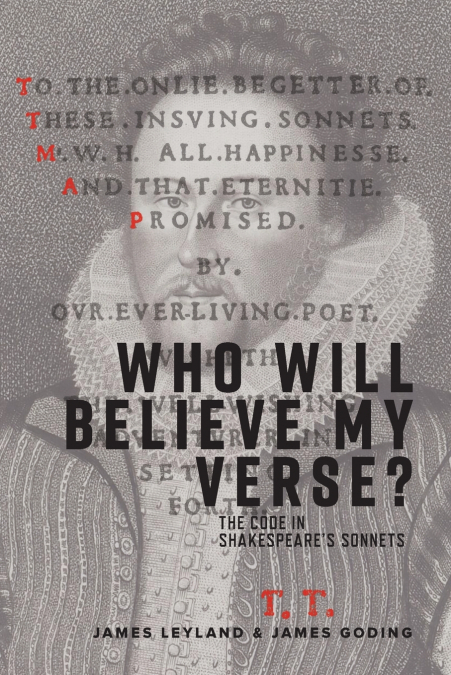
What little we know of the life of William Shakespeare is at odds with what would be expected of the greatest humanitarian writer of the Renaissance. Is Shakespeare a pseudonym? The answer lies in Shakespeare’s Sonnets and its baffling Dedication which is shown to be a code based on the ancient Polybius Square. The Dedication encodes the name of the scholar, politician and ambassador Sir Henry Neville who also encoded his diplomatic dispatches using the Polybian system. Astoundingly, this decryption is validated by an extensive pattern of cross-referencing to the sonnets themselves. Each encrypted word within the Dedication has an exact and predictable mapping to a numbered sonnet. This book not only overturns our understanding of the Sonnets – it demonstrates with mathematical precision that Sir Henry Neville is the true author of the works attributed to William Shakespeare. “This work reveals an astounding mapping between the strange Dedication to Shakespeare’s Sonnets (1609) and the Sonnets themselves. This predictable pattern not only spells out Sir Henry Neville, it illuminates key events in Neville’s biography. This is a poet’s code – worthy of the greatest English writer. If any doubt remains, Leyland and Goding show that this mapping corresponds to the codes used by Neville as Ambassador to France in 1599. Neville’s story not only fits, it’s verifiable.” – Dr Edward Black, Formerly Head of English, London School of Economics.“This book is an astonishing achievement, breathtaking in the brilliance of the discoveries and almost overwhelming. The authors have discovered the most intricate mechanism in literature: the Dedication to Shakespeare’s Sonnets is like an advanced pocket watch. If they were only suggesting coded messages as others have in the past, we might doubt their discoveries but they show there is an intricate mechanism, logical and even mathematical in design. This cannot simply be a result of chance.” – Dr John Casson, Author of five books on the Shakespeare Authorship Question.
Artículos relacionados

  • Shakespeare’s identities
    James Driscoll
    No dramatist has treated identity in as many ways and in such depth as William Shakespeare. In Shakespeare’s Identities, James P. Driscoll shows how the Bard used history, comedy, tragedy, and romance to develop comprehensive treatments of personal identity.Driscoll’s innovative study examines four aspects of identity: the conscious, social, real, and ideal. Drawing on Jungian ...
    Disponible

    45,23 €

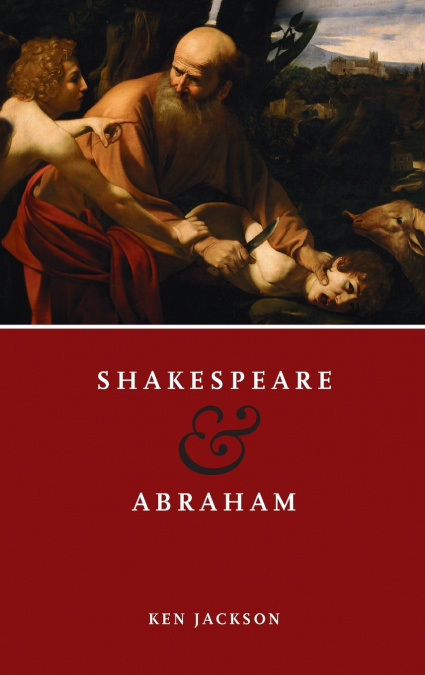
  • Shakespeare and Abraham
    Ken Jackson
    Shakespeare and Abraham shows how Shakespeare’s engagement with the biblical narrative of Abraham’s sacrifice of Isaac manifests in his plays. ...
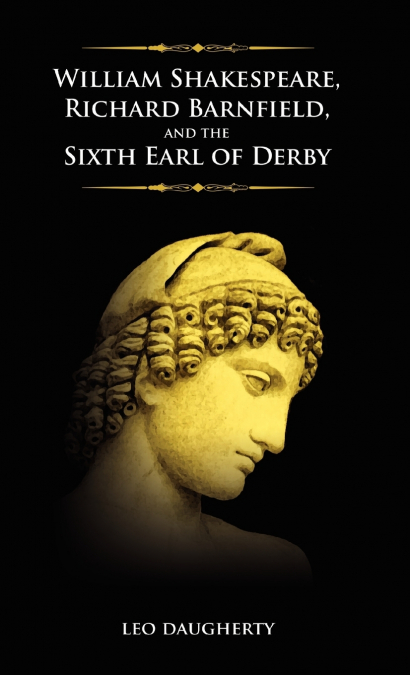
  • William Shakespeare, Richard Barnfield, and the Sixth Earl of Derby
    Leo Daugherty
    This book is the first to argue that the Rival Poet of Shakespeare’s Sonnets is the well-known young Elizabethan writer Richard Barnfield (1574-1620), long suspected to have been one of Shakespeare’s 'private friends' (as they were termed by Francis Meres in 1598), with whom (as Meres also tells us) Shakespeare shared some of his sonnets. This is also the first book to argue th...
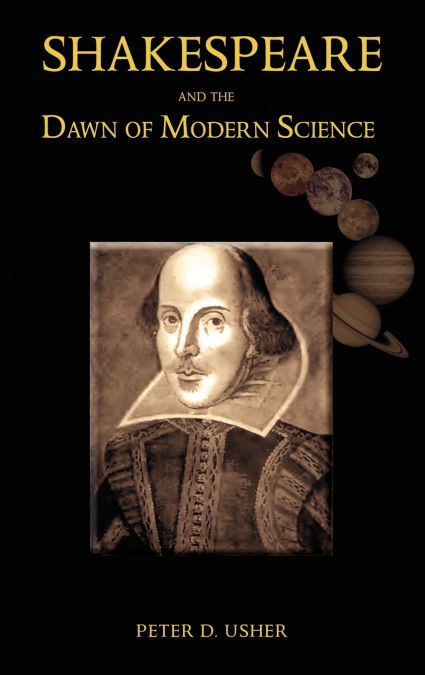
  • Shakespeare and the Dawn of Modern Science
    Peter D. Usher
    In Shakespeare and the Dawn of Modern Science, renowned astronomy expert Peter Usher expands upon his allegorical interpretation of Hamlet and analyzes four more plays, Love’s Labour’s Lost, Cymbeline, The Merchant of Venice, and The Winter’s Tale. With painstaking thoroughness, he dissects the plays and reveals that, contrary to current belief, Shakespeare was well aware of th...
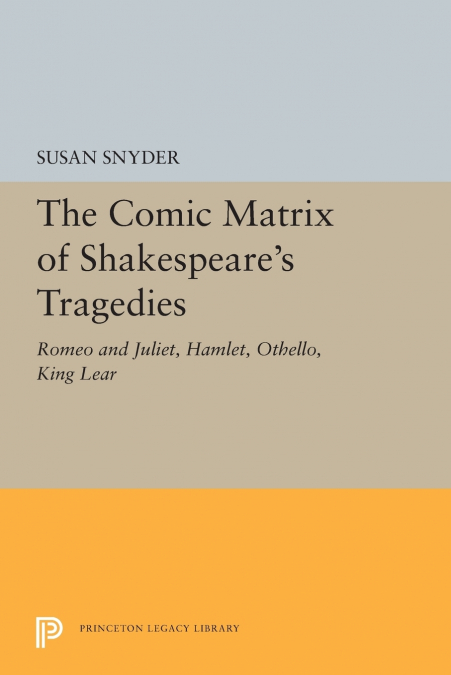
  • The Comic Matrix of Shakespeare’s Tragedies
    Susan Snyder
    Comic elements in Shakespeare’s tragedies have often been noted, but while most critics have tended to concentrate on humorous interludes or on a single play, Susan Snyder seeks a more comprehensive understanding of how Shakespeare used the conventions, structures, and assumptions of comedy in his tragic writing. She argues that Shakespeare’s early mastery of romantic comedy de...
    Disponible

    47,54 €

  • Hamlet in Purgatory
    Stephen Greenblatt
    In Hamlet in Purgatory, renowned literary scholar Stephen Greenblatt delves into his longtime fascination with the ghost of Hamlet’s father, and his daring and ultimately gratifying journey takes him through surprising intellectual territory. It yields an extraordinary account of the rise and fall of Purgatory as both a belief and a lucrative institution--as well as a capacious...
    Disponible

    27,63 €