

 Librería Samer Atenea
 Kálamo Books
 Librería Elías (Asturias)
 Librería Kolima (Madrid)
 Librería Proteo (Málaga)
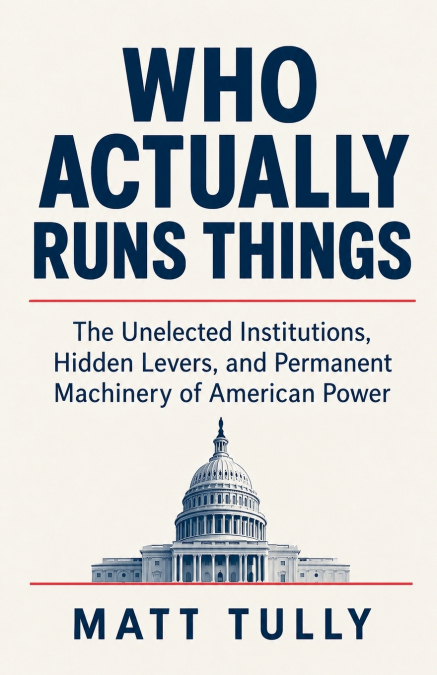
A bakery owner in Dayton learns that sesame must now appear on her labels. Congress voted for that change, and the president signed it. But the label she actually has to print was shaped by many more hands: agency staff who wrote the guidance, inspectors who enforce it, committee staff who drafted the bill, and the court that would hear a challenge.That is the pattern this book follows. The interest rate on her business loan is set by twelve people no voter ever elects. The overtime threshold for her shift managers was written by a labor department, then struck down by a single lifetime-appointed judge. In each case, elected officials made one decision, and unelected institutions decided what it meant in practice.Who Actually Runs Things maps those institutions: the regulatory agencies, the Federal Reserve, the courts, the intelligence and national security agencies, the independent commissions, the career bureaucracy, and the private organizations that take part in public decisions, from think tanks and contractors to lobbyists and trade associations. It asks three questions of each one: who has the legal authority to decide, who actually exercises practical control, and who can hold them accountable.This is not a claim that a secret group controls the government, or that elected officials are powerless. It is a field guide to the system that fills the gap between the Constitution’s 4,500 words and the government Americans actually live under, and a method any citizen can use to trace a decision back to the people who made it.






