 Librería Samer Atenea
 Kálamo Books
 Librería Elías (Asturias)
 Librería Kolima (Madrid)
 Librería Proteo (Málaga)
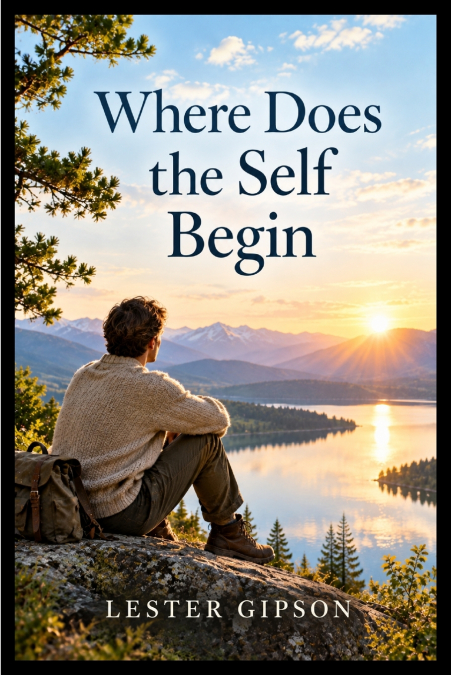
Where Does the Self Begin follows TheoKingsley, a thoughtful young man who becomes troubled by a question thatordinary answers cannot satisfy: where, exactly, does a person begin? Asa child, Theo studies the river behind his father’s cottage and noticesthat an eddy cannot be separated cleanly from the current that forms it.The image becomes the first sign of a much larger inquiry. His fatherCedric can give him a birth date, a parish record, a name, and physicalmarks on a door, but Theo realizes that these are labels and boundariesrather than an explanation of the living person they claim to identify.Theo’s question leads him beyond the cottage and into encounters thatsteadily dismantle his confidence in a permanent self. He watcheschildhood companions change until remembered versions of them no longerseem to exist. He confronts the limits of names, records, memories,social roles, achievements, and bodily sensations. Each attempt tolocate a fixed identity produces another temporary condition rather thanan enduring center. His journey becomes less a search for a particularbirthplace than an examination of the habits by which people divide acontinuous process into separate things and then defend those divisionsas reality.As Theo grows older, the inquiry follows him into scholarship, work,institutions, and public life. He encounters people who cling to titles,reputations, legal identities, professional authority, and personalhistories because those structures appear to provide something solid tostand on. Theo gradually sees the same pattern in himself. The storyultimately turns this insight into a lived freedom. Their conversationbrings his lifelong question into the present. Theo explains that achair does not make its occupant a master, a vote does not create anenduring essence, and a register cannot prevent a person from changing.When Victoria asks where Theo learned to stop fearing the loss of everyfixed boundary, he recalls the long chain of people, places, memories,sensations, and conditions that shaped his life.Theo finally understands that the demand for a permanent beginning wasitself the cage. He does not discover a hidden first moment or aneternal core. Instead, he recognizes himself as movement, relationship,and ongoing change, like the river he watched as a boy. When Victoriaasks where he began, Theo answers that he began nowhere at all, and thatprecisely because he has no fixed origin to defend, he can arriveeverywhere. The novel closes with the river continuing beneath thebridge, carrying leaves and shadows toward the open sea, while thequestion of a permanent self gives way to a quieter freedom.