When the Superpower Myth Broke

When the Superpower Myth Broke

Naim Tahir Baig

73,81 €
IVA incluido
Disponible
Editorial:
Dr Naim Tahir Baig
Año de edición:
2026
Materia
Relaciones internacionales
ISBN:
9798233832499
73,81 €
IVA incluido
Disponible

Selecciona una librería:

  • Librería Samer Atenea

  • Kálamo Books
  • Librería Elías (Asturias)
  • Librería Kolima (Madrid)
  • Librería Proteo (Málaga)

BOOK DESCRIPTIONWhen the Superpower Myth Broke: The USA-Iran War, March 2026 - A Global PerspectiveBy Dr. Naim Tahir Baig, Ph.D.On February 28, 2026, the United States and Israel launched Operation Epic Fury-a coordinated, multi-theatre military campaign that assassinated Iran’s Supreme Leader Ali Khamenei, struck cities from Tehran to Isfahan, and ignited the most consequential geopolitical crisis of the twenty-first century. Within hours, Iran retaliated with over eight hundred drones and nearly four hundred missiles targeting installations across twelve nations. Within days, the Strait of Hormuz-the passage through which one-fifth of the world’s oil flows-was effectively closed. Within weeks, the superpower that had spent decades projecting unchallengeable dominance found itself at war with no exit, no consensus, and no precedent.When the Superpower Myth Broke is the first comprehensive, rigorously documented account of the 2026 Iran War and its profound, still-unfolding consequences for the international order. Drawing on verified open-source intelligence, legal scholarship, humanitarian data, and strategic analysis, Dr. Naim Tahir Baig constructs a forensic and panoramic narrative-from the origins of American exceptionalism to the moment a fifty-thousand-dollar drone shut down the world’s most critical energy chokepoint. This is not merely a book about a war. It is a book about the architecture of power, the fragility of myths, and the moment the world stopped believing.Across twelve densely argued chapters, the book traces how decades of unchallenged military supremacy bred a dangerous strategic overconfidence-one that led Washington to launch a war without congressional authorization, without United Nations approval, and, according to its own Pentagon briefers, without evidence that Iran was planning to strike first. It examines Iran’s defiant retaliation and its sophisticated asymmetric strategy: closing an ocean artery not with a fleet but with drones and GPS jamming. It interrogates the fractured response of America’s allies, the calculated positioning of China and Russia, and the moral outcry of a Global South that had long understood what the 'rules-based order' actually protected. And it confronts the human cost with unflinching clarity-the 165 schoolgirls killed in Minab, the 330,000 displaced, the health infrastructure methodically dismantled, and the information blackout designed to keep the dying invisible.Written from a distinctly international perspective-and with the analytical frankness that only comes from intellectual independence-this book does not treat the war as an American story seen from Washington. It treats it as a world event seen from everywhere at once: from the Gulf states bombed for hosting foreign bases, from Pakistan where twenty-six protesters died in the streets, from Norway where a US Embassy was attacked, from the Iranian women’s soccer team who sought asylum in Australia rather than return to a nation at war. The book is equally unflinching in its legal analysis-cataloguing violations of the UN Charter, the Rome Statute, International Humanitarian Law, and the US Constitution itself-and in its economic reckoning, documenting how Brent crude surged seventy percent in ten days and how the world’s most vulnerable nations bore the heaviest burden of a war they had no voice in starting.When the Superpower Myth Broke is essential reading for scholars of international relations, strategic studies, and Middle Eastern politics; for practitioners of international law and humanitarian policy; for journalists, diplomats, and policymakers navigating a world in which the old certainties no longer hold; and for every citizen of every country who watched, in real time, the foundations of a seventy-year international order begin to crack.
Artículos relacionados

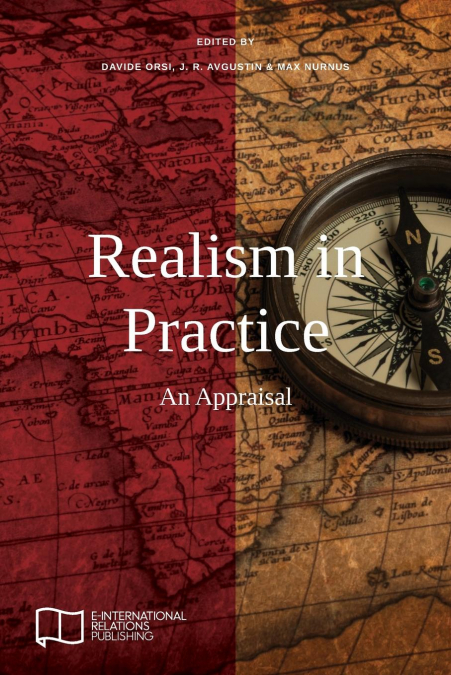
  • Realism in Practice
    The purpose of this book is to appraise the current relevance and validity of realism as an interpretative tool in contemporary International Relations. All chapters of the book are animated by a theoretical effort to define the conceptual aspects of realism and attempt to establish whether the tradition still provides the necessary conceptual tools to scholars.The chapters add...
    Disponible

    20,36 €

  • Predicting gender violence in India
    Shritha K Vasudevan
    In this provocative new book, Shritha Vasudevan argues that feminist international relations (IR) theory has inadvertently resulted in a biased worldview, the very opposite of what feminist IR set out to try to rectify. This book contests theoretical presumptions of Western feminist IR and attempts to reformulate it in contexts of non-Western cultures. Vasudevan deftly utilizes...
  • Contemporary security issues in Africa
    Isiaka Alani Badmus / Lere Amusan
    In volume, an emerging generation of African scholars examines specific states in Africa where instability is the order of the day. Considerations of African instability are highly relevant in today’s world, where one examines the types of regimes that were put in place after the Cold War and their effects on Africa. Multiparty systems introduced in Africa, rather than bringing...
  • Chronicles of the first and second chechen wars
    Ilya Milyukov
    Presented by Russian author and attorney Ilya Milyukov, Chronicles of the First and Second Chechen War presents the main events of the First (1994-1996) and Second (1999-2009) Wars in Chechnya, Russia’s deadliest conflicts since World War II. The First War began in December 1994 and lasted for one year and nine months, ending in August 1996. There were two major urban battles -...
  • Political instability in Africa
    Isiaka Alani Badmus / Lere Amusan
    This book offers broad-gauged analyses of the causes, nature, and changing patterns of armed conflict in Africa as well as the reasons for these patterns. It also situates conflicts that have been haunting the African continent since the time of decolonization within the various theoretical schools such as 'new war,' 'economic war,' 'neo-patrimonial,' and 'globalization.' It be...
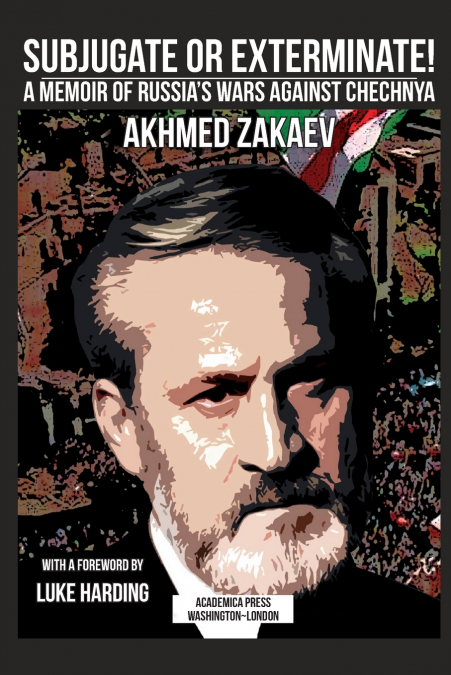
  • Subjugate or exterminate!
    Akhmed Zakaev / Arch Tait
    Foreword by Luke HardingAkhmed Zakaev is a symbol of the indomitable will of the Chechen nation. In this important memoir, he tells the story of the Chechen struggle as he experienced it, describing the conflict in human terms and providing a detailed documentary record of little known or badly understood events that will be of benefit to historians for generations to come.- Da...
    Disponible

    41,63 €

Otros libros del autor

  • The Perishable Advantage
    Naim Tahir Baig
    The Perishable Advantage: Pakistan, Hedging and the Multipolar Order after American Primacy, by Dr Naim Tahir Baig.When the world’s strongest power steps back, who steps forward, and what does it cost to stand there?In April 2026, American and Iranian negotiators sat down in Islamabad for the first direct talks between their governments since 1979. In the months that followed, ...
    Disponible

    55,74 €

  • The Orbit After Ambiguity
    Naim Tahir Baig
    SPACE SECURITY & ARMS CONTROLThe Orbit After AmbiguityHow the US Admitted It Has Weapons in SpaceThe first narrative account of what changed when the United States stopped keeping its space weapons secret.On September 14, 2026, the Secretary of the Air Force told a Washington audience that the United States 'has on-orbit space control weapons capable of defending the joint forc...
    Disponible

    73,95 €

  • The Stilwell Bypass
    Naim Tahir Baig
    In 1942 the United States Army pushed a road out of Ledo, in Assam, toward China. More than eighty years later, a question hangs over the same ground: could a different cargo travel part of that route, heavy rare earths dug from the clay hills of Kachin State in northern Myanmar and carried not east into China, as they are now, but west, toward India and toward separation plant...
    Disponible

    74,68 €

  • Extinction by Extraction?
    Naim Tahir Baig
    What we choose when we choose our mineralsEvery wind turbine, electric vehicle, guided missile and smartphone depends on a group of metals most people have never heard of. Rare earth elements make the modern world’s energy, defense and computing systems possible. They also come from some of the most toxic, concentrated and politically contested supply chains on Earth.Extinction...
    Disponible

    73,62 €

  • Theory in the Interregnum
    Naim Tahir Baig
    Theory in the InterregnumWhich International Relations Theory Explains What in a World of Fraying RulesBy Naim Tahir BaigThe liberal international order is fraying, and every school of International Relations claims to have seen it coming. Theory in the Interregnum asks a sharper question: which theory explains what? Dr Naim Tahir Baig argues that no new grand theory has displa...
    Disponible

    70,52 €

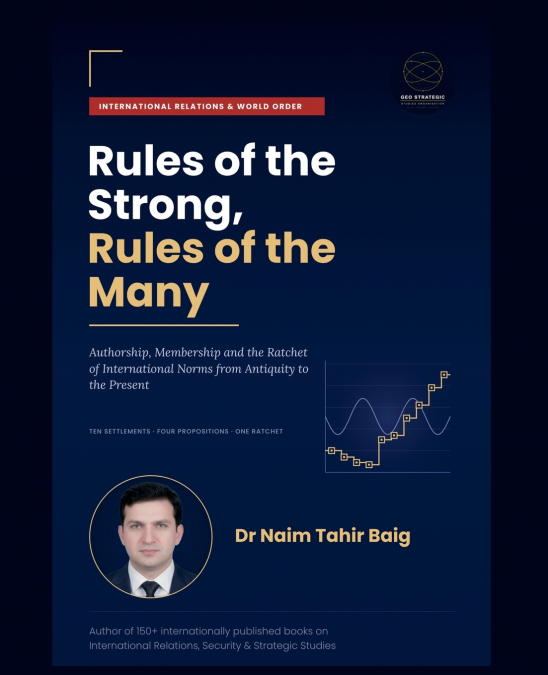
  • Rules of the Strong, Rules of the Many
    Naim Tahir Baig
    Rules of the Strong, Rules of the ManyAuthorship, Membership and the Ratchet of International Norms from Antiquity to the PresentBy Dr Naim Tahir BaigWho writes the rules of international order, and who do those rules protect? Rules of the Strong, Rules of the Many argues that international norms move in two rhythms at once. Authorship, meaning who writes and interprets the rul...
    Disponible

    75,59 €