When Strikes Make Sense-And Why

When Strikes Make Sense-And Why

Samuel Cohn

133,98 €
IVA incluido
Disponible
Editorial:
Springer Nature B.V.
Año de edición:
2013
ISBN:
9781475787740
133,98 €
IVA incluido
Disponible

Selecciona una librería:

  • Librería Samer Atenea
  • Librería Aciertas (Toledo)
  • Kálamo Books
  • Librería Perelló (Valencia)
  • Librería Elías (Asturias)
  • Donde los libros
  • Librería Kolima (Madrid)
  • Librería Proteo (Málaga)

Social scientists have not helped the working class make strategic deci­ sions. Unionists need to know how to carry on industrial conflict so as to provide concrete economic benefits for their members. Should unions strike or not strike? Should losses be avoided at all costs, or can unions afford to take chances? Does economism gut the class power of workers or provide a pragmatic strategy for increasing workers’ wage gains? We can say with great confidence that workers should join unions; there is now an exhaustive and compelling literature demonstrating that union membership provides a wide variety of economic benefits. We can say that corporatist class compromises lower income but increase job security and overall employment. Beyond that, however, we cannot say much. In particular, we can do little to advise particular unions in partic­ ular fixed institutional and political environments how they should han­ dle the microtactics of individual confrontations. The United Farm Work­ ers do not need a speech about the miracle of the Swedish industrial relations system. They need to know whether they should strike or not strike, and how their tactics should change if rival Teamsters come into the field. Unfortunately, medical research often has to start with rabbits be­ fore it proceeds to humans, and so it is with research in industrial conflict. The realistic prospects of doing a large sample analysis of con­ temporary American wage settlements that simultaneously estimates the effects of union tactics and economic factors are poor.

Artículos relacionados

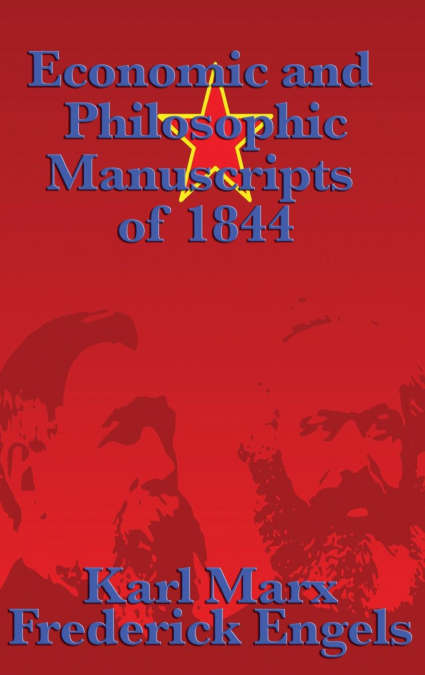
  • Economic and Philosophic Manuscripts of 1844
    Karl Marx
    In the Economic and Philosophic Manuscripts of 1844 Marx explains how, under capitalism, people rely on labor to live. In the past people could rely on Nature itself for their natural needs; in modern society, if one wants to eat, one must work: it is only through money that one may survive. Thus, man becomes a slave to his wages. It is only through his work that he can find en...
  • The Communist Manifesto
    Friedrich Engels / Karl Marx / Samuel Moore
    First published in 1848, Karl Marx and Friedrich Engels’ revolutionary manifesto quickly became one of the most influential political and economictexts in history. A landmark in political philosophy, it advocates for the overthrow of capitalist systems and the establishment of a classless,communist society. ...
    Disponible

    13,12 €

  • Cruel September
    Daniel D. Victor
    Romance blooms at Phillips Junior High when teacher Art Malamud, the school’s union rep, meets Mandy Sayer, the newest member of the faculty. As the school year progresses, Art leads his colleagues in the historic Los Angeles teachers’ strike of 1970 and stokes the ire of the principal, Vivian Laws. Though Art has tenure and relative immunity from Laws’s personal attacks, Mandy...
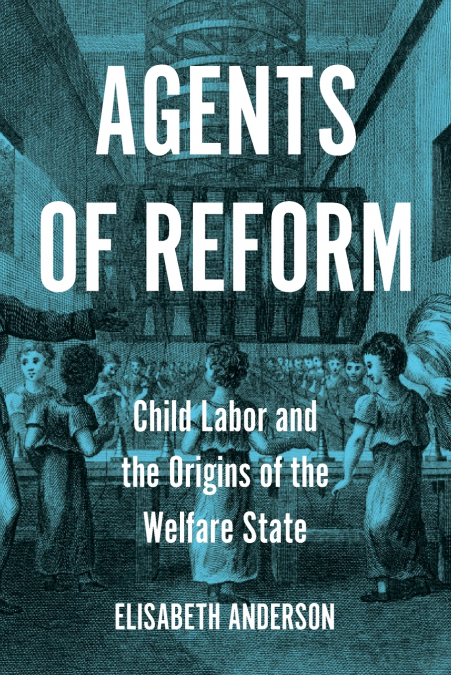
  • Agents of Reform
    Elisabeth Anderson
    A groundbreaking account of how the welfare state began with early nineteenth-century child labor laws, and how middle-class and elite reformers made it happenThe beginnings of the modern welfare state are often traced to the late nineteenth-century labor movement and to policymakers’ efforts to appeal to working-class voters. But in Agents of Reform, Elisabeth Anderson shows t...
    Disponible

    42,75 €

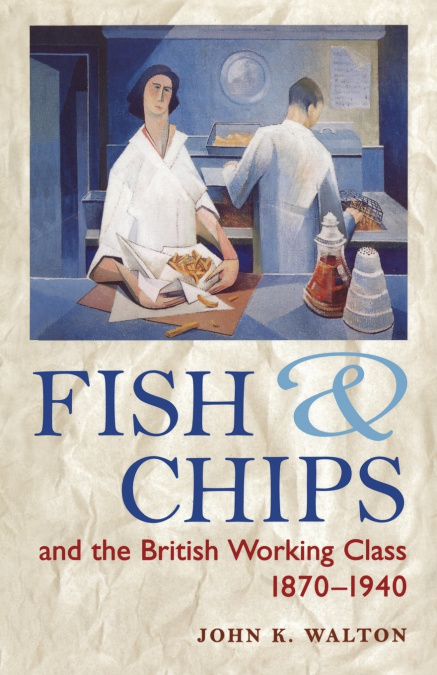
  • Fish and Chips, and the British Working Class, 1870-1940
    John K. Walton
    Unlike other institutions of central importance to working-class life, the fish-and-chip trade has not yet been rescued from what the author of this book regards as the massive condescension of posterity. In attempting to begin this process, he traces the origins of what was by 1914 an important national industry, setting the economic, social and political context of the trade,...
    Disponible

    142,78 €

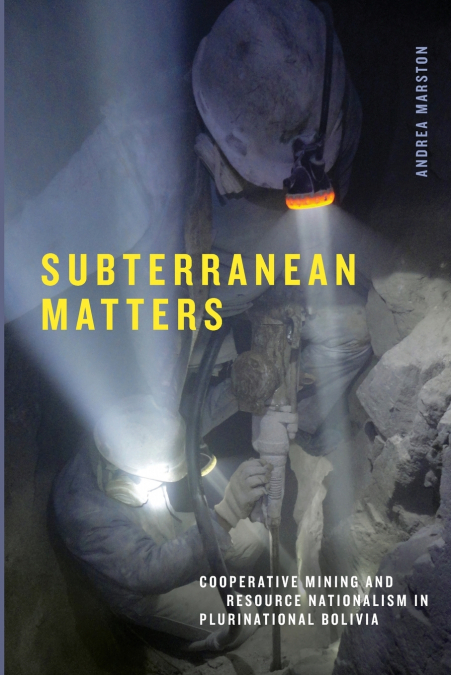
  • Subterranean Matters
    Andrea Marston
    In Subterranean Matters, Andrea Marston examines the ongoing history of Bolivian mining cooperatives, an economic formation that has been central to Bolivian politics and to the country’s economy. Marston outlines how mining cooperatives occupy a contradictory place in Bolivian politics. They were major backers of left-wing president Evo Morales in 2006 and participated signifi...
    Disponible

    36,40 €

Otros libros del autor

  • Race, Gender, And Discrimination At Work
    Samuel Cohn
    Race, Gender, and Discrimination at Work is a review of the determinants of wage and employment discrimination by firms against minorities and women. Aimed at sociology undergraduates, the book assumes no pre-existing social scientific knowledge. ...
  • Employment and Development under Globalization
    Samuel Cohn
    Globalization has changed the models of development that are open to most states both in the industrialized and less industrialized world. Using the unusual case of Brazilian barbers, beauticians, hotels and restaurants, Samuel Cohn lays out a model of the role of the state and development that is an alternative to more highly visible formulas associated with East Asia. By iden...
  • Race, Gender, And Discrimination At Work
    Samuel Cohn
    Race, Gender, and Discrimination at Work is a review of the determinants of wage and employment discrimination by firms against minorities and women. Aimed at sociology undergraduates, the book assumes no pre-existing social scientific knowledge. ...
    Disponible

    88,43 €

  • When Strikes Make Sense-And Why
    Samuel Cohn
    Social scientists have not helped the working class make strategic deci­ sions. Unionists need to know how to carry on industrial conflict so as to provide concrete economic benefits for their members. Should unions strike or not strike? Should losses be avoided at all costs, or can unions afford to take chances? Does economism gut the class power of ...