 Librería Samer Atenea
 Kálamo Books
 Librería Elías (Asturias)
 Librería Kolima (Madrid)
 Librería Proteo (Málaga)
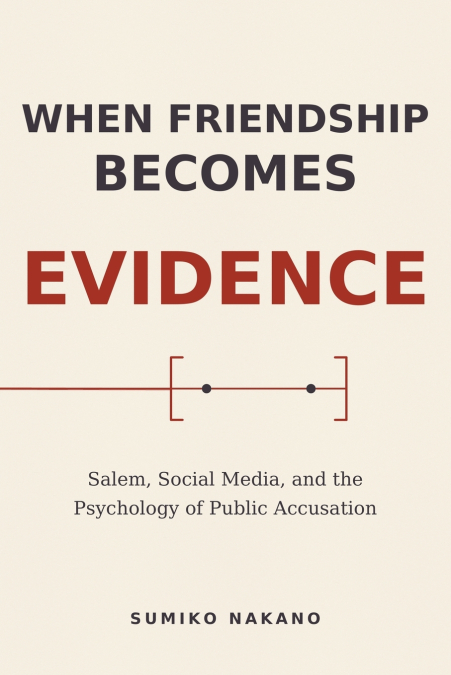
When a name becomes a verdict, everyone standing nearby is put on trial.A post appears. An accusation begins to travel. Before the evidence settles, the question changes from 'What happened?' to 'Whose side are you on?'In 1692, Salem’s authorities turned proximity, confession and the naming of others into instruments of survival. Today, public accusations travel through screenshots, feeds and algorithms. The consequences are not equivalent, but the social pressures can be disturbingly familiar. Friendship becomes suspicion. Silence is treated as proof. Distance is mistaken for private knowledge. Correction arrives after the crowd has moved on.Drawing on Salem’s surviving records, contemporary cases, social psychology and research into digital platforms, When Friendship Becomes Evidence examines:• why people borrow certainty from a crowd• how moral outrage rewards speed and punishes uncertainty• why association can become a second trial• how synthetic evidence complicates what we see and hear• what changes when an accusation is true, false or unresolved• how accountability, correction and repair can exist without permanent contaminationThis is not a defence of abuse or an argument for passive neutrality. It asks how we can take harm seriously without turning empathy into a verdict, protect people without treating uncertainty as guilt, and keep public judgment answerable to evidence.The next accusation will arrive before the whole story does. What will make your response answerable?