
Inicio > Derecho > Derecho internacional > What’s Left of the Law of Integration?
What’s Left of the Law of Integration?

What’s Left of the Law of Integration?

Julio Baquero Cruz

160,96 €
IVA incluido
Consulta disponibilidad
Editorial:
Oxford University Press
Año de edición:
2018
Materia
Derecho internacional
ISBN:
9780198830610

Selecciona una librería:

  • Librería Samer Atenea
  • Librería Aciertas (Toledo)
  • Kálamo Books
  • Librería Perelló (Valencia)
  • Librería Elías (Asturias)
  • Donde los libros
  • Librería Kolima (Madrid)
  • Librería Proteo (Málaga)

Born from the ashes of the Second World War as one of the most ambitious and successful parts of the plan for the reconstruction of Western Europe, European integration has been immersed in a deep economic and institutional crisis for more than a decade. This difficult situation is also threatening to erode one of its most original and valuable elements: the establishment of a supranational rule of law among the Member States of the European Union that provides a solid framework for their peaceful, ordered, and fair relations. This book, which is based on the general course given at the Academy of European Law in Florence in July 2015, puts the innovative initial choices made by the drafters of the Treaties and by the Court of Justice of the Union in their proper historical perspective, understanding Union law as a tool of civilisation. Its current decline is explained as a consequence of the waning of the initial impetus behind integration, of the growing complexity and challenges of the Union system, and of the ambivalent attitude of the Member States regarding their common creation. These themes are explored focusing on a number of fundamental structural issues: the principle of primacy, the national limits to it and the theory of constitutional pluralism; the state of health of the preliminary rulings procedure; Union citizenship, equality and human dignity; the scope of the Charter of Fundamental Rights and the standard of protection of those rights; and the rigidity and fragmentation of the Union system in connection with the increasing use of international law as a softer alternative to Union law. In all these areas, the book presents a fascinating story of decay and resistance, a story that is unfolding at present, and whose fate is closely linked to the future political shape of Europe.
Artículos relacionados

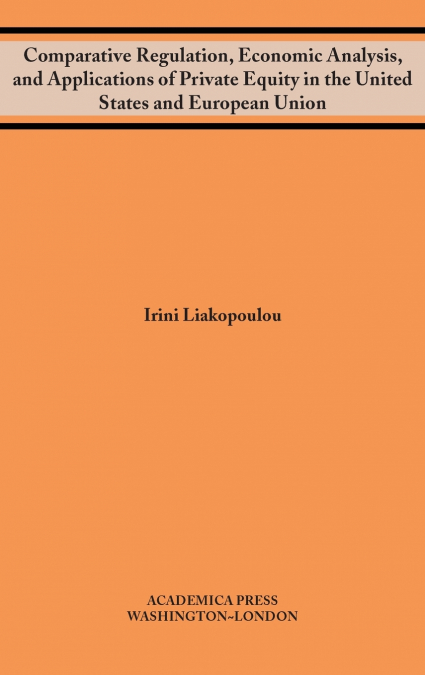
  • Comparative regulation, economic analysis, and applications of private equity in the united states and european union
    Irini Liakopoulou
    The present work examines the economics and legal doctrine of private equity. After a consideration of private equity’s origins, the book will explore the evolution of private equity in the United States and Europe. The reference economic model then will be reconstructed, with particular attention to financial flows to and from private equity firms and funds. This reconstructio...
  • Complicity in International Law
    Dimitris Liakopoulous
    Complicity in International Law aims to analyze questions arising from a state’s complicity in conflict with another state or an international organization. On the basis of international legal provisions, a state that assists the illicit fact of another state or an international organization in turn commits an offense if it is aware of the main fact and is bound by the same obl...
  • Command responsibility
    James B Whisker / Kevin R Spiker
    Command responsibility, or executive accountability, assumes that leaders are responsible for the actions of their subordinates. If subordinates misbehave, violate basic moral laws, transgress international law, or thwart international standards of behavior, their leader may be called before to justice. Standards that set the boundaries of human action have been evolving for ma...
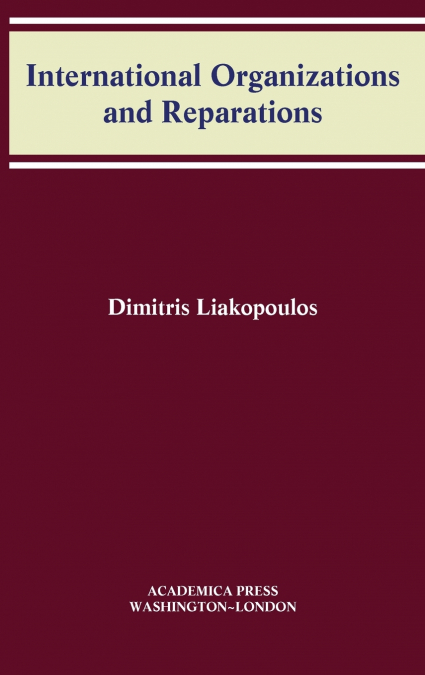
  • International Organizations and Reparations
    Dimitris Liakopoulos
    In the first part of this book, noted legal scholar Dimtris Liakopoulos deals with reconstructing the legal regulatory framework governing human rights violations in the activities of organizations. After identifying rules that are generally applicable to organizations’ offenses and govern the profile of reparations, this study assesses primary rules that guarantee the right to...
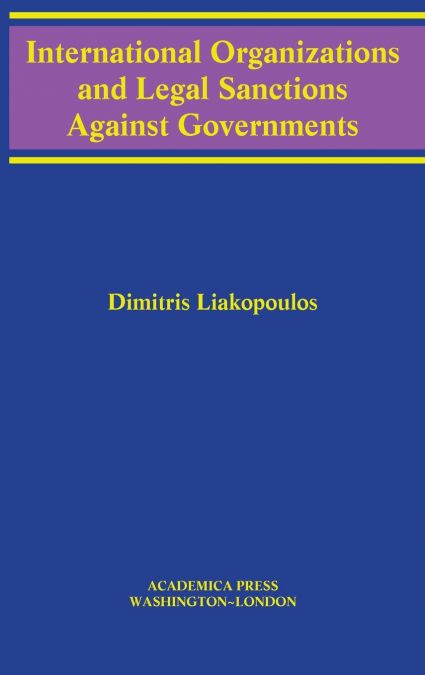
  • International Organizations and Legal Sanctions Against Governments
    Dimitris Liakopoulos
    This book examines the relationship between governments and international organizations under international law. After surveying the policing powers of international organizations under international law, it illustrates some normative aspects of law that distinguish regulation from enforcement via study of recent legal cases before international judicial bodies. According to Di...
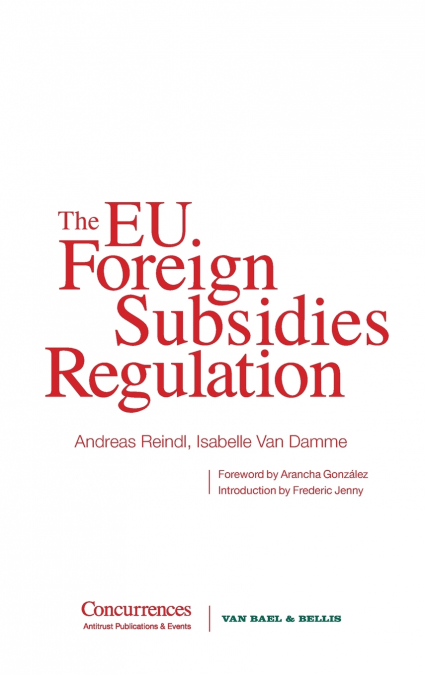
  • The EU Foreign Subsidies Regulation
    Andreas Reindl / Isabelle Van Damme
    'The EU Foreign Subsidies Regulation' is a pioneering manual authored by legal experts Andreas Reindl and Isabelle Van Damme. This essential guide, the first of its kind, is tailored for legal practitioners, offering a thorough exploration of the tools and mechanisms embedded within this novel European regulatory framework. The authors meticulously dissect the EU Foreign Subsid...