 Librería Samer Atenea
 Kálamo Books
 Librería Elías (Asturias)
 Librería Kolima (Madrid)
 Librería Proteo (Málaga)
A place can keep what it made and still lose how to make again.
Ask a Maine town what it makes and the answers come easily: granite, boats, sardines, blueberries, glass. But the hardest thing to make is another person who knows how.
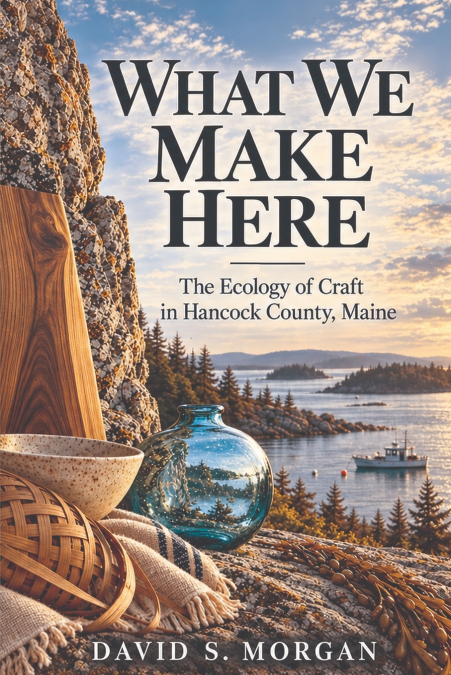
What We Make Here follows that idea across Hancock County, Maine, from the knowledge carried by the first people on this coast to granite quarries, fishing grounds, boatyards, workshops, factories, schools, laboratories, and the people learning with their hands today. It asks a deceptively simple question: How does a place remain capable of making people who know how?
The answer changes what survival looks like. A laboratory can burn and rebuild because copies exist elsewhere. A quarry cannot be restored from a copy of itself. A boatbuilder’s eye cannot be mailed home after the person carrying it has left. When the last sardine cannery in America closes, the building can remain while something much harder to see disappears with the people who leave it.
This is not an argument for freezing a place in time. Hancock County has never stood still. Technologies arrive. Markets disappear. Institutions close. New people come. Old ways change. The deeper question is what must remain possible through all that change.
Drawing on public records, archives, oral histories, working landscapes, and contemporary cases, What We Make Here reveals an ecology of knowledge: the people, tools, relationships, institutions, permissions, and places that allow capability to pass from one person to another.
Part Maine history, part cultural inquiry, and part meditation on the future of place, this book is for readers interested in New England history, craft traditions, working waterfronts, local industry, community resilience, education, apprenticeship, and the changing life of rural communities.