

 Librería Samer Atenea
 Kálamo Books
 Librería Elías (Asturias)
 Librería Kolima (Madrid)
 Librería Proteo (Málaga)
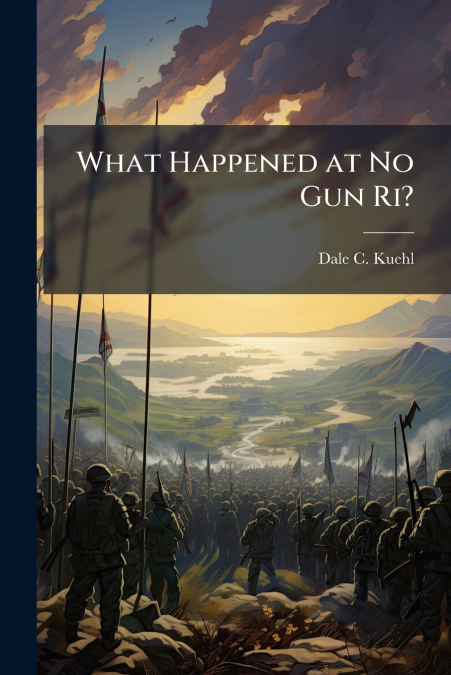
On 26 July 1950 American soldiers from 2-7 Cavalry fired on civilians near No Gun Ri, South Korea. These civilians remained trapped under a bridge between North Korean and American forces for three days. In September 1999, the Associated Press (AP) reported that American soldiers killed hundreds of Koreans at No Gun Ri, under the orders of officers with a blatant disregard for civilian life. This story prompted an investigation by the Department of the Army Inspector General that found evidence of war crimes inconclusive, but acknowledged that Americans killed Korean civilians in the vicinity of No Gun Ri. Drawing on primary and secondary sources this thesis examines the actions at No Gun Ri to determine whether American forces committed war crimes and includes detailed research on the political situation in South Korea, the tactics of the North Korean People’s Army, and the quality of the American Army in 1950. A thorough analysis of primary documents reveals a more complicated battlefield than presented by the AP. Direct orders were not given by officers to shoot civilians, but a poorly crafted policy from Eighth Army, and failure by subordinate commanders to modify the policy resulted in unnecessary civilian casualties.This work has been selected by scholars as being culturally important, and is part of the knowledge base of civilization as we know it. This work was reproduced from the original artifact, and remains as true to the original work as possible. Therefore, you will see the original copyright references, library stamps (as most of these works have been housed in our most important libraries around the world), and other notations in the work.This work is in the public domain in the United States of America, and possibly other nations. Within the United States, you may freely copy and distribute this work, as no entity (individual or corporate) has a copyright on the body of the work.As a reproduction of a historical artifact, this work may contain missing or blurred pages, poor pictures, errant marks, etc. Scholars believe, and we concur, that this work is important enough to be preserved, reproduced, and made generally available to the public. We appreciate your support of the preservation process, and thank you for being an important part of keeping this knowledge alive and relevant.





