Librería Samer Atenea
 Kálamo Books
 Librería Elías (Asturias)
 Librería Kolima (Madrid)
 Librería Proteo (Málaga)
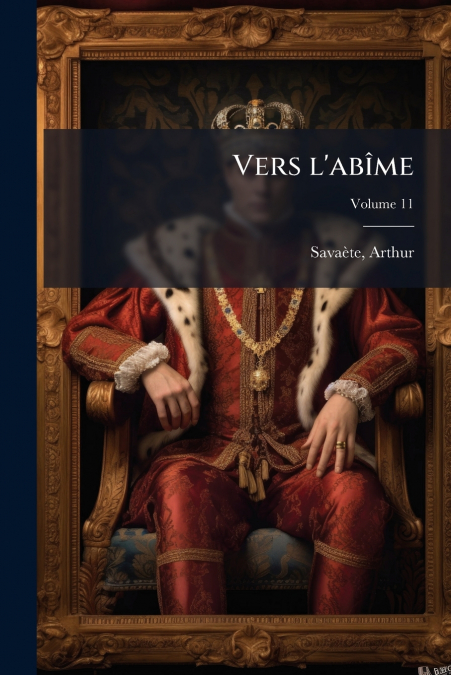
Voix canadiennes, Volume 1: Vers l’abîme, by Arthur Savaète, offers a compelling snapshot of Canadian political and social thought at the turn of the 20th century. Written in French, this collection of essays delves into the complex issues facing Canada, particularly the challenges to national unity and the growing pains of a young nation. Savaète’s work provides valuable insights into the intellectual climate of the time, exploring themes of identity, nationhood, and the future of Canada within the British Empire. This volume presents a series of reflections on the state of Canadian society and its trajectory towards a perceived ’abyss,’ making it essential reading for anyone interested in the historical and political landscape of early 20th-century Canada. It will be of interest to scholars, students, and anyone curious about the intellectual heritage of French Canada.This work has been selected by scholars as being culturally important, and is part of the knowledge base of civilization as we know it. This work was reproduced from the original artifact, and remains as true to the original work as possible. Therefore, you will see the original copyright references, library stamps (as most of these works have been housed in our most important libraries around the world), and other notations in the work.This work is in the public domain in the United States of America, and possibly other nations. Within the United States, you may freely copy and distribute this work, as no entity (individual or corporate) has a copyright on the body of the work.As a reproduction of a historical artifact, this work may contain missing or blurred pages, poor pictures, errant marks, etc. Scholars believe, and we concur, that this work is important enough to be preserved, reproduced, and made generally available to the public. We appreciate your support of the preservation process, and thank you for being an important part of keeping this knowledge alive and relevant.