 Librería Samer Atenea
 Kálamo Books
 Librería Elías (Asturias)
 Librería Kolima (Madrid)
 Librería Proteo (Málaga)
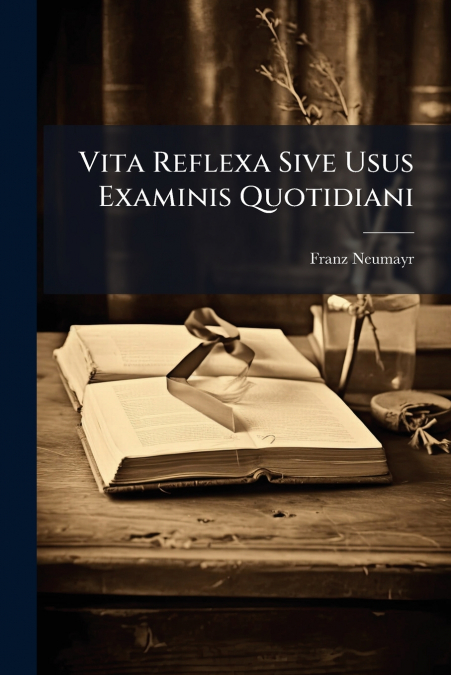
Vita Reflexa Sive Usus Examinis Quotidiani, by Franz Neumayr, is a guide to the practice of daily self-examination within a spiritual context. This work delves into the importance of introspection and moral reflection as tools for spiritual growth and self-improvement. Neumayr provides a structured approach to examining one’s conscience, offering insights into identifying and rectifying personal shortcomings. The book is intended to guide readers in cultivating a more virtuous life through regular and thoughtful self-assessment.Originally written to help individuals develop a deeper understanding of themselves and their relationship with the divine, this work remains relevant for anyone seeking to incorporate regular self-reflection into their daily spiritual practices. Neumayr’s teachings emphasize the value of humility, honesty, and perseverance in the pursuit of moral and spiritual excellence.This work has been selected by scholars as being culturally important, and is part of the knowledge base of civilization as we know it. This work was reproduced from the original artifact, and remains as true to the original work as possible. Therefore, you will see the original copyright references, library stamps (as most of these works have been housed in our most important libraries around the world), and other notations in the work.This work is in the public domain in the United States of America, and possibly other nations. Within the United States, you may freely copy and distribute this work, as no entity (individual or corporate) has a copyright on the body of the work.As a reproduction of a historical artifact, this work may contain missing or blurred pages, poor pictures, errant marks, etc. Scholars believe, and we concur, that this work is important enough to be preserved, reproduced, and made generally available to the public. We appreciate your support of the preservation process, and thank you for being an important part of keeping this knowledge alive and relevant.