Holger Stoecker / Ina Heumann / Mareike Vennen
 Librería Samer Atenea
 Kálamo Books
 Librería Elías (Asturias)
 Librería Kolima (Madrid)
 Librería Proteo (Málaga)
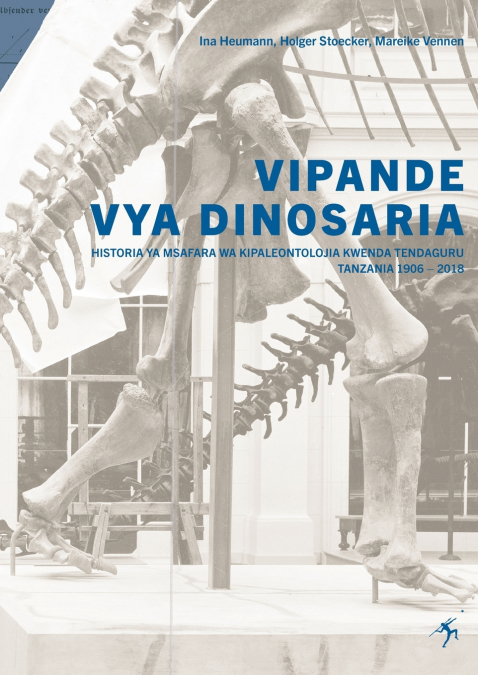
This book narrates the story of a scientific expedition and the treasures found during that journey. The account begins in the early 20th century, at Tendaguru Hill, located in the southern part of the country now known as Tanzania, but at that time, it was a German colony called Deutsch-Ostafrika. In 1907, news of the thrilling discovery of fossils at Tendaguru Hill reached the German Empire. Soon after, it was revealed that the discovery consisted of the remains of huge dinosaur bones, with sizes never seen before, belonging to creatures that lived 150 million years ago and had long since become extinct. A few years later, an expedition led by German scientists went to the site and successfully excavated 250 tons of these ancient animal fossils. One of the significant findings from the excavation was a famous skeleton known as Giraffatitan brancai, which is now displayed at the Museum of Natural History in Berlin. This book traces, step by step, the journey of these fossils from Tendaguru Hill to various locations where they were taken throughout the 20th century. The chapters of this book, relying on sources from the archives of Tanzania, Germany, and the United Kingdom, as well as interviews, inquire how the history of this expedition has been portrayed up to the present day. The book illustrates how the history of the treasures found at Tendaguru reveals the intersection of politics, science, and museums, and how these have shaped the discussions, debates, and current understandings of Giraffatitan brancai.Kitabu hiki kinasimulia habari za msafara wa kisayansi na nyara zili-zopatikana kwenye msafara huo. Masimulizi haya yanaanzia mwan-zoni mwa karne ya ishirini, katika kilima cha Tendaguru, kusini mwa nchi ambayo sasa inaitwa Tanzania lakini wakati huo ilikuwa koloni la Wajerumani lililojulikana kama Deutsch-Ostafrika. Mnamo mwaka 1907, habari za uvumbuzi wa kusisimua wa mifupa, katika kilima cha Tendaguru, ziliufikia Ufalme wa Ujerumani. Muda mfupi baa-daye, ikafahamika kwamba kilichovumbuliwa ni visukuku vya mifupa ya dinosaria wakubwa ajabu, wenye ukubwa ambao haujawahi kuo-nekana, ambao waliishi duniani miaka milioni 150 iliyopita na walik-wisha kutoweka. Miaka michache baadaye, msafara ulioongozwa na wanasayansi wa Kijerumani, ulikwenda mahali hapo na kufanikiwa kuchimbua tani 250 za visukuku vya mifupa hiyo ya wanyama wa zama za kale. Mojawapo ya mapato ya uchimbuaji huo ni kiunzi maa-rufu kiitwacho Graffatitan brancai ambacho kimewekwa kwenye mao-nesho ya Jumba la Makumbusho ya Historia ya Asili, Berlin. Kitabu hiki kinafuatilia hatua kwa hatua mwendo wa visukuku hivyo kutoka kilima cha Tendaguru kwenda pote vilikofikishwa, katika kipindi cha karne ya ishirini. Sura za kitabu hiki, kwa kutegemea vyanzo vya ha-bari kutoka hifadhi za nyaraka za Tanzania, Ujerumani na Uingereza, pamoja na mahojiano, zinauliza, ni kwa jinsi gani historia ya msafara huo imekuwa ikisawiriwa hadi wakati wa sasa. Kitabu kinaonesha jinsi historia ya nyara hizo zilizopatikana Tendaguru inavodhihirisha muingiliano baina ya siasa, sayansi na majumba ya makumbusho, ulivyoyapa sura majadiliano na mabishano; mawasilisho na ufahamu uliopo hadi leo kuhusu Giraffatitan brancai.