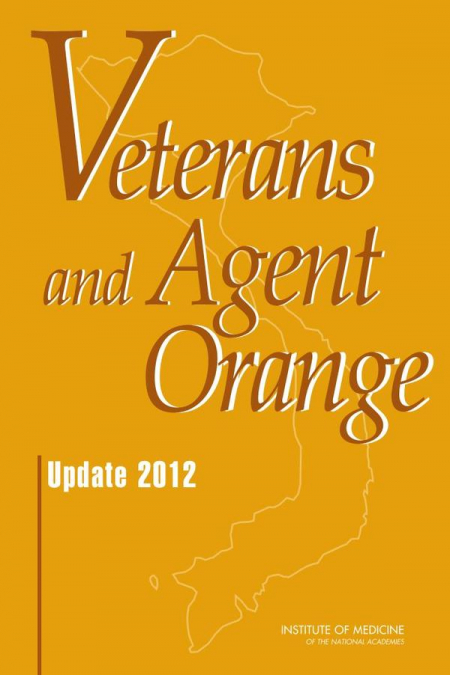

Veterans and Agent Orange

Veterans and Agent Orange

AA.VV

134,68 €
IVA incluido
Disponible
Editorial:
National Academies Press
Año de edición:
2014
Materia
Enfermedades y trastornos
ISBN:
9780309288866
134,68 €
IVA incluido
Disponible

Selecciona una librería:

  • Librería Samer Atenea
  • Librería Aciertas (Toledo)
  • Kálamo Books
  • Librería Perelló (Valencia)
  • Librería Elías (Asturias)
  • Donde los libros
  • Librería Kolima (Madrid)
  • Librería Proteo (Málaga)

From 1962 to 1971, the US military sprayed herbicides over Vietnam to strip the thick jungle canopy that could conceal opposition forces, to destroy crops that those forces might depend on, and to clear tall grasses and bushes from the perimeters of US base camps and outlying fire-support bases. Mixtures of 2,4-dichlorophenoxyacetic acid (2,4-D), 2,4,5-trichlorophenoxyacetic acid (2,4,5-T), picloram, and cacodylic acid made up the bulk of the herbicides sprayed. The main chemical mixture sprayed was Agent Orange, a 50:50 mixture of 2,4-D and 2,4,5-T. At the time of the spraying, 2,3,7,8-tetrachlorodibenzo-p-dioxin (TCDD), the most toxic form of dioxin, was an unintended contaminant generated during the production of 2,4,5-T and so was present in Agent Orange and some other formulations sprayed in Vietnam. Because of complaints from returning Vietnam veterans about their own health and that of their children combined with emerging toxicologic evidence of adverse effects of phenoxy herbicides and TCDD, the National Academy of Sciences (NAS) was asked to perform a comprehensive evaluation of scientific and medical information regarding the health effects of exposure to Agent Orange, other herbicides used in Vietnam, and the various components of those herbicides, including TCDD. Updated evaluations are conducted every two years to review newly available literature and draw conclusions from the overall evidence.Veterans and Agent Orange: Update 2012 reviews peer-reviewed scientific reports concerning associations between health outcomes and exposure to TCDD and other chemicals in the herbicides used in Vietnam that were published in October 2010—September 2012 and integrates this information with the previously established evidence database. This report considers whether a statistical association with herbicide exposure exists, taking into account the strength of the scientific evidence and the appropriateness of the statistical and epidemiological methods used to detect the association; the increased risk of disease among those exposed to herbicides during service in the Republic of Vietnam during the Vietnam era; and whether there exists a plausible biological mechanism or other evidence of a causal relationship between herbicide exposure and the disease.
Artículos relacionados

  • Intelligent Technologies and Parkinson’s Disease
    When it comes to Parkinson’s disease, one of the most important issues revolves around early detection and accurate diagnosis. The intricacies of this neurodegenerative disorder often elude timely identification, leaving patients and healthcare providers grappling with its progressive symptoms. Ethical concerns surrounding the use of machine learning to aid in diagnosis further...
  • Intelligent Solutions for Cognitive Disorders
    Cognitive disorders are a growing concern, affecting individuals across the age spectrum and society. These disorders can profoundly disrupt daily life, and their timely diagnosis is crucial for effective intervention and care. As the prevalence of cognitive disorders continues to rise, the need for precise and early diagnosis has never been more pressing. Intelligent Solutions...
  • The Role of Health Literacy in Major Healthcare Crises
    The COVID-19 pandemic clearly shows the vital role of accurate and reliable information in public health. Health literacy addresses not only patient needs but also the needs of the general population, who must not only comply with advice and instructions but also understand the severity of health crises and respond accordingly. A variety of crises imposed on healthcare systems ...
  • The Role of Health Literacy in Major Healthcare Crises
    The COVID-19 pandemic clearly shows the vital role of accurate and reliable information in public health. Health literacy addresses not only patient needs but also the needs of the general population, who must not only comply with advice and instructions but also understand the severity of health crises and respond accordingly. A variety of crises imposed on healthcare systems ...
    Disponible

    235,81 €

  • Practical Medicine from Salerno to the Black Death
    ...
    Disponible

    81,69 €

  • Chemicals in our Food
    Kevin B DiBacco
    BEST SELLER! Chemicals in Our Food, Reached #1 on INGRAM!'Chemicals in Our Food: What’s Really on Your Plate?' by Kevin B DiBacco is a comprehensive guide to understanding the chemical composition of our food and its impact on our health and the environment. The book begins by introducing readers to the basics of food chemistry, explaining how even natural foods are made up of ...
    Disponible

    10,20 €