Karel van de 1878-1929 Woestijne
 Librería Samer Atenea
 Kálamo Books
 Librería Elías (Asturias)
 Librería Kolima (Madrid)
 Librería Proteo (Málaga)
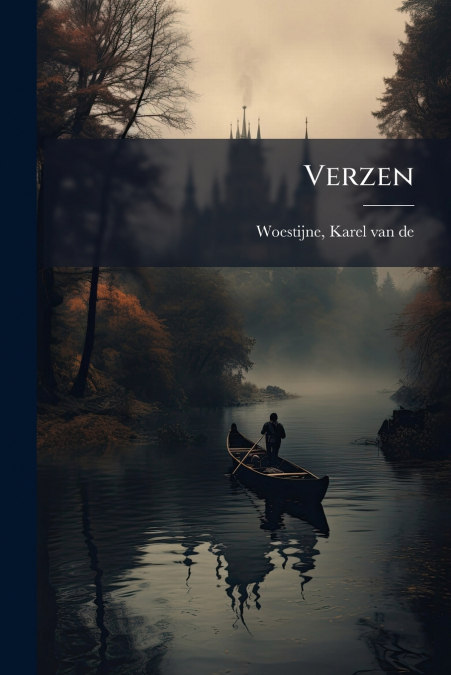
Verzen, published in 1905, showcases the early poetic talent of Karel van de Woestijne, a prominent figure in Dutch literature. This collection exemplifies the symbolist movement, characterized by its emphasis on aesthetic beauty and inner experience rather than objective reality. Van de Woestijne’s verses explore themes of nature, love, and existential longing, rendered with a rich and evocative use of language. His work reflects the cultural and artistic milieu of the early 20th century, marked by a shift from traditional forms to more experimental and introspective expressions. Verzen remains a significant contribution to Dutch poetry and a valuable window into the artistic sensibilities of its time. It appeals to readers interested in European symbolism and the development of modern poetry in the Dutch language.This work has been selected by scholars as being culturally important, and is part of the knowledge base of civilization as we know it. This work was reproduced from the original artifact, and remains as true to the original work as possible. Therefore, you will see the original copyright references, library stamps (as most of these works have been housed in our most important libraries around the world), and other notations in the work.This work is in the public domain in the United States of America, and possibly other nations. Within the United States, you may freely copy and distribute this work, as no entity (individual or corporate) has a copyright on the body of the work.As a reproduction of a historical artifact, this work may contain missing or blurred pages, poor pictures, errant marks, etc. Scholars believe, and we concur, that this work is important enough to be preserved, reproduced, and made generally available to the public. We appreciate your support of the preservation process, and thank you for being an important part of keeping this knowledge alive and relevant.