Inicio > Sociedad y ciencias sociales > Sociedad y cultura: general > Estudios culturales > Cultura popular > Vergleich der Jugendkultur HipHop in der Bundesrepublik Deutschland und der DDR
Vergleich der Jugendkultur HipHop in der Bundesrepublik Deutschland und der DDR

Vergleich der Jugendkultur HipHop in der Bundesrepublik Deutschland und der DDR

Steffi Joetze

34,70 €
IVA incluido
Disponible
Editorial:
GRIN Publishing
Año de edición:
2013
Materia
Cultura popular
ISBN:
9783656537137
34,70 €
IVA incluido
Disponible

Selecciona una librería:

  • Librería Samer Atenea
  • Librería Aciertas (Toledo)
  • Kálamo Books
  • Librería Perelló (Valencia)
  • Librería Elías (Asturias)
  • Donde los libros
  • Librería Kolima (Madrid)
  • Librería Proteo (Málaga)

Examensarbeit aus dem Jahr 2011 im Fachbereich Soziologie - Medien, Kunst, Musik, Note: 1,0, Universität zu Köln, Veranstaltung: Pädagogik / Erziehungswissenschaften / Sozialwissenschaften, Sprache: Deutsch, Abstract: 1. Einleitung Breakdance-Battles in Frankreich, Graffiti-Contests in China, Jams in Rio de Janeiro, Rap in Tansania - HipHop entwickelte sich innerhalb der letzten 40 Jahre zur weltweit größten Jugendkultur aller Zeiten und spielt in der heutigen Lebenswelt von Jugendlichen eine bedeutende Rolle. Das Phänomen HipHop, das vor allem durch die vier Ausdrucksformen Breakdance, Graffiti, DJing und Rap gekennzeichnet ist, entstand in den Ghettos der New Yorker Bronx und erhielt Anfang der 1980er Jahre Einzug in das damals geteilte Deutschland - sowohl in die Bundesrepublik Deutschland als auch in die Deutsche Demokratische Republik. Während des in den 1980er Jahren andauernden Kalten Krieges war die Bundesrepublik Deutschland von einer deutlichen Bindung an den Westen, einer Antihaltung gegenüber dem Kommunismus und einer pluralistischen Öffentlichkeit geprägt (vgl. Wehler 2008, S. 399-406). Auf Seiten der DDR hingegen durchzogen staatliche Kontrollmaßnahmen sowie ein ausgeprägtes Misstrauen gegenüber Einflüssen aus der westlichen Welt alle Lebensbereiche der Bürger (ebd., S. 414-419). Vor diesem Hintergrund befasst sich die vorliegende Arbeit im Kern mit der Frage, inwieweit die amerikanische Jugendkultur HipHop in beiden Systemen unterschiedlich verbreitet, adaptiert und weiterentwickelt wurde und ob sich, trotz der verschiedenartigen Bedingungen, auch gemeinsame Entwicklungen vollziehen konnten. Zunächst werden die Begriffe Jugend und Kultur eingeführt. Anschließend erfolgt deren Verbindung zum Terminus Jugendkultur und es werden gegenwärtige Merkmale dieser Bewegung erläutert. Im darauffolgenden Abschnitt werden die afroamerikanischen Wurzeln, insbesondere die Kulturtechniken des HipHop betrachtet, um einen Eindruck von der Entstehung und Charakteristik

Artículos relacionados

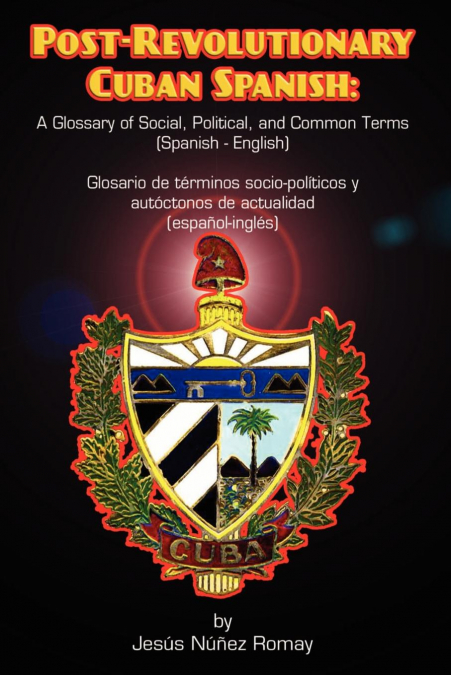
  • Post-Revolutionary Cuban Spanish
    Jesus Nez Romay / Jesus Nunez Romay / Jesus Nzqez Romay
    Because the first socialist revolution in the Americas took place in Cuba, this country has also seen the rise of new terms and the introduction of new, very specific meanings for old terms, adopted as required to express new realities. How can these neologisms be rendered in English, when no English-speaking country has as yet carried out a Marxist-Leninist social revolution a...
    Disponible

    11,00 €

  • Studies In Structural Sociology
    Frank W Young
    This collection of articles and essays embodies a new approach to sociology based on the original meaning of the word. Its central concept is 'community,' which is defined to cover units as small as the household and as large as the nation-state. Individuals are a special case of community. So defined, communities account for almost all the independent social organization of th...
    Disponible

    18,65 €

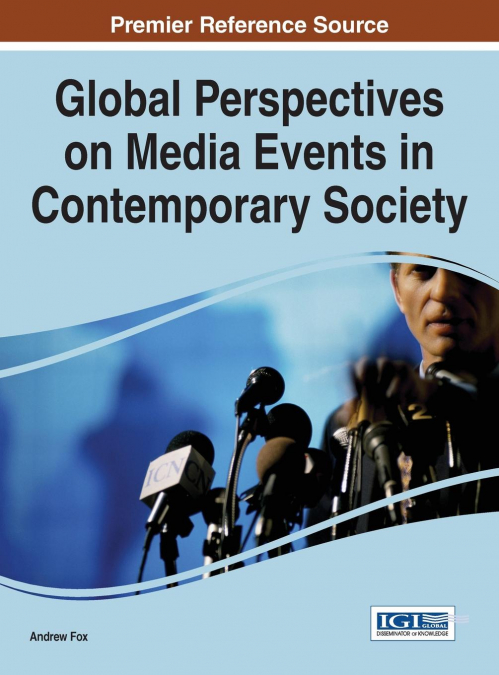
  • Global Perspectives on Media Events in Contemporary Society
    Andrew Fox
    Media events have been described as broadcasts that involve an engaged audience viewing the same event simultaneously; though this definition is still relevant, the way media outlets interact with and react to their audiences has greatly changed. This is in part due to the emergence of social media platforms which allow a participatory audience, something that genre-specific te...
  • War Memory and Popular Culture
    This collection of essays investigates such diverse vehicles for war commemoration as poems, battlefield tours, souvenirs, books, films, architectural structures, comics, websites, and video games. Drawing on essayists from Australia, Canada, Great Britain, Israel and the United States, this work explores the evolution from traditional to contemporary forms of war commemorat...
    Disponible

    42,91 €

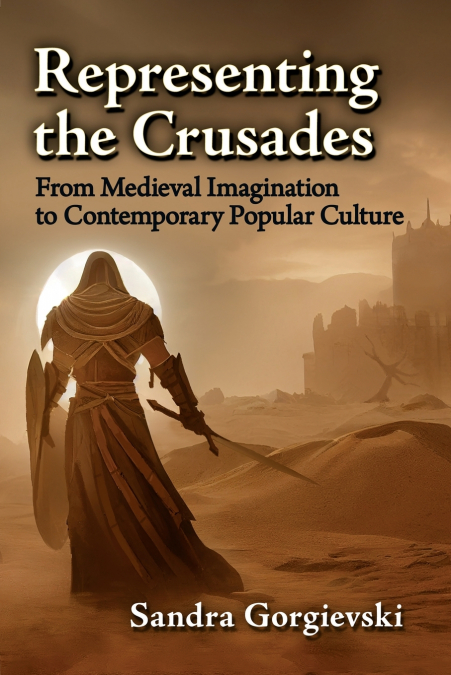
  • Representing the Crusades
    Sandra Gorgievski
    How are the Crusades portrayed in popular culture today? Have the medieval images of chivalric and military heroes survived the eras of Orientalism and decolonization? The first of its kind, this comparative study examines representations of the Crusades in both European and Arab medieval texts and in 20th and 21st century transmedia recreations. It follows the cartography...
    Disponible

    72,58 €

  • WHY BRITAIN ROCKED
    Elizabeth Sharkey
    Why Britain Rocked: How Rock Became Roll and Took Over the World challenges the origins of ’Beatlemania’ by travelling deep into Britain’s history to trace the events that led to Britain’s twentieth century musical explosion. With rigorous in-depth research, new discoveries and original insights Why Britain Rocked: How Rock Became Roll and Took Over the World completely reframe...

Otros libros del autor

  • Oral Error Treatment in the Second Language Classroom
    Steffi Joetze
    Seminar paper from the year 2007 in the subject Didactics for the subject English - Pedagogy, Literature Studies, grade: 1,3, University of Cologne, language: English, abstract: 'Should learner errors be corrected? If so, when should learner errors be corrected? Which learner errors should be corrected? Who should correct learner errors? And how should learner errors be correct...
    Disponible

    23,04 €