Values and Morals

Values and Morals


207,40 €
IVA incluido
Disponible
Editorial:
Springer Nature B.V.
Año de edición:
2010
Materia
Ética y filosofía moral
ISBN:
9789048183524
207,40 €
IVA incluido
Disponible

Selecciona una librería:

  • Librería Samer Atenea
  • Librería Aciertas (Toledo)
  • Kálamo Books
  • Librería Perelló (Valencia)
  • Librería Elías (Asturias)
  • Donde los libros
  • Librería Kolima (Madrid)
  • Librería Proteo (Málaga)

This Festschrift seeks to honor three highly distinguished scholars in the Department of Philosophy, University of Michigan: William K. Frankena, Charles L. Stevenson, and Richard B. Brandt. Each has made significant con­ tributions to the philosophic literature, particularly in the field of ethics. Michigan has been fortunate in having three such original and productive moral philosophers serving ob its faculty simultaneously. Yet they stand in a long tradition of excellence, both within the Department and in the University. Let us trace that tradition briefly. The University of Michigan opened in 184l.lts Department of Literature, Science, and the Arts at first resembled a typical American college ofthat period, with religious and ethical indoctrination playing a central role in course offerings. But when Henry Tappan, a Presbyterian clergyman and Professor of philosophy, became President in 1852, he succeeded in shifting the emphasis from indoctrination to inquiry and scholarship. Though he was dismissed for his policies in 1863, Tappan’s efforts to establish a broad and liberal curriculum prevailed. Michigan was to take its place among the leading educational institutions in this country, and to achieve an international reputation as a research center. Several past philosophers are worthy of mention here. George Sylvester Morris, an absolute idealist, joined the Department in 1881, having served from 1870 as Chairman of the Department of Modern Languages and Literature. He assumed the Chairmanship of Philosophy in 1884.

Artículos relacionados

  • Ka Ab Ba Building The Lighted Temple
    Dr Terri R. Nelson / Dr Terri RNelson
    The book KaAbBa Building The Lighted Temple/Metaphysical Keys to the Tree of Life draws a circle that is inclusive of the Afrikan origin of the Ancient Kemetic/Egyptian wisdom. It reveals the undeniable root and link of Ancient Africa to all the religious systems that would develop worldwide. This book is explosive in its power to convey the meaning of KaAbBa, the Medu Neter  (...
    Disponible

    37,41 €

  • Technoethics and the Evolving Knowledge Society
    Rocci Luppicini
    Recently, there has been a major push to rediscover the ethical dimension of technology across the sciences, social sciences, and humanities. Technoethics and the Evolving Knowledge Society: Ethical Issues in Technological Design, Research, Development, and Innovation examines human processes and practices connected to technology embedded within social, political, and moral sph...
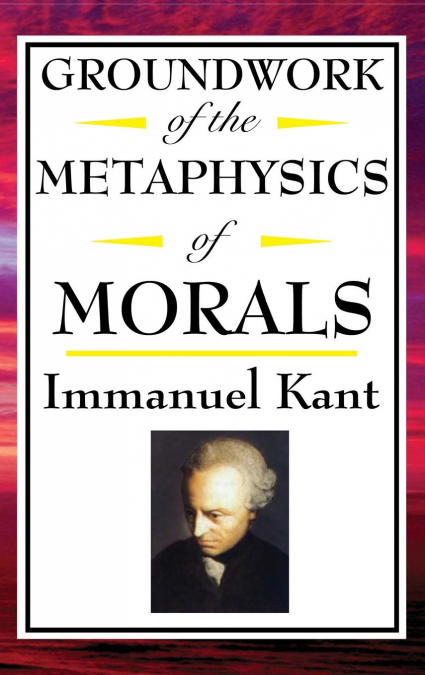
  • Kant
    Immanuel Kant
    Kant’s Groundwork of the Metaphysics of Morals is one of the most important works in modern moral philosophy. It belongs beside Plato, Aristotle, Machiavelli, and Hobbes. Here Kant sets out to articulate and defend the Categorical Imperative - the fundamental principle that underlies moral reasoning - and to lay the foundation for a comprehensive account of justice and human vi...
  • On the Duty of Civil Disobedience
    HENRY DAVID THOREAU
    Civil Disobedience argues that citizens should not permit their governments to overrule their consciences, and that they have a duty to avoid allowing their acquiescence to enable the government to make them the agents of injustice. Thoreau was motivated in part by his disgust with slavery and the Mexican-American War, but the sentiments he expresses here are just as pertinent ...
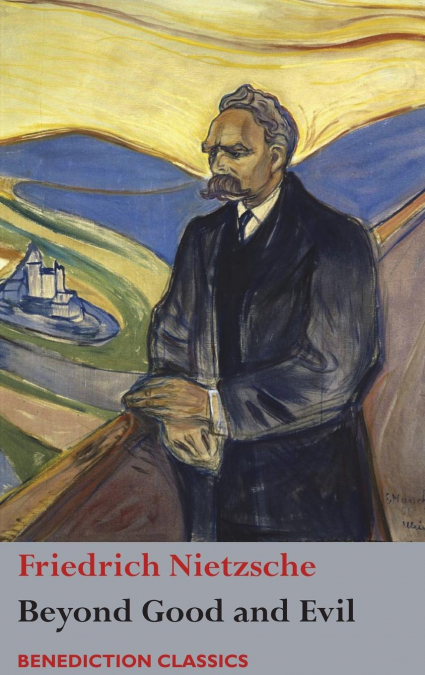
  • Beyond Good and Evil
    Friedrich Nietzsche
    Nietzsche, though primarily a philosopher, wrote widely on art, philology, history, religion, tragedy, culture, and science.  In 1886, at the height of his powers, he published Beyond Good and Evil.  Here he examines much of the best of human thought--dogmatic philosophy, Judeo-Christian morality, science and democracy – and finds it lacking.  Rejecting “slave-morality” he pres...
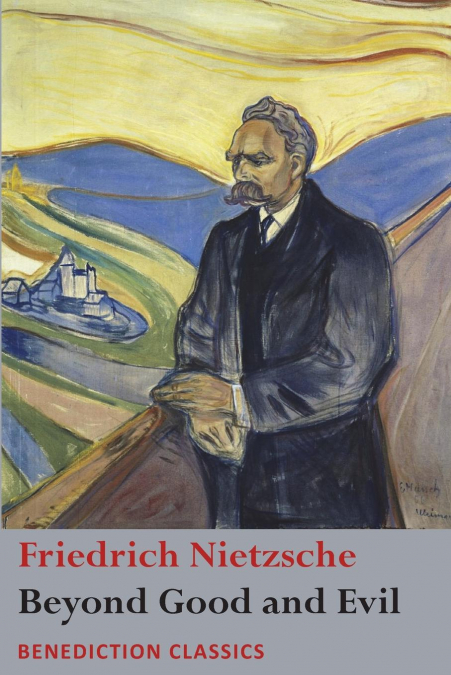
  • Beyond Good and Evil
    Friedrich Nietzsche
    Nietzsche, though primarily a philosopher, wrote widely on art, philology, history, religion, tragedy, culture, and science.  In 1886, at the height of his powers, he published Beyond Good and Evil.  Here he examines much of the best of human thought--dogmatic philosophy, Judeo-Christian morality, science and democracy – and finds it lacking.  Rejecting “slave-morality” he pres...
    Disponible

    9,99 €