 Librería Samer Atenea
 Kálamo Books
 Librería Elías (Asturias)
 Librería Kolima (Madrid)
 Librería Proteo (Málaga)
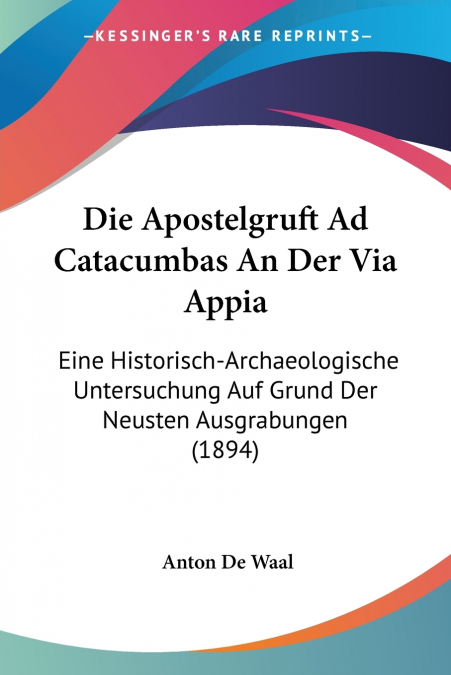
Valeria, Oder Der Triumphzug Aus Den Katakomben, subtitled Historische Erzaehlung (Historical Narrative), by Anton De Waal, transports the reader to the heart of early Christian Rome. Published in 1884, this compelling historical fiction vividly portrays the trials and triumphs of Valeria, a young woman navigating the perils of a society resistant to the burgeoning Christian faith. De Waal masterfully recreates the atmosphere of the Roman catacombs, where early Christians sought refuge from persecution. The narrative explores themes of faith, resilience, and the enduring power of belief in the face of adversity. Through Valeria’s experiences, the reader gains insight into the challenges and spiritual fortitude of those who laid the foundation for Christianity. This historical account offers a glimpse into a pivotal era, making it a valuable read for those interested in both historical fiction and the history of Christianity.This work has been selected by scholars as being culturally important, and is part of the knowledge base of civilization as we know it. This work was reproduced from the original artifact, and remains as true to the original work as possible. Therefore, you will see the original copyright references, library stamps (as most of these works have been housed in our most important libraries around the world), and other notations in the work.This work is in the public domain in the United States of America, and possibly other nations. Within the United States, you may freely copy and distribute this work, as no entity (individual or corporate) has a copyright on the body of the work.As a reproduction of a historical artifact, this work may contain missing or blurred pages, poor pictures, errant marks, etc. Scholars believe, and we concur, that this work is important enough to be preserved, reproduced, and made generally available to the public. We appreciate your support of the preservation process, and thank you for being an important part of keeping this knowledge alive and relevant.