 Librería Samer Atenea
 Kálamo Books
 Librería Elías (Asturias)
 Librería Kolima (Madrid)
 Librería Proteo (Málaga)
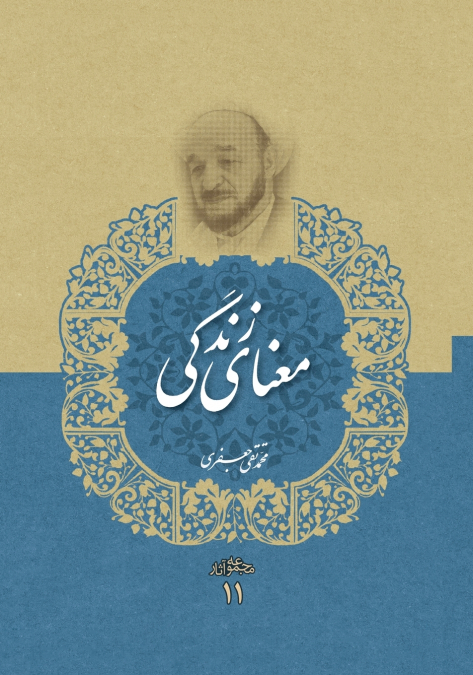
In truth, life begins with definition and ends within it. For this reason, the number of definitions given to life is infinite-in a word, there are as many definitions of life as there are lives lived. Moreover, no individual’s definition remains static; it expands and shifts with every new circumstance, every positive or negative turn, and every minor or monumental event.Indeed, just as humanity is astonishing and existence remains submerged in mystery, grandeur, and the unseen, life is equally saturated with unspoken, undiscovered elements. It is entirely natural, rooted in the very essence of life, that thinkers, philosophers, artists, and scholars of every era continually renew their perspectives, definitions, and demarcations of its scope.None of these perspectives-whether ordinary, rational, profound, mystical, teleological, poetic, or nihilistic-view life from the outside. Rather, each operates like an eye gazing upon itself. This is one of life’s enduring truths: it never steps outside itself, it never hollows itself out, and it can never proceed without purpose and philosophy. This work opens by defining purpose and existence, progressing through the diverse motivations behind the fundamental inquiry into life itself.What is the ideal of life? The ideal of life is to live an ideal life. Rarely are two concepts so intrinsically intertwined as 'life' and the 'ideal.' Life seeks the ideal, and the ideal summons life-a sublime reality that has long remained unaddressed across the pages devoted to human existence.In short, life is itself an ideal, and the ultimate pursuit can be stated simply: the ideal life is a conscious striving, guided by personality, originating in eternity, passing through the infinite, and aiming for eternity as its ultimate perfection. This perspective, preserved across history, emerges anew here, reflecting the vantage point from which Ostad Mohammad-Taqi Ja’fari observed human existence. Having identified life’s ideal within an ideal life, he asserted that this definition, across its various dimensions, can offer every individual and society a genuine path toward fulfillment.Another profound, widely recognized cornerstone of Allameh Ja’fari’s philosophical framework is his theory of Hayat-e Ma’qul (The Reasonable Life). Far beyond an abstract hypothesis, his rigorous expositions developed this concept into a mature, systematic theory. The Reasonable Life serves as an ongoing intellectual movement seeking to reconnect human existence with the cosmos through vitality, reason, and rationality. Formulated in his later years, this central thesis first appeared in the second volume of his Translation and Interpretation of the Nahj al-Balaghah and is notably absent from his earlier commentary on Rumi’s Masnavi.This volume-representing the eleventh collection of Ostad Mohammad-Taqi Ja’fari’s collected works-brings together several key texts, including The Ideal of Life and the Ideal Life, The Philosophy and Purpose of Life, and The Reasonable Life, originally published as standalone works across the 1960s, 1970s, and 1980s. It also incorporates distinct chapters on 'Means and Ends of Life' and 'Martyrdom,' drawn from Volumes 1 and 6 of his commentary on Nahj al-Balaghah. Additionally, given its vital connection to the broader discourse on existence, his critical discussion on 'Death,' originally published in Volume 8 of his commentary on the Masnavi, has been included in the concluding sections.