
Utilitarianism

Utilitarianism

John Stuart Mill

8,89 €
IVA incluido
Disponible
Editorial:
Brian Westland
Año de edición:
2023
Materia
Ética y filosofía moral
ISBN:
9781774419793
8,89 €
IVA incluido
Disponible

Selecciona una librería:

  • Librería Samer Atenea
  • Librería Aciertas (Toledo)
  • Kálamo Books
  • Librería Perelló (Valencia)
  • Librería Elías (Asturias)
  • Donde los libros
  • Librería Kolima (Madrid)
  • Librería Proteo (Málaga)

John Stuart Mill’s book Utilitarianism is a classic exposition and defence of utilitarianism in ethics. The essay first appeared as a series of three articles published in Fraser’s Magazine in 1861 (vol. 64, p. 391-406, 525-534, 659-673); the articles were collected and reprinted as a single book in 1863. Mill’s aim in the book is to explain what utilitarianism is, to show why it is the best theory of ethics, and to defend it against a wide range of criticisms and misunderstandings. Though heavily criticized both in Mill’s lifetime and in the years since, Utilitarianism did a great deal to popularize utilitarian ethics and has been considered 'the most influential philosophical articulation of a liberal humanistic morality that was produced in the nineteenth century.Mill took many elements of his version of utilitarianism from Jeremy Bentham, the great nineteenth-century legal reformer, who along with William Paley were the two most influential English utilitarians prior to Mill. Like Bentham, Mill believed that happiness (or pleasure, which both Bentham and Mill equated with happiness) was the only thing humans do and should desire for its own sake. Since happiness is the only intrinsic good, and since more happiness is preferable to less, the goal of the ethical life is to maximize happiness. This is what Bentham and Mill call 'the principle of utility' or 'the greatest-happiness principle.' Both Bentham and Mill thus endorse 'classical' or 'hedonistic' forms of utilitarianism. More recent utilitarians often deny that happiness is the sole intrinsic good, arguing that a variety of values and consequences should be considered in ethical decision making.[4]Although Mill agreed with Bentham about many of the foundational principles of ethics, he also had some major disagreements. In particular, Mill tried to develop a more refined form of utilitarianism that would harmonize better with ordinary morality and highlight the importance in the ethical life of intellectual pleasures, self-development, high ideals of character, and conventional moral rules.

Artículos relacionados

  • Ka Ab Ba Building The Lighted Temple
    Dr Terri R. Nelson / Dr Terri RNelson
    The book KaAbBa Building The Lighted Temple/Metaphysical Keys to the Tree of Life draws a circle that is inclusive of the Afrikan origin of the Ancient Kemetic/Egyptian wisdom. It reveals the undeniable root and link of Ancient Africa to all the religious systems that would develop worldwide. This book is explosive in its power to convey the meaning of KaAbBa, the Medu Neter  (...
    Disponible

    37,41 €

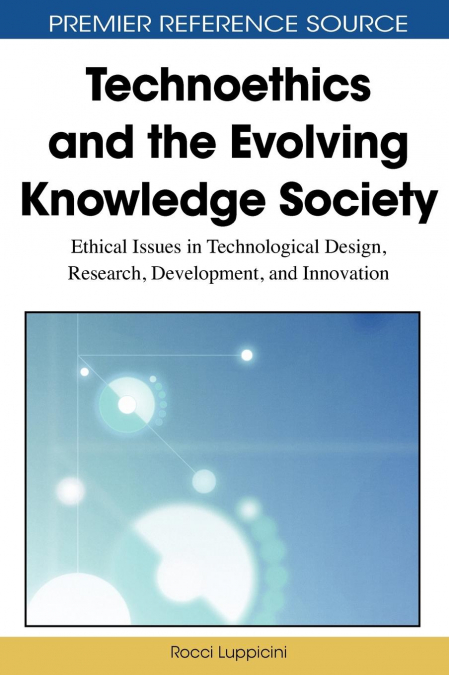
  • Technoethics and the Evolving Knowledge Society
    Rocci Luppicini
    Recently, there has been a major push to rediscover the ethical dimension of technology across the sciences, social sciences, and humanities. Technoethics and the Evolving Knowledge Society: Ethical Issues in Technological Design, Research, Development, and Innovation examines human processes and practices connected to technology embedded within social, political, and moral sph...
  • Kant
    Immanuel Kant
    Kant’s Groundwork of the Metaphysics of Morals is one of the most important works in modern moral philosophy. It belongs beside Plato, Aristotle, Machiavelli, and Hobbes. Here Kant sets out to articulate and defend the Categorical Imperative - the fundamental principle that underlies moral reasoning - and to lay the foundation for a comprehensive account of justice and human vi...
  • On the Duty of Civil Disobedience
    HENRY DAVID THOREAU
    Civil Disobedience argues that citizens should not permit their governments to overrule their consciences, and that they have a duty to avoid allowing their acquiescence to enable the government to make them the agents of injustice. Thoreau was motivated in part by his disgust with slavery and the Mexican-American War, but the sentiments he expresses here are just as pertinent ...
  • Beyond Good and Evil
    Friedrich Nietzsche
    Nietzsche, though primarily a philosopher, wrote widely on art, philology, history, religion, tragedy, culture, and science.  In 1886, at the height of his powers, he published Beyond Good and Evil.  Here he examines much of the best of human thought--dogmatic philosophy, Judeo-Christian morality, science and democracy – and finds it lacking.  Rejecting “slave-morality” he pres...
  • Beyond Good and Evil
    Friedrich Nietzsche
    Nietzsche, though primarily a philosopher, wrote widely on art, philology, history, religion, tragedy, culture, and science.  In 1886, at the height of his powers, he published Beyond Good and Evil.  Here he examines much of the best of human thought--dogmatic philosophy, Judeo-Christian morality, science and democracy – and finds it lacking.  Rejecting “slave-morality” he pres...
    Disponible

    9,99 €

Otros libros del autor

  • On Liberty
    John Stuart MILL
    The subject of this Essay is not the so-called Liberty of the Will, so unfortunately opposed to the misnamed doctrine of Philosophical Necessity; but Civil, or Social Liberty: the nature and limits of the power which can be legitimately exercised by society over the individual. A question seldom stated, and hardly ever discussed, in general terms, but which profoundly influence...
  • Utilitarianism
    John Stuart Mill
    In John Stuart Mill's classic restatement of the utilitarianism of Jeremy Bentham, he continued a philosophical perspective that continues to be appolied to this day. The 'principle of utility', otherwise known as 'the greatest happiness principle' has surfaced over and over again throughout history since then, and has often been the basis for important publ...
    Disponible

    11,07 €

  • On Liberty
    JOHN STUART MILL
    On Liberty is John Stuart Mill’s elegant defense of personal freedom in a world that loves to tell people what’s 'good for them.' His core idea is the harm principle: society may limit an individual’s actions only to prevent harm to others, not to enforce morality, tradition, or majority opinion.Mill argues that free speech-even offensive or unpopular speech-is vital, because s...
    Disponible

    14,19 €

  • On Liberty
    JOHN STUART MILL
    On Liberty is John Stuart Mill’s elegant defense of personal freedom in a world that loves to tell people what’s 'good for them.' His core idea is the harm principle: society may limit an individual’s actions only to prevent harm to others, not to enforce morality, tradition, or majority opinion.Mill argues that free speech-even offensive or unpopular speech-is vital, because s...
  • The Contest in America
    John Stuart Mill
    Dive into the heart of 19th-century America with 'The Contest in America,' a powerful exploration of the political and social conflicts that shaped a nation. This compelling narrative, now republished by Alpha Editions after decades in obscurity, invites readers to witness the intense struggles that defined an era. At its core, the book delves into the political drama and cultu...
    Disponible

    12,48 €

  • Elementos de economía política
    John Stuart Mill
    ¿Por qué debo leer este libro? ¡Sencillo! Porque te enseña cómo se produce la riqueza, no con fórmulas, sino con lógica impecable. Además, plantea que la economía no es un fin en sí misma, sino una herramienta para mejorar la vida humana. ¿Qué es el capital y cómo se forma? ¿Por qué la libertad económica sin justicia puede perpetuar la miseria? ¿Qué papel juegan la educación, e...
    Disponible

    5,51 €