Inicio > Humanidades > Historia > Historia: primitiva hasta la actualidad > Historia antigua: hasta c. 500 e. c. > Úrsidos en medios kársticos de la Cornisa Cantábrica (País Vasco y Navarra)
Úrsidos en medios kársticos de la Cornisa Cantábrica (País Vasco y Navarra)

Úrsidos en medios kársticos de la Cornisa Cantábrica (País Vasco y Navarra)

Aritza Villaluenga Martínez

154,41 €
IVA incluido
Disponible
Editorial:
British Archaeological Reports (Oxford) Ltd
Año de edición:
2016
Materia
Historia antigua: hasta c. 500 e. c.
ISBN:
9781407315485
154,41 €
IVA incluido
Disponible

Selecciona una librería:

  • Librería Samer Atenea
  • Librería Aciertas (Toledo)
  • Kálamo Books
  • Librería Perelló (Valencia)
  • Librería Elías (Asturias)
  • Donde los libros
  • Librería Kolima (Madrid)
  • Librería Proteo (Málaga)

This monograph develops a zooarchaeological and taphonomic study of four archaeological sites (Lezetxiki, Astigarragako Kobea, Labeko Koba and Ekain) and two paleontological caves (Muniziaga and Illobi) located in the eastern sector of the Cantabrian Corniche (Basque Country and Navarre). These sites are characterized by alternating occupations by bears (Ursus spelaeus and Ursus arctos), carnivores and human beings during the Upper Pleistocene and early Holocene. The study also demonstrates the existence of intense competition for the occupation of the caves until the early Upper Paleolithic period, when modern humans displaced the bears and carnivores.En esta monografía incluye en análisis arqueozoológico y tafonómico de cuatro sitios arqueológicos (Lezetxiki, Astigarragako Kobea, Labeko Koba and Ekain) y dos cavidades paleontológicas (Muniziaga e Illobi) situadas en el sector oriental de la Cornisa Cantábrica (País Vasco y Navarra). Estos sitios se caracterizan por la existencia de ocupaciones alternantes entre osos (Ursus spelaeus y Ursus arctos), carnívoros y humanos durante el Pleistoceno Superior y Holoceno reciente. Este trabajo ha demostrado la existencia de una intensa competición en la ocupación de las cavidades, sólo durante el Paleolítico Superior Inicial los seres humanos modernos desplazaron a osos y carnívoros de aquellas cuevas por ellos ocupadas. Dans le cadre de cette monographie, nous avons procédé à une étude archéozoologique et taphonomique des ensembles d’ossements provenant de quatre grottes (Lezetxiki, Astigarragako Kobea, Labeko Koba and Ekain) et deux gouffres (Muniziaga et Illobi) situés dans la zone orientale de la Corniche Cantabrique (Pays Basque et Navarre). Ces sites présentent des occupations alternantes entre ours (Ursus spelaeus et Ursus arctos), des carnivores et des groupes humains pendant le Pléistocène Supérieur et Holocène récent. Ce travail a démontré l’existence d’une concurrence intense dans l’occupation des cavités, seulement pendant le Paléolithique supérieur les humains modernes déplacé les ours et carnivores de les grottes par eux occupées. 
Artículos relacionados

  • Iron Age Societies in the Severn-Cotswolds
    Tom Moore
    The central theme of this study is an examination of the processes of change in Iron Age social organisation and identity on a regional scale using the Severn-Cotswolds area in England as a case study. It aims to provide a coherent narrative of the period in the region based on the wealth of current data now available, providing a basic storyboard against which future studies c...
    Disponible

    144,57 €

  • Somewhere Beyond The Sea Les îles bretonnes (France)
    The Seminar on the Archaeology of Western France, which focused on the islands of Brittany, was held on 1 April 2014 at the University of Rennes 1. The desire to organize this seminar arose spontaneously from the dynamism which currently animates archaeological research on island spaces of the western seaboard of France. Indeed, the seminar took place during a pivotal period of...
    Disponible

    86,11 €

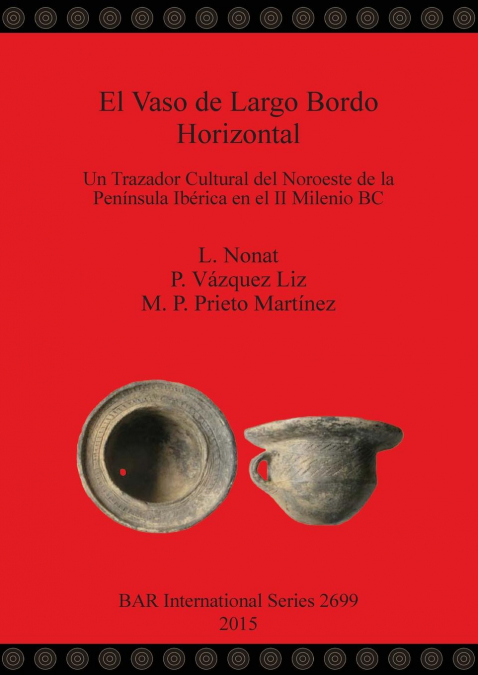
  • El Vaso de Largo Bordo Horizontal
    L. Nonat / LNonat / M. P. Prieto Martínez / MPPrieto Martínez / P. Vázquez Liz / PVázquez Liz
    In this paper the authors study a specific type of pottery from the northwest Iberian Peninsula, known as the Wide Horizontal Rim (WHR) vessel. One of its distinctive aspects is precisely the fact that it is exclusively found in this region, which now comprises the Spanish region of Galicia and northern Portugal, as far south as the River Duero. This type of pottery, of which t...
    Disponible

    115,71 €

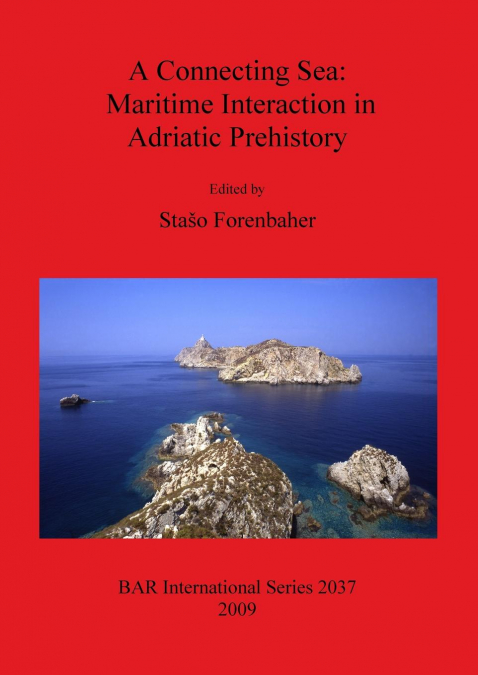
  • A Connecting Sea
    Stašo Forenbaher
    This book includes papers stemming from a session at the EAA conference held in Zadar in September 2007.                          ...
    Disponible

    79,97 €

  • The Roman Pottery Production Site at Wickham Barn, Chiltington, East Sussex
    Chris Butler / Malcolm Lyne
    The excavations undertaken at Chiltington in East Sussex revealed two Roman pottery kilns, as well as remains from prehistory and from medieval period.The kilns are well documented, and all the finds were examined and catalogued. Three phases were identified. The pottery produced on the site indicate a strong New Forest influence. ...
    Disponible

    55,62 €

  • Kurgans, Ritual Sites, and Settlements
    Edited by: Jeannine Davis-Kimball, Eileen M. Murphy, Ludmila Koryakova and Leonid T. YablonskyThis richly illustrated volume adds immensely to the small but growing corpus of Eurasian Archaeology published in the English language. Comprised of thirty articles, the authors have focused on the Bronze Age, continuing to include the first millennium BC Early Iron Age, with a termin...
    Disponible

    158,26 €