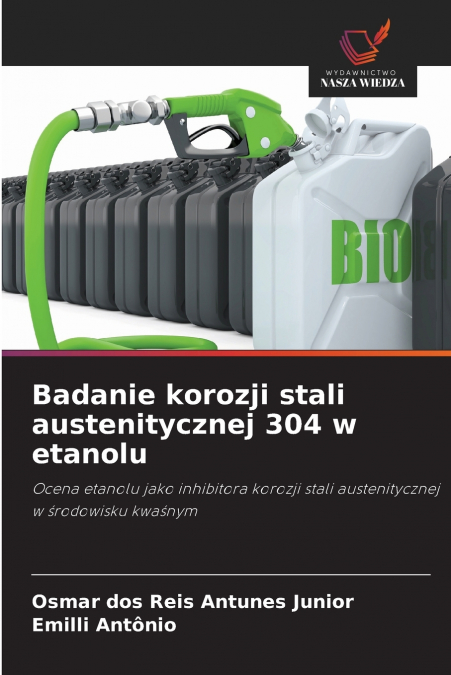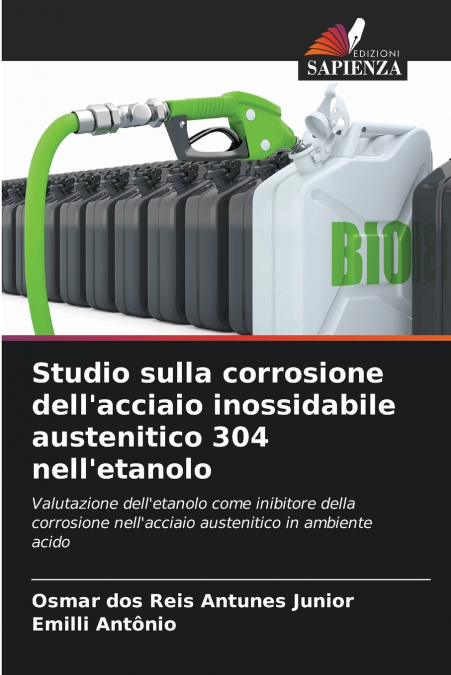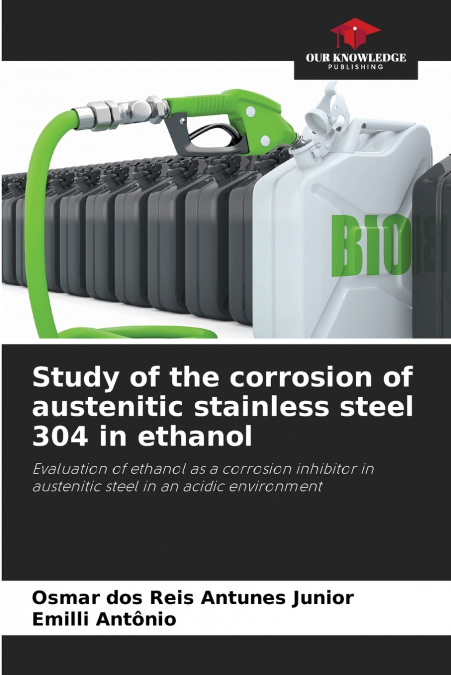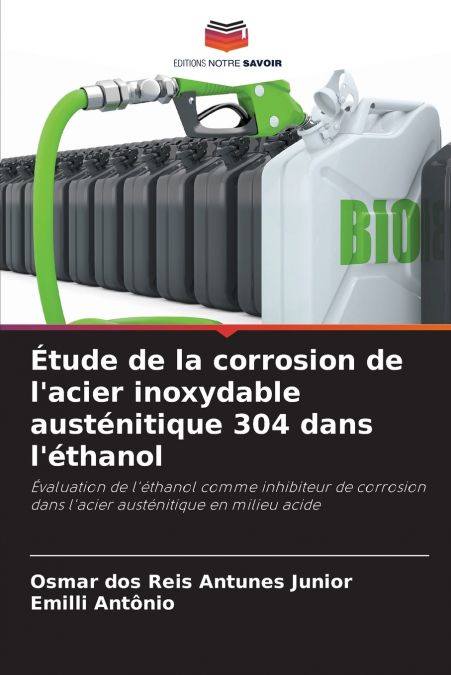
Inicio > Matemáticas y ciencia > Química > Untersuchung der Korrosion von austenitischem Edelstahl 304 in Ethanol
Untersuchung der Korrosion von austenitischem Edelstahl 304 in Ethanol

Untersuchung der Korrosion von austenitischem Edelstahl 304 in Ethanol

Emilli Antônio / Osmar dos Reis Antunes Junior

59,21 €
IVA incluido
Disponible
Editorial:
KS OmniScriptum Publishing
Año de edición:
2025
Materia
Química
ISBN:
9786209113802
59,21 €
IVA incluido
Disponible

Selecciona una librería:

  • Librería Samer Atenea
  • Librería Aciertas (Toledo)
  • Kálamo Books
  • Librería Perelló (Valencia)
  • Librería Elías (Asturias)
  • Donde los libros
  • Librería Kolima (Madrid)
  • Librería Proteo (Málaga)

Das wichtigste Nebenprodukt, das bei der Synthese von Biodiesel entsteht, ist Glycerin. Durch den Einsatz von Mikroorganismen bei der Zersetzung von Glycerin kann ein Biokraftstoff der zweiten Generation, Ethanol, gewonnen werden. Dieser Alkohol kann als Korrosionsinhibitor für Eisenlegierungen verwendet werden. Das in der Arbeit verwendete Ethanol wurde durch mikrobiologische Fermentation von Glycerin durch Eschericchia coli in einem Kulturmedium aus Dextrose, Pepton, Tryptose und Laktose hergestellt. Die folgenden elektrochemischen Techniken wurden für die Korrosionsuntersuchungen verwendet: Open-Circuit-Potential-Tests (ECA), elektrochemische Impedanzspektroskopie (EIS), anodische (PPA) und kathodische (PPC) Potentiodynamik, elektrische Leitfähigkeit und optische Mikroskopie (OM).


Artículos relacionados

  • Suzuki-Miyaura Cross-Coupling Reaction and Potential Applications
    Suzuki–Miyaura cross-coupling remains a powerful tool in organic synthesis for C–C bond formation and has various industrial applications, for example, the synthesis of pharmaceuticals and materials. Intensive research efforts are being made into finding ways of improving and expanding the scope of this process, and the development of more efficient catalytic systems for this e...
    Disponible

    67,89 €

  • Catalysis for Low Temperature Fuel Cells
    Today, the development of active and stable catalysts still represents a challenge to overcome in the research field of low temperature fuel cells. Operation at low temperatures demands the utilization of highly active catalysts to reduce the activation energy of the electrochemical reactions involved at the electrodes, and thus obtain practical performances and high efficienci...
    Disponible

    59,74 €

  • Trends in Microextraction Techniques for Sample Preparation
    Micro-extraction techniques in sample preparation are gaining interest among analytical chemists as they comply with green analytical chemistry demands and ensure environmental protection and public safety. Savings in cost and time are considered as valuable benefits by using novel micro-extraction approaches in sample handling. Selectivity, sensitivity and lower detection limi...
    Disponible

    59,87 €

  • Advances and Applications of Nano-antimicrobial Treatments
    Nowadays, great concerns are associated with the resistance demonstrated by many microorganisms towards the conventional antibiotic therapies. The failure of traditional antimicrobials, and the increasing healthcare costs, have encouraged scientific research and the development of novel antimicrobial agents. Particularly, there is a great deal of interest in nanotechnologies an...
    Disponible

    51,68 €

  • Handbook of Research on Uncovering New Methods for Ecosystem Management through Bioremediation
    Kajal Srivastava / Shivom Singh
    Maintaining and preserving the environment is a crucial consideration in an era where climate change and rising sea levels are common knowledge. It is important for researchers and developers alike to explore potential solutions for a steadily warming world. The Handbook of Research on Uncovering New Methods for Ecosystem Management through Bioremediation focuses on the agricul...
  • Structural Design and Properties of Coordination Polymers
    The assembly of organic ligands and metal centres yields coordination polymers, many of which find applications in conductivity, catalysis, magnetism, gas sorption, biological sensing and luminescence. The structure and topology of coordination polymers may be manipulated by changing the reaction conditions, leading to a large variety of structurally and topologically unique pr...
    Disponible

    43,77 €

Otros libros del autor

  • Badanie korozji stali austenitycznej 304 w etanolu
    Emilli Antônio / Osmar dos Reis Antunes Junior
    Głównym produktem ubocznym otrzymywanym podczas syntezy biodiesla jest glicerol. Wykorzystując mikroorganizmy do rozkładu glicerolu, można uzyskać biopaliwo drugiej generacji, czyli etanol. Alkohol ten może być stosowany jako inhibitor korozji stopów żelaza. Etanol wykorzystany w pracy został wyprodukowany w wyniku mikrobiologicznej fermentacji glicerolu przez Eschericchia coli...
    Disponible

    59,14 €

  • Studio sulla corrosione dell’acciaio inossidabile austenitico 304 nell’etanolo
    Emilli Antônio / Osmar dos Reis Antunes Junior
    Il principale coprodotto ottenuto dalla sintesi del biodiesel è il glicerolo. Utilizzando microrganismi nella decomposizione del glicerolo, è possibile ottenere un biocarburante di seconda generazione, l’etanolo. Questo alcool può essere utilizzato come inibitore di corrosione per leghe ferrose. L’etanolo utilizzato nel lavoro è stato prodotto dalla fermentazione microbiologica...
    Disponible

    59,14 €

  • Study of the corrosion of austenitic stainless steel 304 in ethanol
    Emilli Antônio / Osmar dos Reis Antunes Junior
    The main co-product obtained in biodiesel synthesis is glycerol. By using microorganisms to break down glycerol, a second-generation biofuel, ethanol, can be obtained. This alcohol can be used as a corrosion inhibitor for ferrous alloys. The ethanol used in this study was produced by the microbiological fermentation of glycerol by Eschericchia coli in a culture medium of dextro...
    Disponible

    59,14 €

  • Étude de la corrosion de l’acier inoxydable austénitique 304 dans l’éthanol
    Emilli Antônio / Osmar dos Reis Antunes Junior
    Le principal coproduit obtenu lors de la synthèse du biodiesel est le glycérol. En utilisant des micro-organismes pour décomposer le glycérol, on peut obtenir un biocarburant de deuxième génération, l’éthanol. Cet alcool peut être utilisé comme inhibiteur de corrosion pour les alliages ferreux. L’éthanol utilisé dans ce travail a été produit par fermentation microbiologique du ...
    Disponible

    59,21 €