
Inicio > Sociedad y ciencias sociales > Política y gobierno > United States’ reactions after the raising of the Berlin Wall
United States’ reactions after the raising of the Berlin Wall

United States’ reactions after the raising of the Berlin Wall

Patrick Buck

22,22 €
IVA incluido
Disponible
Editorial:
GRIN Verlag
Año de edición:
2013
Materia
Política y gobierno
ISBN:
9783656449560
22,22 €
IVA incluido
Disponible

Selecciona una librería:

  • Librería Samer Atenea
  • Librería Aciertas (Toledo)
  • Kálamo Books
  • Librería Perelló (Valencia)
  • Librería Elías (Asturias)
  • Donde los libros
  • Librería Kolima (Madrid)
  • Librería Proteo (Málaga)

Seminar paper from the year 2006 in the subject Politics - Region: USA, grade: 2, University of Wyoming (Political Science), course: Psychology of war and conflicts, language: English, abstract: The United States of America under President John F. Kennedy showed almost no military reaction after the raising of the Berlin Wall. They sent more troops together with Vice President Lyndon B. Johnson to West Berlin, but there was no intention to reopen the border. Instead the US Government tried to get into negotiations with the Soviet Union about the status of West Berlin. This decision avoided transforming the Cold War into a Hot War, but it also manifested the separation of East and West Germany and made the unification in the near future less likely. The decision helped to establish another socialist state in Europe and locked up 17 million Germans within the borders of East Germany.This paper will focus on the question why President Kennedy and his main advisers decided the way they did. Did they fear the military strength and the use of the Soviet nuclear arsenal? Or did they think they could reach better results by negotiating? Or did they just trade the eastern part of Germany against a secure status quo for West Berlin? Maybe the situation was seen more as a chance for stability than as a threat?The basic information for this research will come from the Digital National Security Archive. The original documents should show who gave information to President Kennedy and his advisers. Who were the talking heads during the decision-making process? Who had the most influence? Was it only an inner-American process or were other allies involved, too?An interesting question is, if there is a change between the evaluation of the situation before and after the raising of the Berlin Wall. So this research will compare some documents before and after the crisis.
Artículos relacionados

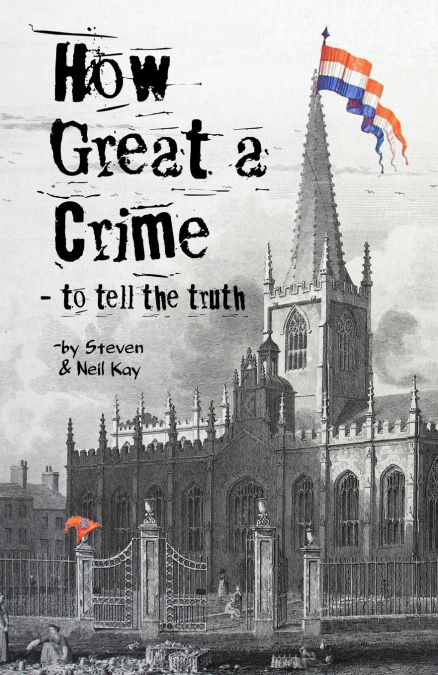
  • How Great a Crime - to tell the truth
    Neil Kay / Steven Kay
    Joseph Gales was one of the all-time great Sheffielders – forget Joe Cocker, Jessica Ennis-Hill, Sean Bean or Michael Palin. These are all minnows compared to Joseph Gales – and their stories are boring besides that of the Galeses. The Galeses story has been forgotten and has not been brought together in one place before – it is not just something dredged up from history – an i...
    Disponible

    10,33 €

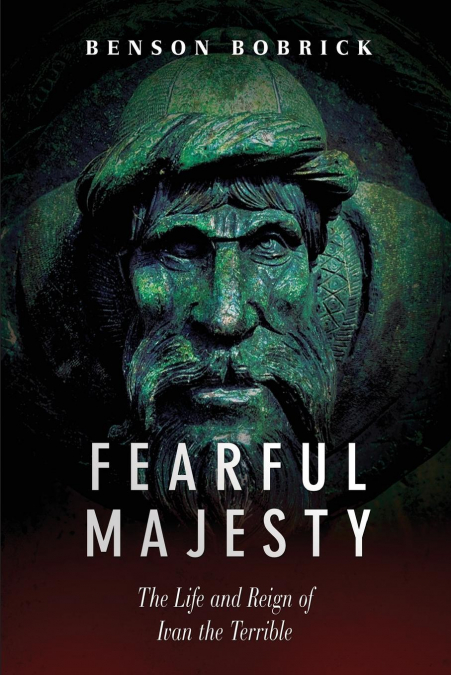
  • Fearful Majesty
    Benson Bobrick
    Ivan the Terrible - the name evokes the legend of a cruel and dangerously insane tyrant. Fearful Majesty explores that legend and exposes the man, his nature, and his time.This acclaimed biography of one of Russia’s most important and tyrannical rulers is not only a rich, readable biography, it is also surprisingly timely, revealing how many of the issues Russia faces today hav...
    Disponible

    19,27 €

  • Economic Optimization of Innovation & Risk
    Robert Shuler
    A Theory of Crash Rate for Private & Public Projects with Critical or non-Critical systems.Analyzing & managing risk has been a quest for 5000 years, and is essential to everything from water supplies, finance, and agriculture to computers and space travel. At last there is a quantitative theory and a simple equation that allows you to: - choose your failure rate - get there...
    Disponible

    13,02 €

  • The System
    Lincoln Steffens
    The 'muckraker' Lincoln Steffens dug deep into business criminality and political corruption in a powerful series of articles written for McClure's magazine. Establishment newspapers and 'System' politicians dismissed his work as just another example of the decrepit modern journalism that could never pass for genuine writing. But Steffens' dogged quest for truth and justice set...
    Disponible

    23,66 €

  • Digital Activism in Asia Reader
    The digital turn might as well be marked as an Asian turn. From flash-mobs in Taiwan to feminist mobilisations in India, from hybrid media strategies of Syrian activists to cultural protests in Thailand, we see the emergence of political acts that transform the citizen from being a beneficiary of change to becoming an agent of change. In co-shaping these changes, what the digit...
    Disponible

    22,19 €

  • The New Freedom
    Woodrow Wilson
    In 1912, Woodrow Wilson was the Democratic nominee for President of the United States. He campaigned against the Republican incumbent, William Howard Taft, and Taft’s predecessor, Theodore Roosevelt, who had split off from the Republican Party to form his own Progressive, or Bull Moose, Party. Much of the campaign focused on the US economy, particularly the candidates’ views of...
    Disponible

    8,67 €

Otros libros del autor

  • The presidency of Gerald Ford
    Patrick Buck
    Seminar paper from the year 2006 in the subject Politics - Region: USA, grade: 2, University of Wyoming (Political Science), language: English, abstract: Gerald Ford came to the Presidency very surprisingly. Before and after Richard Nixon’s resignation following the Watergate affair, he did not have a lot of time to create his own policies or structure his own administration wi...
    Disponible

    17,41 €