

 Librería Samer Atenea
 Kálamo Books
 Librería Elías (Asturias)
 Librería Kolima (Madrid)
 Librería Proteo (Málaga)
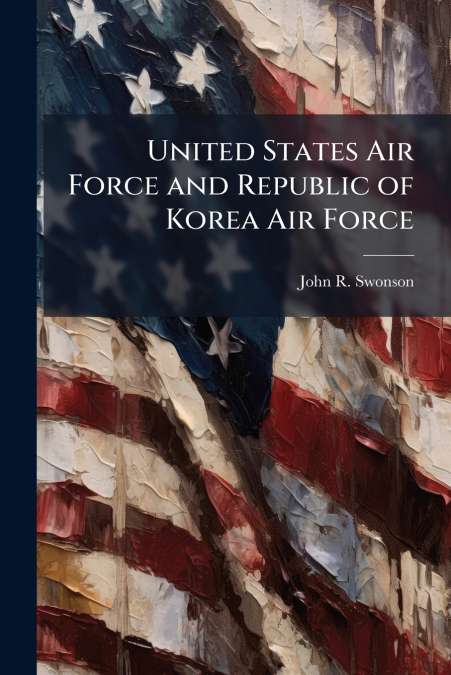
This study investigates the feasibility of combining the daily training schedules of United States Air Force units and Republic of Korea Air Force units. The combined Air Component Command’s plan for future hostilities in the Korean theater call for both air forces to work together in combined operations on the very first day of the campaign. The training each air force does to prepare for this eventuality is similar in many respects, but because of long standing beliefs the two have, they rarely trained together. The two training syllabi were compared to highlight the similarities and differences. Staff interviews were conducted to provide service and cultural related perceptions to clarify research questions. This study concludes that near-term combined training is feasible, however, only on a limited basis. In-depth, long-term training programs can be developed as the cultural barriers are broken down, which is what this study promotes.This work has been selected by scholars as being culturally important, and is part of the knowledge base of civilization as we know it. This work was reproduced from the original artifact, and remains as true to the original work as possible. Therefore, you will see the original copyright references, library stamps (as most of these works have been housed in our most important libraries around the world), and other notations in the work.This work is in the public domain in the United States of America, and possibly other nations. Within the United States, you may freely copy and distribute this work, as no entity (individual or corporate) has a copyright on the body of the work.As a reproduction of a historical artifact, this work may contain missing or blurred pages, poor pictures, errant marks, etc. Scholars believe, and we concur, that this work is important enough to be preserved, reproduced, and made generally available to the public. We appreciate your support of the preservation process, and thank you for being an important part of keeping this knowledge alive and relevant.





