

 Librería Samer Atenea
 Kálamo Books
 Librería Elías (Asturias)
 Librería Kolima (Madrid)
 Librería Proteo (Málaga)
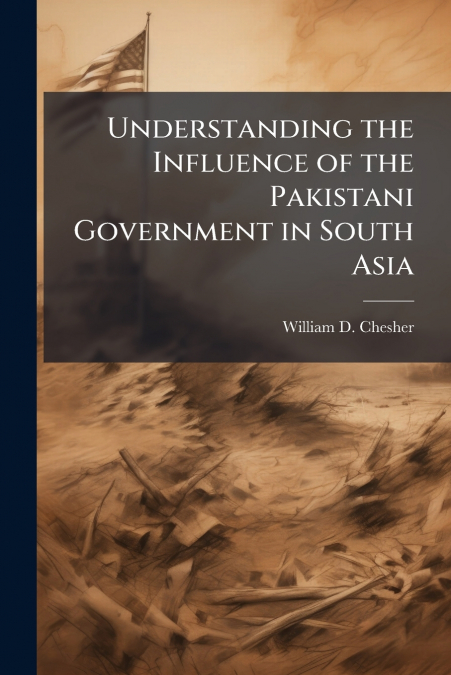
This monograph will explore the origins of the Islamic fundamentalist movement in South Asia that can be traced back to the Islamization program during the Zia ul Haq regime in Pakistan. Since 1947, Pakistan’s early political administrations were characterized by a failure of governance, resulting in five failed regimes in twenty years. The political turmoil from Iskander Mirza’s presidency in 1957 through the Zulfiqar Ali Bhutto regime ending in 1977 prompted the military to assume the role of the guardian of the Muslim State. Equally as important to understanding Pakistan’s political and military relationship is that each of these regimes changed the Constitution of Pakistan, ensuring that political power was placed under the presidency, and by doing so, limited the authority of the provincial leadership. From these formative years, the Pakistani people experienced a series of failed regimes that ended in coups and created the perception that Pakistan’s government needed a military leader with complete control. The Zia ul Haq regime lasted from 1977 to 1988, and through its Islamization program, changed the human landscape in Pakistan. Under his rule, Zia’s Islamization program focused on bringing Islam into every aspect of Pakistani life. Through the implementation of the zagat (alms), and usher (taxes), Zia began to fund the madrassas throughout Pakistan. During the Soviet-Afghan War, Pakistan began to assist the Afghan Resistance Movement by supporting the mujahedeen. With funding from the United States and Saudi Arabia, Pakistan--through the Inter-Services Intelligence Agency (ISI)--supported the mujahedeen from the tribal areas along the border between Pakistan and Afghanistan. As a direct result of this support, the Islamization program created the conditions for militant Islam to flourish in the tribal areas by supporting the Islamic extremists with funding, religious desire, and the physical space to thrive within Pakistan. After Zia ul Haq’s regime endedThis work has been selected by scholars as being culturally important, and is part of the knowledge base of civilization as we know it. This work was reproduced from the original artifact, and remains as true to the original work as possible. Therefore, you will see the original copyright references, library stamps (as most of these works have been housed in our most important libraries around the world), and other notations in the work.This work is in the public domain in the United States of America, and possibly other nations. Within the United States, you may freely copy and distribute this work, as no entity (individual or corporate) has a copyright on the body of the work.As a reproduction of a historical artifact, this work may contain missing or blurred pages, poor pictures, errant marks, etc. Scholars believe, and we concur, that this work is important enough to be preserved, reproduced, and made generally available to the public. We appreciate your support of the preservation process, and thank you for being an important part of keeping this knowledge alive and relevant.





