 Librería Samer Atenea
 Kálamo Books
 Librería Elías (Asturias)
 Librería Kolima (Madrid)
 Librería Proteo (Málaga)
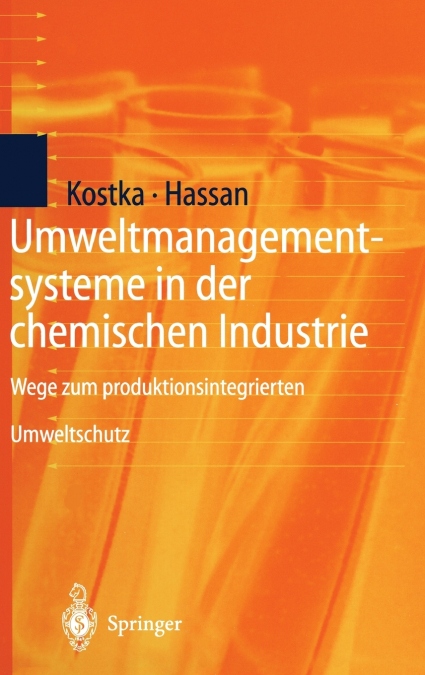
1. Die ökologische Herausforderung.- 1.1 Verschiedene Sichtweisen.- 1.2 Problem der Umweltbelastung und die Lösungsansätze.- 1.3 Interdisziplinäre Methodik.- 2. Umweltschutz in der chemischen Industrie.- 2.1 Chemische Industrie.- 2.1.1 Abgrenzung der Branche.- 2.1.2 Bedeutung der Branche.- 2.2 Umweltrelevante Rahmenbedingungen der chemischen Industrie.- 2.2.1 Einteilung der Rahmenbedingungen.- 2.2.2 Rechtliche Rahmenbedingungen.- 2.2.2.1 Einleitung.- 2.2.2.2 Bundes-Immissionsschutzgesetz.- 2.2.2.3 Wasserhaushaltsgesetz und Abwasserabgabegesetz.- 2.2.2.4 Kreislaufwirtschafts- und Abfallgesetz.- 2.2.2.5 Chemikaliengesetz.- 2.2.2.6 Umwelthaftungsgesetz.- 2.2.2.7 Beauftragtenorganisation für den Umweltschutz.- 2.2.3 Wirtschaftliche Rahmenbedingungen.- 2.2.4 Öko-toxikologische Rahmenbedingungen.- 2.2.5 Technische Rahmenbedingungen.- 2.2.6 Gesellschaftliche Rahmenbedingungen.- 2.3 Aufwand für den Umweltschutz in der chemischen Industrie.- 2.3.1 Abgrenzung der betrieblichen Umweltkosten.- 2.3.2 Investitions- und Betriebskosten.- 2.3.3 Organisatorischer Aufwand für den Umweltschutz.- 3. Produktionsintegrierter Umweltschutz und seine Beispiele in der chemischen Industrie.- 3.1 Produktionsbedingte Umweltproblematik der chemischen Industrie.- 3.1.1 Grundlagen chemischer Produktionsprozesse.- 3.1.2 Produktionsbedingte Umweltbelastung.- 3.2 Gliederung der technologischen Umweltschutzmaßnahmen.- 3.2.1 Additiver Umweltschutz.- 3.2.2 Integrierter Umweltschutz.- 3.2.3 Vergleichende Zusammenfassung.- 3.3 Methoden des produktionsintegrierten Umweltschutzes.- 3.3.1 Einleitung.- 3.3.2 Gestaltung des Produktionsprogramms.- 3.3.3 Chemische Forschung und Verfahrensentwicklung.- 3.3.4 Verfahrensauswahl.- 3.3.5 Optimierung chemischer Prozesse.- 3.4 Kriterien des produktionsintegrierten Umweltschutzes.- 3.5 Beispiele zum produktionsintegrierten Umweltschutz in der chemischen Industrie.- 3.5.1 Einleitung.- 3.5.2 Substitution der Syntheseroute von Ibuprofen.- 3.5.3 Optimierung der Syntheseroute von Etinol.- 3.5.4 Zeolite als Katalysatoren.- 3.5.5 Optimaler Reaktionsweg zur Synthese eines Zwischenproduktes von Vitamin E.- 3.5.6 DuPont-Oxidationsverfahren von n-Butan zur Herstellung von Maleinsäureanhydrid und Tetrahydrofuran.- 3.5.7 N-Methylpyrrolidon als alternatives Lösemittel.- 3.5.8 Fazit.- 4. Umweltmanagementsysteme in der chemischen Industrie.- 4.1 Managementsystemansatz.- 4.1.1 Funktionen des Managements.- 4.1.2 Begriffe und Aufgaben der betrieblichen Organisation.- 4.1.3 Managementmodelle.- 4.1.3.1 Sinn und Zweck von Managementmodellen.- 4.1.3.2 „Management-by'-Modelle.- 4.1.3.3 St. Gallener Managementmodell.- 4.1.3.4 Grundlagen der Managementsysteme.- 4.2 Qualitätsmanagementsysteme.- 4.2.1 Einleitung.- 4.2.2 Ausgangspunkte des Qualitätsmanagements.- 4.2.3 DIN ISO 9000er Normenreihe.- 4.2.4 Total Quality Management.- 4.2.5 Qualitätsmanagementsysteme in der chemischen Industrie.- 4.3 Grundlagen der Umweltmanagementsysteme.- 4.3.1 Historische Entwicklung.- 4.3.2 Ziele von Umweltmanagementsystemen.- 4.3.3 Elemente des Umweltmanagementsystems am Beispiel der EMAS.- 4.3.4 Responsible Care und die EMAS.- 4.3.5 Elemente des Umweltmanagementsystems am Beispiel der ISO 14001.- 4.3.6 Verknüpfung von Qualitäts-, Sicherheits- und Umweltmanagementsystemen in der chemischen Industrie.- 4.4 Aufbau und Implementierung von Umweltmanagementsystemen.- 4.4.1 Einleitung.- 4.4.2 Aufbauphase I: Projektanstoß.- 4.4.2.1 Vorstudie und erste Schritte.- 4.4.2.2 Festlegung der Umweltpolitik.- 4.4.2.3 Bildung einer Projektgruppe.- 4.4.2.4 Festlegung von Arbeitspaketen.- 4.4.3 Aufbauphase II: Umweltprüfung.- 4.4.3.1 Anforderungen.- 4.4.3.2 Vorgehensweise.- 4.4.3.3 Auswertung.- 4.4.4 Aufbauphase III: Umweltziele und -programm.- 4.4.5 Aufbauphase IV: Maßnahmenumsetzung.- 4.4.5.1 Festlegung der Organisationsstruktur.- 4.4.5.2 Schulung, Bewußtseinsbildung und Kompetenz.- 4.4.5.3 Notfallvorsorge.- 4.4.5.4 Dokumentation.- 4.4.6 Aufbauphase V: Maßnahmenüberprüf