Inicio > Tecnología, ingeniería, agricultura > Tecnología: cuestiones generales > Umsetzung des HACCP-Konzeptes in einem mittelständischen Lebensmittelunternehmen
Umsetzung des HACCP-Konzeptes in einem mittelständischen Lebensmittelunternehmen

Umsetzung des HACCP-Konzeptes in einem mittelständischen Lebensmittelunternehmen

Umsetzung des HACCP-Konzeptes in einem mittelständischen Lebensmittelunternehmen

Marion Kenkel

45,05 €
IVA incluido
Disponible
Editorial:
diplom.de
Año de edición:
1997
Materia
Tecnología: cuestiones generales
ISBN:
9783838601205
45,05 €
IVA incluido
Disponible

Selecciona una librería:

  • Librería Samer Atenea
  • Librería Aciertas (Toledo)
  • Kálamo Books
  • Librería Perelló (Valencia)
  • Librería Elías (Asturias)
  • Donde los libros
  • Librería Kolima (Madrid)
  • Librería Proteo (Málaga)

Inhaltsangabe:Problemstellung: Der Verkehr von Lebensmitteln im europäischen Binnenmarkt setzt voraus, daß international einheitliche Hygienestandards in der Lebensmittelwirtschaft festgelegt werden. Dadurch wird sichergestellt, daß die Gesundheit des Verbrauchers durch den Konsum eines Lebensmittels unabhängig von dessen Herstellungsort nicht beeinträchtigt wird. Im Interesse des Verbraucherschutzes wurden deshalb einheitliche Hygienerichtlinien für die Mitgliedstaaten der Europäischen Union entwickelt, die in der Richtlinie 93/43/EWG des Rates vom 14. Juni 1993 über Lebensmittelhygiene festgehalten sind. Diese Richtlinie enthält allgemeine Hygienevorschriften für Lebensmittel auf jeder Stufe des Herstellens, Behandelns und Inverkehrbringens und regelt die Überprüfung und Einhaltung dieser Vorschriften. Eine Umsetzung dieser Richtlinie in nationales Recht durch eine bundeseinheitliche 'Verordnung über Lebensmittelhygiene' (LMHV) hätte schon zum Ende 1995 erfolgen sollen. Nun soll nach dem Zeitplan des Bundesministeriums für Gesundheit die LMHV noch vor der Sommerpause 1997 veröffentlicht werden und innerhalb von sechs Monaten in Kraft treten. Die Lebensmittelunternehmen werden durch diese Verordnung verpflichtet, entsprechende Hygienevorschriften zu beachten und ein System zur Gefahrenbewertung, -identifizierung und -beherrschung analog den Grundsätzen des HACCP (Hazard Analysis and Critical Control Points)-Konzeptes umzusetzen. Betroffen sind hiervon alle Betriebe, die im Anschluß an die Urproduktion die Zubereitung, Herstellung, Verpackung, den Versand oder das Anbieten von Lebensmitteln vornehmen. Gang der Untersuchung: In dieser Arbeit wird an dem Beispiel eines Naturkosthersteller die Umsetzung eines HACCP-Konzeptes für einen mittelständischen Lebensmittelbetrieb aufgezeigt. Zunächst werden die theoretischen Grundlagen des Konzeptes entsprechend der Empfehlungen der Codex Alimentarius Kommission erläutert. Die zur Umsetzung des HACCP-Konzeptes in der Pr

Artículos relacionados

  • Science and the Big Issues of Our Time
    Martin Gellender
    Within the last few generations, our world has been shaped by technological change enabled by scientific advances. This is particularly evident to the 'baby boomer' generation, who have lived through and witnessed huge changes in society over the course of their lifetimes. Although many have little education in science, or have forgotten what they learned in high school, they u...
    Disponible

    26,58 €

  • Statics+++
    James W Dally / Robert J Bonenberger
    This textbook has been prepared to support a course offering for Statics at the University of Nevada at Reno.  Statics provides the first exposure of engineering students to the study of mechanics.  While Statics is a relatively simple subject, many students find it difficult, and they often perform far below our expectations.  In an effort to improve the curriculum, several me...
    Disponible

    101,22 €

  • Technical Writing, Presentational Skills, and Online Communication
    Raymond Greenlaw
    This book addresses four main topics: professional ethics, technical writing, presentation skills, and online writing. These topics are woven throughout the book and some of them are the main subjects of one or more chapters. The overarching theme of this book is to provide well-tested, best-practice techniques and strategies for main topic areas while focusing on information t...
  • Project Management Techniques and Innovations in Information Technology
    John Wang
    Managing cost, time, and quality of a project can be a challenging task for any project manager, but especially in times of an ever-changing and burgeoning field of IT. Project Management Techniques and Innovations in Information Technology offers a vital compendium of the latest research, case studies, best practices, and methodologies within the field of IT project management...
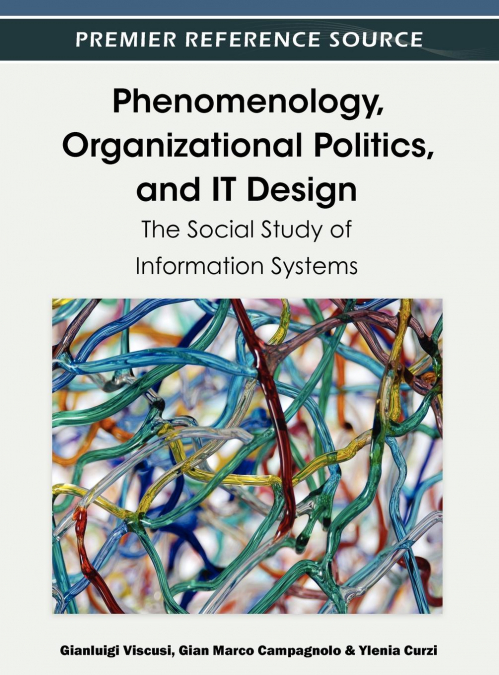
  • Phenomenology, Organizational Politics, and IT Design
    Information systems are researched, published on, and utilized as an extremely broad and vital sector of current technology development, usually studied from the scientific or technological viewpoints therein. Phenomenology, Organizational Politics, and IT Design: The Social Study of Information Systems offers a new look at the latest research and critical issues within the fie...
  • Geotechnical Applications for Earthquake Engineering
    Disaster preparedness and response management is a burgeoning field of technological research, and staying abreast of the latest developments within the field is a difficult task. Geotechnical Applications for Earthquake Engineering: Research Advancements has collected chapters from experts from around the world in a variety of applications, frameworks, and methodologies, and p...