 Librería Samer Atenea
 Kálamo Books
 Librería Elías (Asturias)
 Librería Kolima (Madrid)
 Librería Proteo (Málaga)
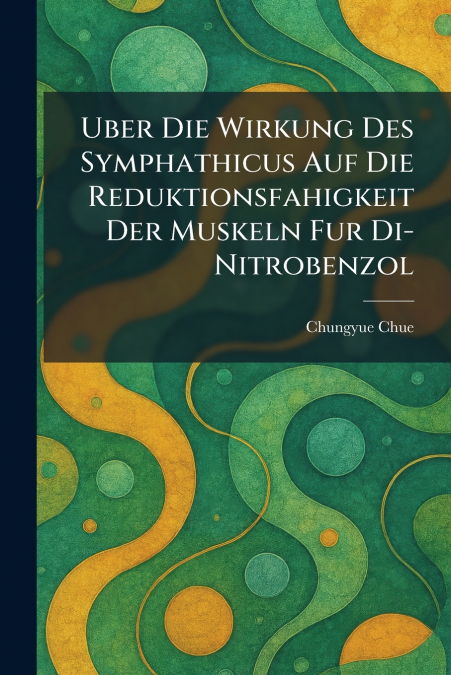
'Uber Die Wirkung Des Symphathicus Auf Die Reduktionsfahigkeit Der Muskeln Fur Di-Nitrobenzol' ist eine detaillierte physiologische Abhandlung, die die Rolle des sympathischen Nervensystems bei der Regulierung chemischer Prozesse im Muskelgewebe untersucht. Im Zentrum der Arbeit von Chungyue Chue steht die experimentelle Analyse, wie nervöse Impulse die Fähigkeit der Muskulatur beeinflussen, die organische Verbindung Di-Nitrobenzol zu reduzieren.Das Werk liefert fundierte Erkenntnisse über die funktionelle Verknüpfung von Neurologie und Zellstoffwechsel. Durch die systematische Beobachtung der Reduktionsvorgänge bietet der Autor eine wissenschaftliche Grundlage für das Verständnis der vegetativen Steuerung peripherer Organfunktionen. Die Studie beleuchtet komplexe biologische Mechanismen und trägt zum wissenschaftlichen Diskurs über die neurohumorale Regulation bei. Diese Arbeit ist von besonderem Interesse für Fachleute der Physiologie, der Neurowissenschaften sowie für Medizinhistoriker, die sich mit der Erforschung des autonomen Nervensystems im frühen 20. Jahrhundert beschäftigen.This work has been selected by scholars as being culturally important, and is part of the knowledge base of civilization as we know it. This work was reproduced from the original artifact, and remains as true to the original work as possible. Therefore, you may see the original copyright references, library stamps (as most of these works have been housed in our most important libraries around the world), and other notations in the work.This work is in the public domain in the United States of America, and possibly other nations. Within the United States, you may freely copy and distribute this work, as no entity (individual or corporate) has a copyright on the body of the work.As a reproduction of a historical artifact, this work may contain missing or blurred pages, poor pictures, errant marks, etc. Scholars believe, and we concur, that this work is important enough to be preserved, reproduced, and made generally available to the public. We appreciate your support of the preservation process, and thank you for being an important part of keeping this knowledge alive and relevant.