
Inicio > Humanidades > Filosofía > Filosofía: epistemología y teoría del conocimiento > Über die vierfache Wurzel des Satzes vom zureichenden Grunde
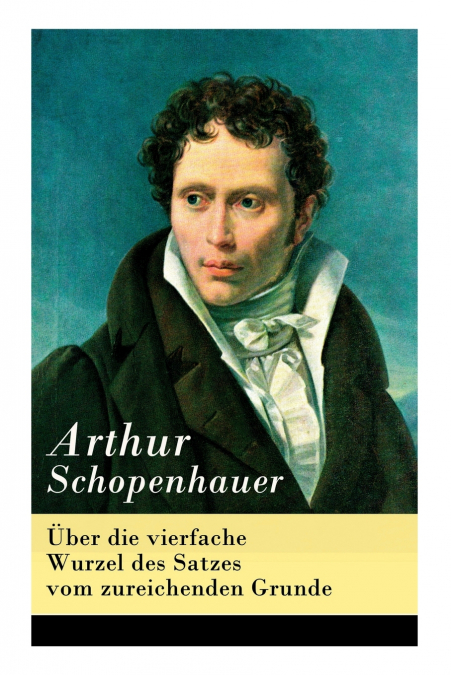
Über die vierfache Wurzel des Satzes vom zureichenden Grunde

Über die vierfache Wurzel des Satzes vom zureichenden Grunde

Arthur Schopenhauer

11,35 €
IVA incluido
Disponible
Editorial:
e-artnow
Año de edición:
2018
Materia
Filosofía: epistemología y teoría del conocimiento
ISBN:
9788026856245
11,35 €
IVA incluido
Disponible

Selecciona una librería:

  • Librería Samer Atenea
  • Librería Aciertas (Toledo)
  • Kálamo Books
  • Librería Perelló (Valencia)
  • Librería Elías (Asturias)
  • Donde los libros
  • Librería Kolima (Madrid)
  • Librería Proteo (Málaga)

Über die vierfache Wurzel des Satzes vom zureichenden Grunde ist Dissertation Schopenhauers aus dem Jahr 1813. Der Satz vom zureichenden Grund (lat. principium rationis sufficientis) ist in der Geschichte der Logik und der Philosophie der allgemeine Grundsatz, unterschiedlich formuliert und auch in unterschiedlicher Funktion verwendet: Jedes Sein oder Erkennen könne und/oder solle in angemessener Weise auf ein anderes zurückgeführt werden. Der 'Satz vom Grunde' steht stellvertretend als gemeinsamer Oberbegriff, als gemeinschaftliche Wurzel aller Arten von Relation, wie sie in der vorgestellten Welt erscheinen. Diese Relationsbeziehungen ordnet Schopenhauer vier verschiedenen Klassen zu, in denen jeweils bestimmte Objekte auf unterschiedliche Weise aufeinander wirken, also eine unterschiedene Ausformung des Satzes vom Grunde herrscht. Arthur Schopenhauer (1788-1860) war ein deutscher Philosoph, Autor und Hochschullehrer. Schopenhauer entwarf eine Lehre, die gleichermaßen Erkenntnistheorie, Metaphysik, Ästhetik und Ethik umfasst. Innerhalb der Philosophie des 19. Jahrhunderts entwickelte er eine eigene Position des Subjektiven Idealismus und vertrat als einer der ersten Philosophen im deutschsprachigen Raum die Überzeugung, dass der Welt ein irrationales Prinzip zugrunde liegt.


Artículos relacionados

  • Vier Quellen Der Erkenntnis
    Ellis Potter
    Woher wissen wir etwas? Weil es ‚wissenschaftlich bewiesen‘ ist oder ‚in der Bibel steht‘ oder es ‚sich in mir einfach richtig und wahr anfühlt ‘? Wissen wir alles auf gleiche Weise? Passen unterschiedliche Wege der Erkenntnis zusammen in ein Leben und eine Wirklichkeit?In dieser kompakten Ausgabe, dem zweiten Teil einer Trilogie, zeigt der internationale Referent Ellis Potter ...
    Disponible

    12,44 €

  • Fichte’s 1804 Wissenschaftslehre
    Illuminating new essays on Fichte’s 1804 Wissenschaftslehre, or The Science of Knowing.Fichte’s 1804 Wissenschaftslehre, or The Science of Knowing, consists of a series of lectures he delivered in his Berlin home to members of the city’s political and cultural elite in 1804. The lectures mark a dramatic shift in the terminology and methodology he uses to explore the nature of k...
  • Cybernetics for the 21st Century Vol. 1
    Andrew Pickering / Katherine Hayles
    Cybernetics for the 21st Century Vol.1 is dedicated to the epistemological reconstruction of cybernetics, consisting of a series of historical and critical reflections on the subject - which according to Martin Heidegger marked the completion of Western metaphysics. In this anthology, historians, philosophers, sociologists and media studies scholars explore the history of cyber...
    Disponible

    20,84 €

  • Huellas de San Agustín en Kant
    Javier Narváez Arango
    El libro se desarrolla en tres partes. En la primera encontramos el tiempo, el espacio, el fenómeno, el númeno, las categorías, los juicios sintéticos a priori, el mundo, el alma y Dios, expuestos por Kant en la Crítica de la razón pura. En la segunda parte encontramos los mismos temas desde san Agustín, haciendo un paralelo, para mostrar las semejanzas entre estos autores, enc...
    Disponible

    9,31 €

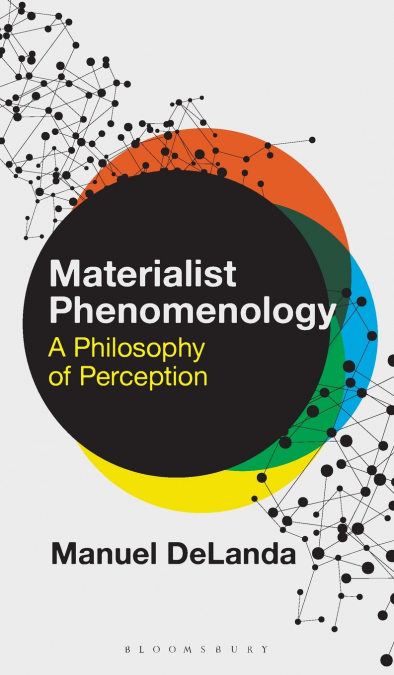
  • Materialist Phenomenology
    Manuel DeLanda
    Bringing together phenomenology and materialism, two perspectives seemingly at odds with each other, leading international theorist, Manuel DeLanda, has created an entirely new theory of visual perception. Engaging the scientific (biology, ecological psychology, neuroscience and robotics), the philosophical (idea of ’the embodied mind’) and the mathematical (dynamic systems the...
  • A Certain Ambiguity
    Gaurav Suri / Hartosh Singh Bal
    While taking a class on infinity at Stanford in the late 1980s, Ravi Kapoor discovers that he is confronting the same mathematical and philosophical dilemmas that his mathematician grandfather had faced many decades earlier--and that had landed him in jail. Charged under an obscure blasphemy law in a small New Jersey town in 1919, Vijay Sahni is challenged by a skeptical judge ...
    Disponible

    23,49 €

Otros libros del autor

  • Collected Essays of Arthur Schopenhauer
    Arthur Schopenhauer
    Collected here are Fourty-two short essays, previously published as seven separate books, Councils and Maxims, On Human Nature, On Religion, Studies in Pessimism, The Art of Controversy, The Art of Literature and, The Wisdom of Life. This is the most complete collection available from the world renowned philosopher Arthur Schopenhauer. ...
  • The Art of Literature
    Arthur Schopenhauer
    Collected here are eight short essays, On Authorship, On Style, On the Study of Latin, On Men of Learning, On Thinking for Ones Self, On Criticism, On Reputation, On Genius, by the world renowned philosopher Arthur Achopenhauer. ...
  • Religion
    Arthur Schopenhauer
    Collected here are five short essays, A Dialogue, A Few Words on Pantheism, On Books and Reading, Physiognomy, and, Psychological Observations, by the world renowned philosopher Arthur Schopenhauer. ...
  • Human Nature
    Arthur Schopenhauer
    Collected here are five short essays, Human Nature, Government, Free-will and Fatalism, Character, Moral Instinct, and, Ethical Reflections, by the world renowned philosopher Arthur Schopenhauer. ...
  • Counsels and Maxims
    Arthur Schopenhauer
    Collected here, are five short essays, General Rules, Our Relation to Ourselves, Our Relation to Others, Worldly Fortune, and, The Ages of Life, by the world renowned philosopher Arthur Schopenhauer. ...
  • The Essays of Arthur Schopenhauer
    Arthur Schopenhauer
    Arthur Schopenhauer (22 February 1788 - 21 September 1860) was a German philosopher. He is best known for his 1818 work The World as Will and Representation (expanded in 1844), which characterizes the phenomenal world as the product of a blind and insatiable noumenal will. Building on the transcendental idealism of Immanuel Kant, Schopenhauer developed an atheistic metaphysical...