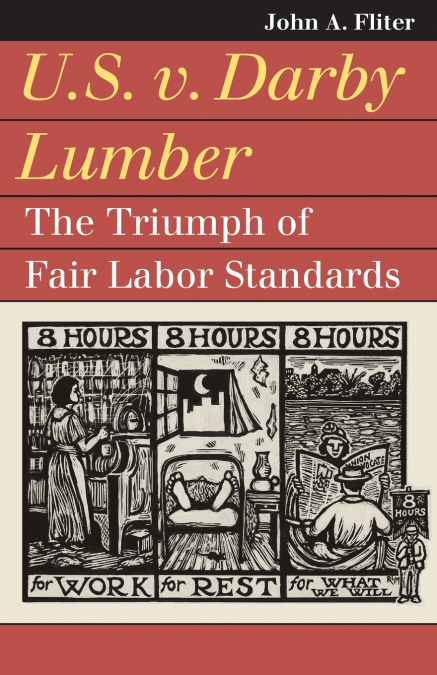

U.S. v. Darby Lumber

U.S. v. Darby Lumber

John A. Fliter

38,30 €
IVA incluido
Disponible
Editorial:
University Press of Kansas
Año de edición:
2025
ISBN:
9780700640591
38,30 €
IVA incluido
Disponible

Selecciona una librería:

  • Librería Samer Atenea
  • Librería Aciertas (Toledo)
  • Kálamo Books
  • Librería Perelló (Valencia)
  • Librería Elías (Asturias)
  • Donde los libros
  • Librería Kolima (Madrid)
  • Librería Proteo (Málaga)

The story of how the advocacy of workers and labor unions and a monumental shift on the Supreme Court paved the way for fair labor standards in the United States.The eight-hour day. The five-day work week. Minimum wage. Time-and-a-half overtime pay. Prohibition of oppressive child labor.Today we take these features of employment for granted, but they are the result of a long, difficult, and often violent struggle for workplace protections that culminated in the Fair Labor Standards Act (FLSA) of 1938. But it was the landmark 1941 Supreme Court decision in U.S. v. Darby Lumber Company that secured those protections.The social movement for fair labor standards in the United States began in the late 1700s when some of the first associations of working men demanded fair wages and maximum work hours. In advocating for national fair labor standards, workers and labor unions had to overcome not only opposition from powerful business groups but also entrenched legal doctrines that challenged the very idea of labor unions. They also had to overcome deeply held beliefs that workplace regulations were local economic issues reserved to the states under the Tenth Amendment of the Constitution.Several groundbreaking decisions by the Supreme Court in the spring of 1937 changed the whole debate over government regulation of the market and opened the door for federal legislation on fair labor standards. In what is widely known as the Constitutional Revolution of 1937, Justice Owen Roberts switched to the liberal bloc, and with the support of Chief Justice Charles Evans Hughes, the Supreme Court in West Coast Hotel v. Parrish and NLRB v. Jones and Laughlin Steel Corp. abruptly shifted its view of economic regulation. Ultimately, this paved the way for the Supreme Court to confirm the constitutionality of the FLSA in 1941.The Darby Lumber decision is a landmark case that affirmed the powers of Congress over labor standards and working conditions. Today the decision is as important as ever, with conservative groups seeking to undo these labor protections facing off against an insurgent labor movement aiming to regain lost ground.

Artículos relacionados

  • Economic and Philosophic Manuscripts of 1844
    Karl Marx
    In the Economic and Philosophic Manuscripts of 1844 Marx explains how, under capitalism, people rely on labor to live. In the past people could rely on Nature itself for their natural needs; in modern society, if one wants to eat, one must work: it is only through money that one may survive. Thus, man becomes a slave to his wages. It is only through his work that he can find en...
  • The Communist Manifesto
    Friedrich Engels / Karl Marx / Samuel Moore
    First published in 1848, Karl Marx and Friedrich Engels’ revolutionary manifesto quickly became one of the most influential political and economictexts in history. A landmark in political philosophy, it advocates for the overthrow of capitalist systems and the establishment of a classless,communist society. ...
    Disponible

    13,12 €

  • Cruel September
    Daniel D. Victor
    Romance blooms at Phillips Junior High when teacher Art Malamud, the school’s union rep, meets Mandy Sayer, the newest member of the faculty. As the school year progresses, Art leads his colleagues in the historic Los Angeles teachers’ strike of 1970 and stokes the ire of the principal, Vivian Laws. Though Art has tenure and relative immunity from Laws’s personal attacks, Mandy...
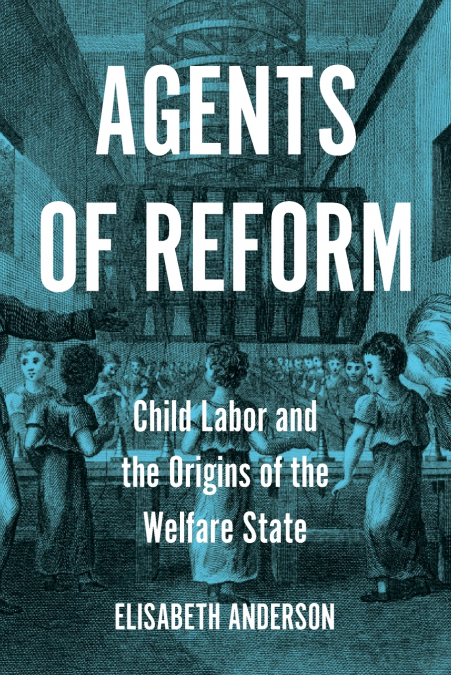
  • Agents of Reform
    Elisabeth Anderson
    A groundbreaking account of how the welfare state began with early nineteenth-century child labor laws, and how middle-class and elite reformers made it happenThe beginnings of the modern welfare state are often traced to the late nineteenth-century labor movement and to policymakers’ efforts to appeal to working-class voters. But in Agents of Reform, Elisabeth Anderson shows t...
    Disponible

    42,75 €

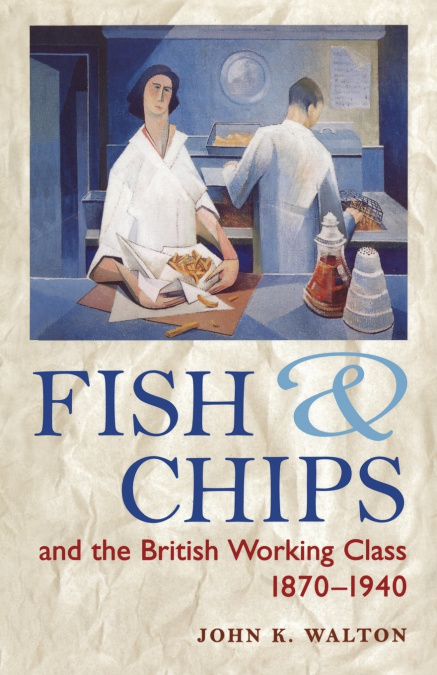
  • Fish and Chips, and the British Working Class, 1870-1940
    John K. Walton
    Unlike other institutions of central importance to working-class life, the fish-and-chip trade has not yet been rescued from what the author of this book regards as the massive condescension of posterity. In attempting to begin this process, he traces the origins of what was by 1914 an important national industry, setting the economic, social and political context of the trade,...
    Disponible

    142,78 €

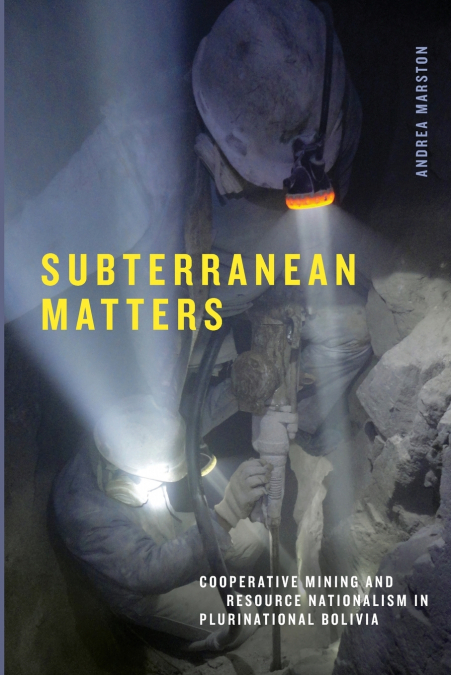
  • Subterranean Matters
    Andrea Marston
    In Subterranean Matters, Andrea Marston examines the ongoing history of Bolivian mining cooperatives, an economic formation that has been central to Bolivian politics and to the country’s economy. Marston outlines how mining cooperatives occupy a contradictory place in Bolivian politics. They were major backers of left-wing president Evo Morales in 2006 and participated signifi...
    Disponible

    36,40 €