

 Librería Samer Atenea
 Kálamo Books
 Librería Elías (Asturias)
 Librería Kolima (Madrid)
 Librería Proteo (Málaga)
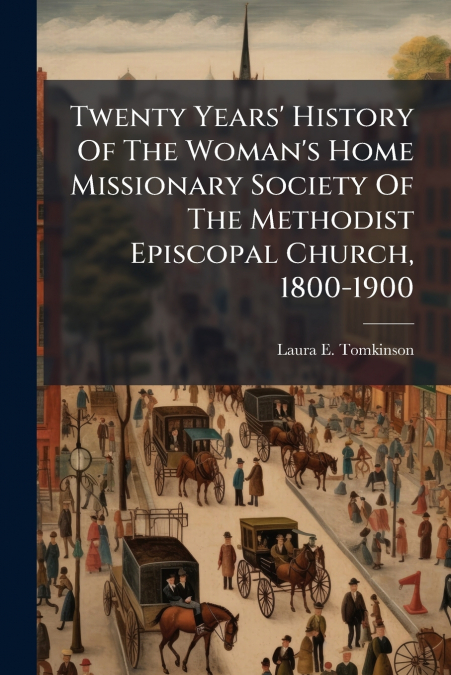
Explore the formative years of a pivotal organization with ’Twenty Years’ History Of The Woman’s Home Missionary Society Of The Methodist Episcopal Church, 1880-1900.’ This meticulously researched account by Laura E. Tomkinson delves into the society’s origins, development, and impact during a transformative period in American history.Discover the tireless efforts of women dedicated to social reform, education, and missionary work across the United States. From addressing poverty and inequality to promoting education and healthcare, the Woman’s Home Missionary Society played a vital role in shaping communities and empowering marginalized populations.This historical record offers invaluable insights into the intersection of religion, social activism, and women’s roles in the late 19th century. A must-read for anyone interested in American religious history, women’s studies, and the legacy of social reform movements.This work has been selected by scholars as being culturally important, and is part of the knowledge base of civilization as we know it. This work was reproduced from the original artifact, and remains as true to the original work as possible. Therefore, you will see the original copyright references, library stamps (as most of these works have been housed in our most important libraries around the world), and other notations in the work.This work is in the public domain in the United States of America, and possibly other nations. Within the United States, you may freely copy and distribute this work, as no entity (individual or corporate) has a copyright on the body of the work.As a reproduction of a historical artifact, this work may contain missing or blurred pages, poor pictures, errant marks, etc. Scholars believe, and we concur, that this work is important enough to be preserved, reproduced, and made generally available to the public. We appreciate your support of the preservation process, and thank you for being an important part of keeping this knowledge alive and relevant.





