

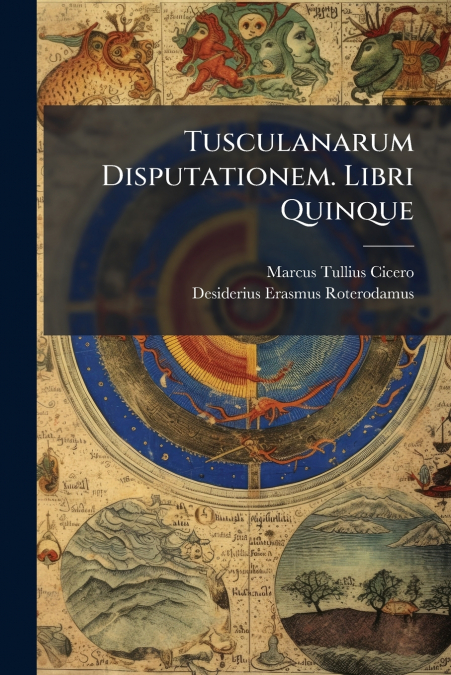
Marcus Tullius Cicero / Desiderius Erasmus Roterodamus
 Librería Samer Atenea
 Kálamo Books
 Librería Elías (Asturias)
 Librería Kolima (Madrid)
 Librería Proteo (Málaga)
'Tusculanarum Disputationem. Libri Quinque' presents Cicero’s influential dialogues on Stoic philosophy and the pursuit of happiness. This edition includes the contributions of Desiderius Erasmus Roterodamus, a key figure in Renaissance humanism, adding layers of interpretation to Cicero’s original work. The five books explore themes of death, pain, grief, emotional disturbances, and the sufficiency of virtue for happiness. Cicero engages with these profound subjects through insightful discussions, drawing upon Greek philosophical traditions to offer practical guidance on living a virtuous and fulfilling life. This edition is valuable for scholars and readers interested in classical philosophy, Renaissance humanism, and the enduring relevance of Stoic thought. It offers a unique perspective on the intersection of ancient wisdom and early modern intellectual inquiry.This work has been selected by scholars as being culturally important, and is part of the knowledge base of civilization as we know it. This work was reproduced from the original artifact, and remains as true to the original work as possible. Therefore, you will see the original copyright references, library stamps (as most of these works have been housed in our most important libraries around the world), and other notations in the work.This work is in the public domain in the United States of America, and possibly other nations. Within the United States, you may freely copy and distribute this work, as no entity (individual or corporate) has a copyright on the body of the work.As a reproduction of a historical artifact, this work may contain missing or blurred pages, poor pictures, errant marks, etc. Scholars believe, and we concur, that this work is important enough to be preserved, reproduced, and made generally available to the public. We appreciate your support of the preservation process, and thank you for being an important part of keeping this knowledge alive and relevant.





