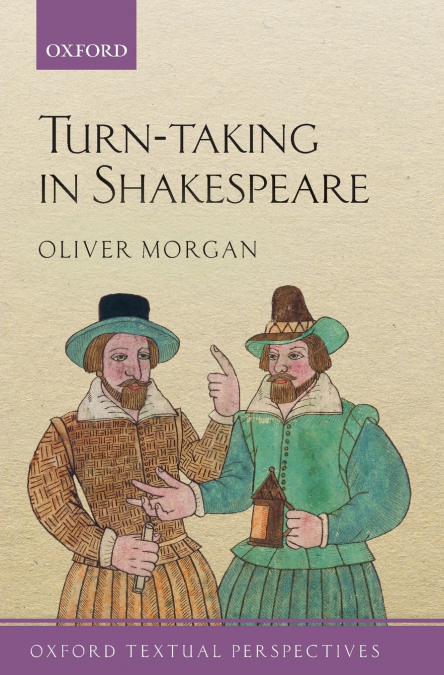
Turn-Taking in Shakespeare

Turn-Taking in Shakespeare

Oliver Morgan

125,31 €
IVA incluido
Consulta disponibilidad
Editorial:
Oxford University Press
Año de edición:
2019
Materia
Estudios literarios: obras de teatro y dramaturgos
ISBN:
9780198836353

Selecciona una librería:

  • Librería Samer Atenea
  • Librería Aciertas (Toledo)
  • Kálamo Books
  • Librería Perelló (Valencia)
  • Librería Elías (Asturias)
  • Donde los libros
  • Librería Kolima (Madrid)
  • Librería Proteo (Málaga)

Oxford Textual Perspectives is a series of informative and provocative studies focused upon literary texts (conceived of in the broadest sense of that term) and the technologies, cultures, and communities that produce, inform, and receive them. It provides fresh interpretations of fundamental works and of the vital and challenging issues emerging in English literary studies. By engaging with the materiality of the literary text, its production, and reception history, and frequently testing and exploring the boundaries of the notion of text itself, the volumes in the series question familiar frameworks and provide innovative interpretations of both canonical and less well-known works. Whenever people talk to one another there are at least two things going on at once. First, and most obviously, there is an exchange of speech. Second, and slightly less obviously, there is a negotiation about how that exchange is organised--about whose turn it is to talk at any given moment. Linguists call this second, organisational level of activity ’turn-taking’ and since the late 1970s it has been central to the way in which spoken interaction is understood. In spite of its obvious relevance to the study of drama, however, turn-taking has received little attention from critics and editors of Shakespeare. Turn-taking in Shakespeare offers a fresh perspective on the dramatic text by reversing the priorities of traditional literary analysis. Rather than focussing on what characters say, it focuses on when they speak. Rather than focussing on how they talk, it focuses on how they gain access to the floor. Its central argument is that the turn-taking patterns of Shakespeare’s plays are a part of what Emrys Jones has called their ’basic structural shaping’--as fundamental to dialogue as rhythm is to verse. The book investigates what it means for a character to speak in or out of turn, to interrupt or overlap with a previous speaker, to pause before speaking, or to fail to speak at all. It explores how these moments are--and are not--signalled by the Shakespearean text, how best to describe and understand them, and the implications of such questions for contemporary debates about editing, rhetoric, prosody, and early modern performance practices.
Artículos relacionados

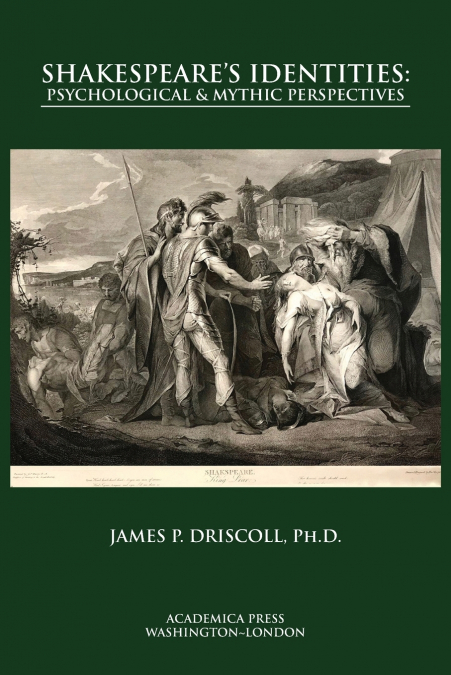
  • Shakespeare’s identities
    James Driscoll
    No dramatist has treated identity in as many ways and in such depth as William Shakespeare. In Shakespeare’s Identities, James P. Driscoll shows how the Bard used history, comedy, tragedy, and romance to develop comprehensive treatments of personal identity.Driscoll’s innovative study examines four aspects of identity: the conscious, social, real, and ideal. Drawing on Jungian ...
    Disponible

    45,23 €

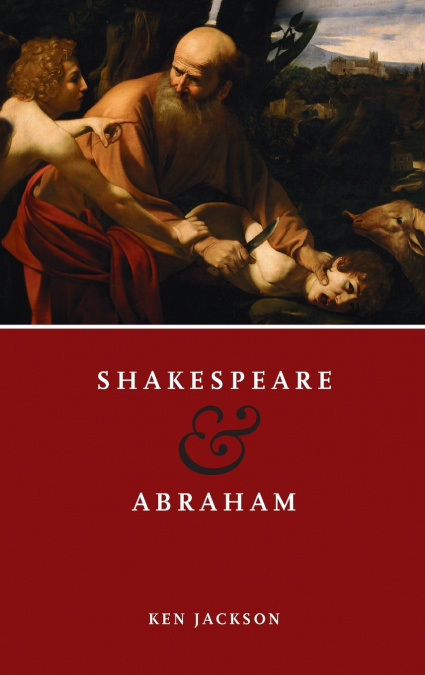
  • Shakespeare and Abraham
    Ken Jackson
    Shakespeare and Abraham shows how Shakespeare’s engagement with the biblical narrative of Abraham’s sacrifice of Isaac manifests in his plays. ...
  • William Shakespeare, Richard Barnfield, and the Sixth Earl of Derby
    Leo Daugherty
    This book is the first to argue that the Rival Poet of Shakespeare’s Sonnets is the well-known young Elizabethan writer Richard Barnfield (1574-1620), long suspected to have been one of Shakespeare’s 'private friends' (as they were termed by Francis Meres in 1598), with whom (as Meres also tells us) Shakespeare shared some of his sonnets. This is also the first book to argue th...
  • Shakespeare and the Dawn of Modern Science
    Peter D. Usher
    In Shakespeare and the Dawn of Modern Science, renowned astronomy expert Peter Usher expands upon his allegorical interpretation of Hamlet and analyzes four more plays, Love’s Labour’s Lost, Cymbeline, The Merchant of Venice, and The Winter’s Tale. With painstaking thoroughness, he dissects the plays and reveals that, contrary to current belief, Shakespeare was well aware of th...
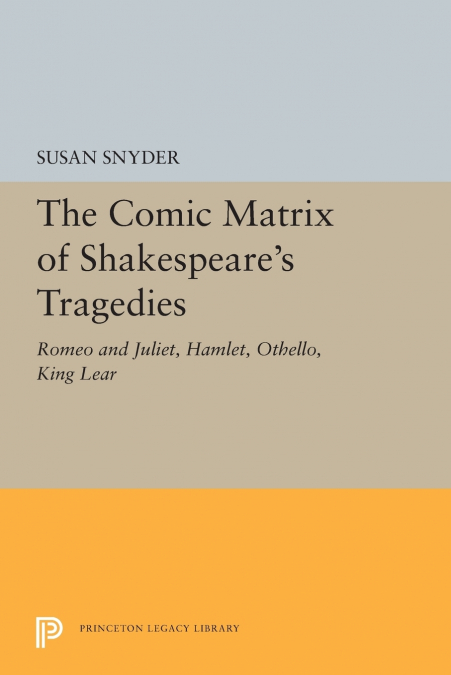
  • The Comic Matrix of Shakespeare’s Tragedies
    Susan Snyder
    Comic elements in Shakespeare’s tragedies have often been noted, but while most critics have tended to concentrate on humorous interludes or on a single play, Susan Snyder seeks a more comprehensive understanding of how Shakespeare used the conventions, structures, and assumptions of comedy in his tragic writing. She argues that Shakespeare’s early mastery of romantic comedy de...
    Disponible

    47,54 €

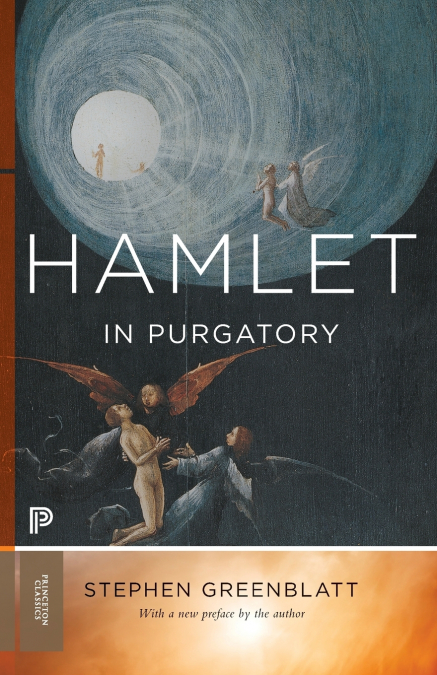
  • Hamlet in Purgatory
    Stephen Greenblatt
    In Hamlet in Purgatory, renowned literary scholar Stephen Greenblatt delves into his longtime fascination with the ghost of Hamlet’s father, and his daring and ultimately gratifying journey takes him through surprising intellectual territory. It yields an extraordinary account of the rise and fall of Purgatory as both a belief and a lucrative institution--as well as a capacious...
    Disponible

    27,63 €

Otros libros del autor

  • Turn-Taking in Shakespeare
    Oliver Morgan
    Oxford Textual Perspectives is a series of informative and provocative studies focused upon literary texts (conceived of in the broadest sense of that term) and the technologies, cultures, and communities that produce, inform, and receive them. It provides fresh interpretations of fundamental works and of the vital and challenging issues emerging in English literary studies. By...
    Disponible

    45,65 €