 Librería Samer Atenea
 Kálamo Books
 Librería Elías (Asturias)
 Librería Kolima (Madrid)
 Librería Proteo (Málaga)
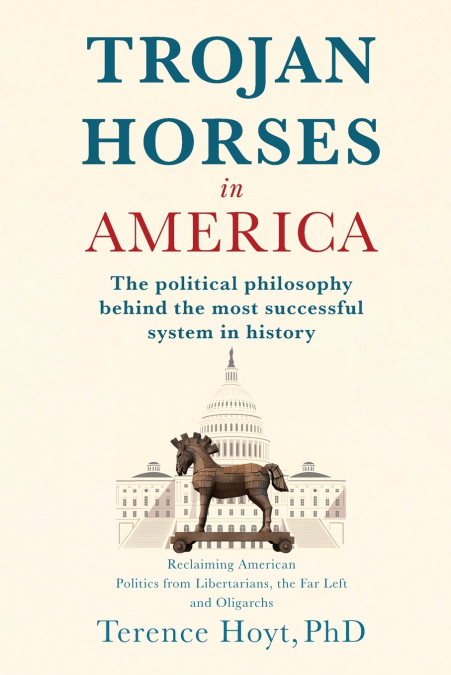
Dr. Hoyt has two main goals in writing this book. First, he explains how a small number of philosophical ideas helped create a long period of stability and prosperity in the United States. However, he argues this success has come at a cost: Americans have come to define well-being in a narrow, materialistic way. He also argues that a mechanistic view of human motivation and self-interest underlies the American system and that this is no longer sustainable. According to Dr. Hoyt, the current idea of a 'successful life' in the U.S. has helped enable an oligarchic class that is focused on gaining more wealth and power. He further claims that social media and the influence of libertarian ideology in American policy have made it easier for this small group to gain excessive political control.A second and key educational goal of the book is to help develop a new kind of elite-activists, teachers, and political leaders-who understand the importance of a 'structure of incentives' in maintaining justice in the American system. His second goal is to explain how and why American political activism has lost direction over the past fifty years, which has allowed the rise of this powerful minority.To address these problems, Dr. Hoyt uses the film The Matrix as a metaphor. He suggests that political ideas should be understood like 'code' within a complex system. He argues that many activists mistakenly treat ideas such as equality and freedom as absolute or morally ultimate. In his view, over the past half century, many activists and academics have lost focus on the system’s main responsibility: to create and support public policies that benefit the average citizen and to prevent excessive concentrations of wealth and power. He also notes that mainstream thinkers generally agree that the greatest danger is the concentration of wealth in the hands of a few.Dr. Hoyt does not only criticize these misunderstandings; he also offers a positive vision. Drawing on thinkers like Immanuel Kant, Alasdair MacIntyre, Jean-Jacques Rousseau, and Eric Voegelin, he argues that the American system should be limited to its proper role. By doing so, Americans can create more space for cultural, moral, and spiritual growth, where citizens work together to build a more ethical and truly just society-not just a formally just one.He emphasizes that moral values cannot be fully built into a system and are not the main purpose of the American political system. Instead, he argues that meaningful change comes from individuals working together to promote ethical care in society. In contrast to many U.S. intellectuals who reject the idea of free will, Dr. Hoyt invites those who accept free will and personal moral responsibility to take part in this effort. He believes that within this kind of cultural space-created by a new generation of activist-educators-American society can move toward a richer and deeper understanding of happiness.