
Inicio > Tecnología, ingeniería, agricultura > Tecnología: cuestiones generales > Triennial Review of the National Nanotechnology Initiative
Triennial Review of the National Nanotechnology Initiative

Triennial Review of the National Nanotechnology Initiative

AA.VV

42,59 €
IVA incluido
Disponible
Editorial:
National Academies Press
Año de edición:
2013
Materia
Tecnología: cuestiones generales
ISBN:
9780309269223
42,59 €
IVA incluido
Disponible

Selecciona una librería:

  • Librería Samer Atenea
  • Librería Aciertas (Toledo)
  • Kálamo Books
  • Librería Perelló (Valencia)
  • Librería Elías (Asturias)
  • Donde los libros
  • Librería Kolima (Madrid)
  • Librería Proteo (Málaga)

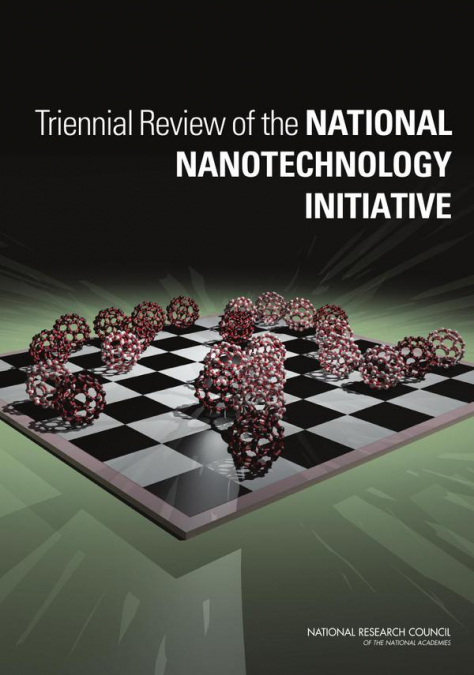
The National Nanotechnology Initiative (NNI) is a multiagency, multidisciplinary federal initiative comprising a collection of research programs and other activities funded by the participating agencies and linked by the vision of ’a future in which the ability to understand and control matter at the nanoscale leads to a revolution in technology and industry that benefits society.’ As first stated in the 2004 NNI strategic plan, the participating agencies intend to make progress in realizing that vision by working toward four goals. Planning, coordination, and management of the NNI are carried out by the interagency Nanoscale Science, Engineering, and Technology (NSET) Subcommittee of the National Science and Technology Council (NSTC) Committee on Technology (CoT) with support from the National Nanotechnology Coordination Office (NNCO). Triennial Review of the National Nanotechnology Initiative is the latest National Research Council review of the NNI, an assessment called for by the 21st Century Nanotechnology Research and Development Act of 2003. The overall objective of the review is to make recommendations to the NSET Subcommittee and the NNCO that will improve the NNI’s value for basic and applied research and for development of applications in nanotechnology that will provide economic, societal, and national security benefits to the United States. In its assessment, the committee found it important to understand in some detail—and to describe in its report—the NNI’s structure and organization; how the NNI fits within the larger federal research enterprise, as well as how it can and should be organized for management purposes; and the initiative’s various stakeholders and their roles with respect to research. Because technology transfer, one of the four NNI goals, is dependent on management and coordination, the committee chose to address the topic of technology transfer last, following its discussion of definitions of success and metrics for assessing progress toward achieving the four goals and management and coordination. Addressing its tasks in this order would, the committee hoped, better reflect the logic of its approach to review of the NNI. Triennial Review of the National Nanotechnology Initiative also provides concluding remarks in the last chapter.

Artículos relacionados

  • Science and the Big Issues of Our Time
    Martin Gellender
    Within the last few generations, our world has been shaped by technological change enabled by scientific advances. This is particularly evident to the 'baby boomer' generation, who have lived through and witnessed huge changes in society over the course of their lifetimes. Although many have little education in science, or have forgotten what they learned in high school, they u...
    Disponible

    26,58 €

  • Statics+++
    James W Dally / Robert J Bonenberger
    This textbook has been prepared to support a course offering for Statics at the University of Nevada at Reno.  Statics provides the first exposure of engineering students to the study of mechanics.  While Statics is a relatively simple subject, many students find it difficult, and they often perform far below our expectations.  In an effort to improve the curriculum, several me...
    Disponible

    101,22 €

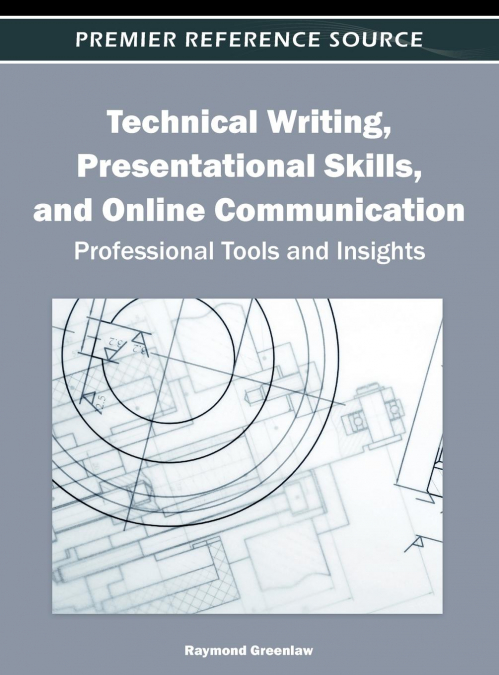
  • Technical Writing, Presentational Skills, and Online Communication
    Raymond Greenlaw
    This book addresses four main topics: professional ethics, technical writing, presentation skills, and online writing. These topics are woven throughout the book and some of them are the main subjects of one or more chapters. The overarching theme of this book is to provide well-tested, best-practice techniques and strategies for main topic areas while focusing on information t...
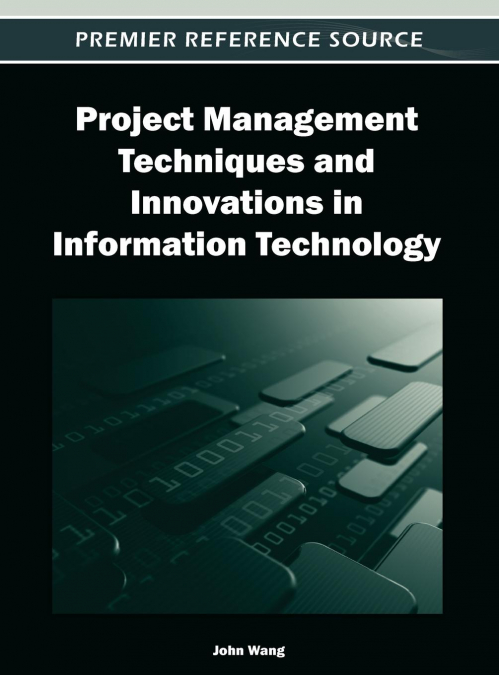
  • Project Management Techniques and Innovations in Information Technology
    John Wang
    Managing cost, time, and quality of a project can be a challenging task for any project manager, but especially in times of an ever-changing and burgeoning field of IT. Project Management Techniques and Innovations in Information Technology offers a vital compendium of the latest research, case studies, best practices, and methodologies within the field of IT project management...
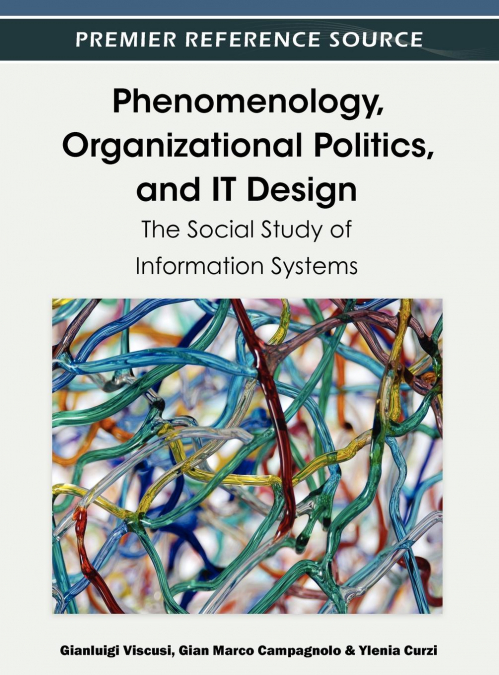
  • Phenomenology, Organizational Politics, and IT Design
    Information systems are researched, published on, and utilized as an extremely broad and vital sector of current technology development, usually studied from the scientific or technological viewpoints therein. Phenomenology, Organizational Politics, and IT Design: The Social Study of Information Systems offers a new look at the latest research and critical issues within the fie...
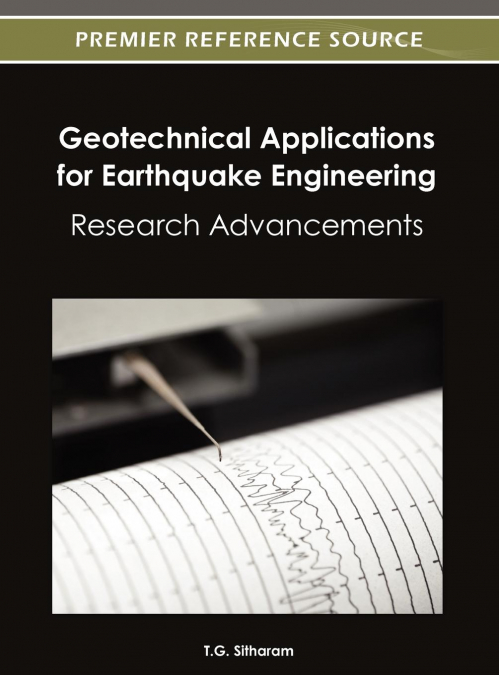
  • Geotechnical Applications for Earthquake Engineering
    Disaster preparedness and response management is a burgeoning field of technological research, and staying abreast of the latest developments within the field is a difficult task. Geotechnical Applications for Earthquake Engineering: Research Advancements has collected chapters from experts from around the world in a variety of applications, frameworks, and methodologies, and p...