 Librería Samer Atenea
 Kálamo Books
 Librería Elías (Asturias)
 Librería Kolima (Madrid)
 Librería Proteo (Málaga)
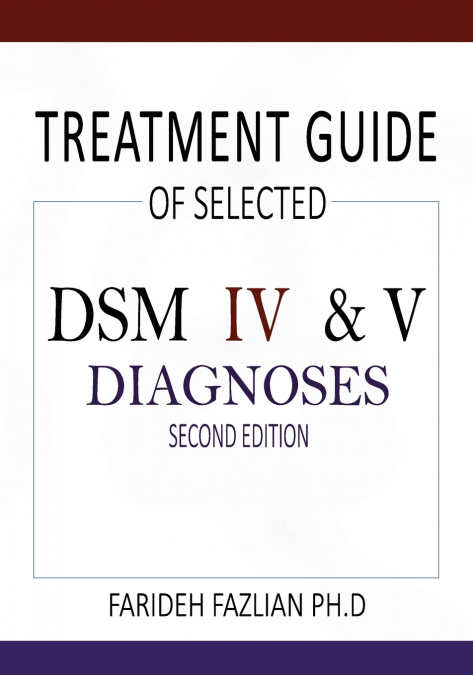
This book is intended to serve as a resource and guideline for developing treatment plans and formulating useful and practical clinical methods and strategies for treatment dealing with psychological disorders, complications, and symptoms. The core purpose of writing this resource and guideline book has been: 1) to share a structured guide or framework with clinicians and to a certain extent with the clinicians who are young in the field and interns about the development of a treatment plan while taking into account the intensity, immediacy, and stages of the identified mental health conditions. 2) to provide a guide for identifying treatment issues related to a specific mental disorder and establishing treatment goals for a mental health condition or identified problem/issue. 3) to provide a guideline for practitioners in selecting methods of intervention and development of effective strategies addressing specific identified issues related to a particular mental health disorder, and 4) to offer a resource for young clinicians or interns who face challenges in the application of academic knowledge to the clinical domain.In compiling this book, which is part of the outcome of my clinical experience in public and private mental health settings over the years, I have observed significant changes and improvements in the area of patient mental health evaluation and intervention within the field of mental health treatment. However, all of the changes that have been brought about by many pioneers, researchers, practitioners, and authors at various levels, overall, of the mental health treatment domain have helped the effectiveness of treatment planning. I believe that the active participation of a client/patient in treatment planning has been one of the most significant changes in the domain of mental health treatment. Therefore, the application of the treatment planning suggested in this resource and guideline book is considered to be the most effective when it takes into consideration the client’s/patient’s active participation in the development of a treatment plan.In the development of a treatment plan using this guidebook, the most severe identified problem is considered to be addressed initially and immediately. However, some of the residual problems related to the initial stage of intervention may extend into the next stage of the treatment, or to the short-term intervention stage, as it may be feasible. The methods and strategies that are used to address symptoms and problems related to an identified mental or emotional condition at a selected stage of intervention may require reasonable modifications if they are feasible and necessary for an effective intervention purpose. The application of structured types of intervention approaches may be considered effective for a desirable therapeutic outcome, further in the treatment, when a client/patient is considered to have responded well to the intervention, addresses a crisis, and the initial stage of intense emotional/mental suffering.For the purposes of applying the methods and strategies described in this book, the selection and application of appropriate strengths, assets, and self-owned positive protective factors when dealing with an identified symptom, problem, or issue is suggested to be taken into consideration. However, this exhortation should not be taken to undermine the embodied medical models designed to identify and fix a patient’s weakness. Nonetheless, it is crucial to avoid any complications resulting in the patient’s demoralization. Thus, the clinician should protect the client/patient by encouraging active participation in the process of developing a treatment plan and including and applying the patient’s strengths, assets, and positive protective factors in the formulation of the plan of intervention.