Inicio > Lenguas > Lingüistica > Transmitting Minority Languages
Transmitting Minority Languages

Transmitting Minority Languages


193,22 €
IVA incluido
Consulta disponibilidad
Editorial:
Springer Nature B.V.
Año de edición:
2022
Materia
Lingüistica
ISBN:
9783030879099

Selecciona una librería:

  • Librería Samer Atenea
  • Librería Aciertas (Toledo)
  • Kálamo Books
  • Librería Perelló (Valencia)
  • Librería Elías (Asturias)
  • Donde los libros
  • Librería Kolima (Madrid)
  • Librería Proteo (Málaga)

This book gives fresh insight into the diverse ways in which the transmission of minority and heritage languages is carried out in a range of sociolinguistic contexts. When traditional modes of intergenerational transmission begin to break down, minority language and diaspora communities resort to other modes of transmission, out of necessity, to complement traditional mechanisms and secure language maintenance. This volume brings together a broad range of studies of these alternative modes of transmission, examining the complex and diverse practical, ideological and personal challenges that arise in different settings. Beyond addressing the dynamics of language use within the home and family, the book also emphasises the importance of the participation of the minority community itself in language and cultural transmission. These mechanisms and initiatives, sometimes overlooked or dismissed in the academic literature, will prove to be essential in maintaining and ensuring the survival of minority and heritage languages into the 21st century and beyond. The twelve chapters in the book are divided into four sections (intergenerational transmission; transmission in post-traditional families; alternatives to ’traditional’ transmission; and transmission in diasporic contexts), and the language contexts, both minoritised and diasporic, which are discussed include Basque, Breton, Galician, Guernesais, Irish, Māori, Russian, Scottish Gaelic, Sorbian and Spanish. This book will be of interest to students and scholars of sociolinguistics, language acquisition, heritage language maintenance and revitalization, and language policy and planning.

Artículos relacionados

  • User-Centered Computer Aided Language Learning
    Giorgos Zacharia / Panayiotis Zaphiris
    ...
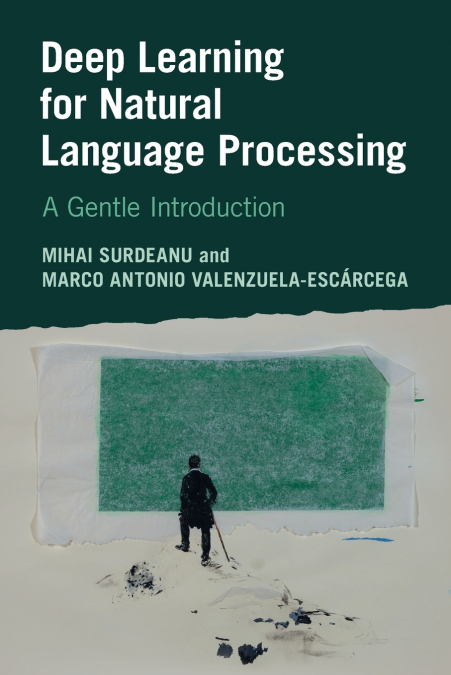
  • Deep Learning for Natural Language Processing
    Marco Antonio Valenzuela-Escárcega / Mihai Surdeanu
    ...
    Disponible

    47,60 €

  • Deep Learning for Natural Language Processing
    Marco Antonio Valenzuela-Escárcega / Mihai Surdeanu
    ...
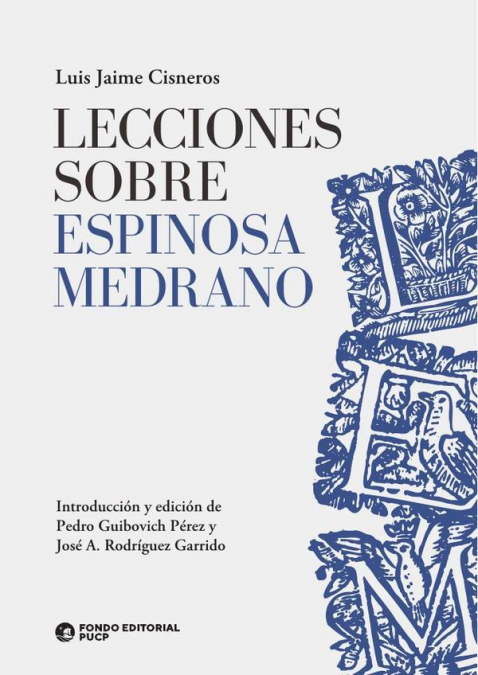
  • Lecciones sobre espinosa medrano
    Luis Jaime Cisneros Vizquerra
    La obra de Juan de Espinosa Medrano, apodado en su tiempo «El Lunarejo» (c. 1629-1688), fue uno de los mayores focos de interés académico de Luis Jaime Cisneros (1921-2011). En 1980 aparecieron sus primeros trabajos dedicados a estudiar los textos capitales de Espinosa Medrano (el Apologético en favor de don Luis de Góngora, la Panegírica declamación por la protección de las ci...
    Disponible

    17,63 €

  • Lyre Book
    Matthew Kilbane
    Redefines modern lyric poetry at the intersection of literary and media studies.In The Lyre Book, Matthew Kilbane urges literary scholars to consider lyric not as a genre or a reading practice but as a media condition: the generative tension between writing and sound. In addition to clarifying issues central to the study of modern poetry--including its proximity to popular song...
    Disponible

    50,84 €

  • Translation-mediated Communication in a Digital World
    David Ashworth / Minako O’Hagan
    The Internet is accelerating globalization by exposing organizations and individuals to global audiences. This in turn is driving teletranslation and teleinterpretation, new types of multilingual support, which are functional in digital communications environments. The book describes teletranslation and teleinterpretation by exploring a number of key emerging contexts for langu...
    Disponible

    45,19 €