
Inicio > Humanidades > Historia > Historia: primitiva hasta la actualidad > Historia antigua: hasta c. 500 e. c. > Traf der Speer oder traf er nicht? Zur Darstellung des Protagoras von Abdera in der Perikles-Vita von Plutarch
Traf der Speer oder traf er nicht? Zur Darstellung des Protagoras von Abdera in der Perikles-Vita von Plutarch

Traf der Speer oder traf er nicht? Zur Darstellung des Protagoras von Abdera in der Perikles-Vita von Plutarch

Katharina Theilen

10,11 €
IVA incluido
Disponible
Editorial:
GRIN Publishing
Año de edición:
2008
Materia
Historia antigua: hasta c. 500 e. c.
ISBN:
9783638944113
10,11 €
IVA incluido
Disponible

Selecciona una librería:

  • Librería Samer Atenea
  • Librería Aciertas (Toledo)
  • Kálamo Books
  • Librería Perelló (Valencia)
  • Librería Elías (Asturias)
  • Donde los libros
  • Librería Kolima (Madrid)
  • Librería Proteo (Málaga)

Studienarbeit aus dem Jahr 2007 im Fachbereich Geschichte - Weltgeschichte - Frühgeschichte, Antike, Note: 1,0, Carl von Ossietzky Universität Oldenburg (Institut für Geschichte), 21 Quellen im Literaturverzeichnis, Sprache: Deutsch, Abstract: „Als ein Fünfkämpfer den Epitimos von Pharsalos unabsichtlich mit dem Wurfspieß traf und tötete, habe er [Perikles] einen ganzen Tag darauf verwendet, mit Protagoras die Frage zu diskutieren, wen man nun bei diesem Unglück nach streng rechtlicher Beurteilung für den Schuldigen halten müsse, den Speer oder eher den, der ihn geworfen, oder die Kampford-ner?' Plutarch: Perikles 36. Dieser Ausschnitt aus der Perikles/Fabius Maximus-Parallelvita des Plutarch beschreibt eine Interaktion zwischen dem Sophisten Protagoras von Abdera und dem athenischen Staatsmann Perikles. Anekdotenhaft zeigt er auf, dass Perikles mit einem der bekanntesten und seine Zeit prägendsten Sophisten ein Rechtsproblem diskutierte. Anekdote oder Fakt? Intentionales Beispiel oder reale Begebenheit? Da der Autor der Parallelvita, Plutarch von Chaironeia, kein Zeitgenosse der von ihm beschriebenen Personen war, geboren wurde er um 46 n.Chr. , und keine Quellen dieses eher kleine und unscheinbare Ereignis in dieser Form erwähnen, dessen Thematik allerdings im 5. Jahrhundert v.Chr. zum pädagogischen Standardrepertoire gehörte und an anderer Stelle wieder auftaucht , ist davon auszugehen, dass Plutarch hier ein konstruiertes Beispiel mit einem bestimmten Zweck in Form einer Anekdote verwendete. Diese Hausarbeit im Rahmen des Seminars „Perikles' (AM 1) versucht der Frage nachzugehen, inwieweit die Begegnung von Protagoras und Perikles in der Parallelvita Perikles/Fabius Maximus Plutarchs eine intentionale Anekdote ist und welche Absicht sich dahinter verbirgt. Kurz: Was sollte diese konstruierte Darstellung des Protagoras von Abdera zur Lebensbeschreibung des Perikles beitragen? Wie ist sie zu deuten?
Artículos relacionados

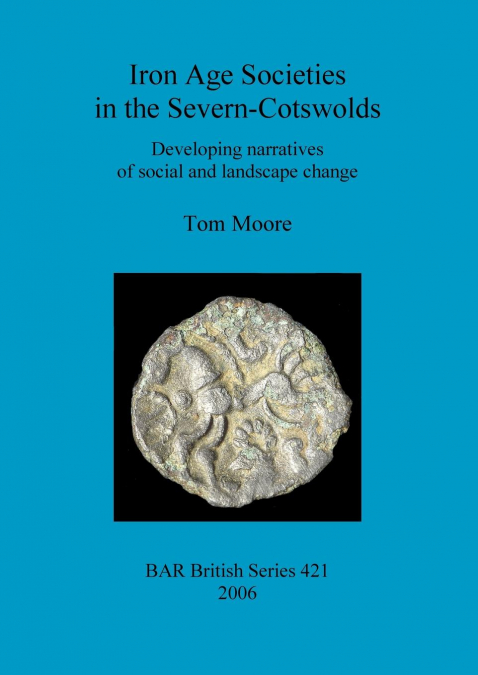
  • Iron Age Societies in the Severn-Cotswolds
    Tom Moore
    The central theme of this study is an examination of the processes of change in Iron Age social organisation and identity on a regional scale using the Severn-Cotswolds area in England as a case study. It aims to provide a coherent narrative of the period in the region based on the wealth of current data now available, providing a basic storyboard against which future studies c...
    Disponible

    144,57 €

  • Somewhere Beyond The Sea Les îles bretonnes (France)
    The Seminar on the Archaeology of Western France, which focused on the islands of Brittany, was held on 1 April 2014 at the University of Rennes 1. The desire to organize this seminar arose spontaneously from the dynamism which currently animates archaeological research on island spaces of the western seaboard of France. Indeed, the seminar took place during a pivotal period of...
    Disponible

    86,11 €

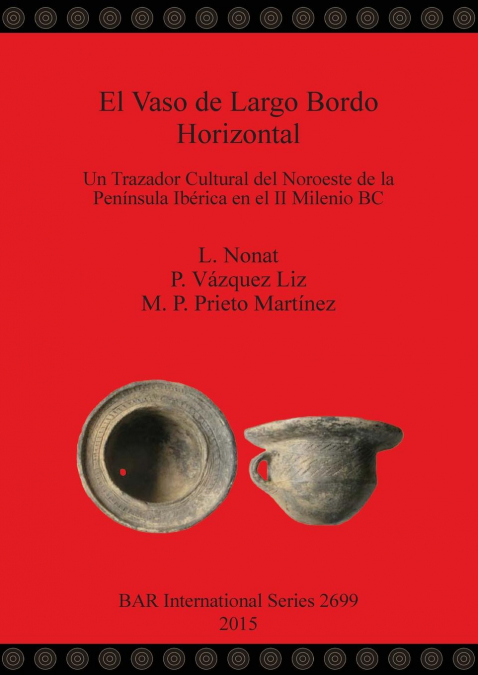
  • El Vaso de Largo Bordo Horizontal
    L. Nonat / LNonat / M. P. Prieto Martínez / MPPrieto Martínez / P. Vázquez Liz / PVázquez Liz
    In this paper the authors study a specific type of pottery from the northwest Iberian Peninsula, known as the Wide Horizontal Rim (WHR) vessel. One of its distinctive aspects is precisely the fact that it is exclusively found in this region, which now comprises the Spanish region of Galicia and northern Portugal, as far south as the River Duero. This type of pottery, of which t...
    Disponible

    115,71 €

  • A Connecting Sea
    Stašo Forenbaher
    This book includes papers stemming from a session at the EAA conference held in Zadar in September 2007.                          ...
    Disponible

    79,97 €

  • The Roman Pottery Production Site at Wickham Barn, Chiltington, East Sussex
    Chris Butler / Malcolm Lyne
    The excavations undertaken at Chiltington in East Sussex revealed two Roman pottery kilns, as well as remains from prehistory and from medieval period.The kilns are well documented, and all the finds were examined and catalogued. Three phases were identified. The pottery produced on the site indicate a strong New Forest influence. ...
    Disponible

    55,62 €

  • Kurgans, Ritual Sites, and Settlements
    Edited by: Jeannine Davis-Kimball, Eileen M. Murphy, Ludmila Koryakova and Leonid T. YablonskyThis richly illustrated volume adds immensely to the small but growing corpus of Eurasian Archaeology published in the English language. Comprised of thirty articles, the authors have focused on the Bronze Age, continuing to include the first millennium BC Early Iron Age, with a termin...
    Disponible

    158,26 €