
Inicio > Sociedad y ciencias sociales > Psicología > Tracing the Emergence of Psychology, 1520-⁠1750
Tracing the Emergence of Psychology, 1520-⁠1750

Tracing the Emergence of Psychology, 1520-⁠1750

Sven Hroar Klempe

121,88 €
IVA incluido
Disponible
Editorial:
Springer Nature B.V.
Año de edición:
2021
Materia
Psicología
ISBN:
9783030537036
121,88 €
IVA incluido
Disponible

Selecciona una librería:

  • Librería Samer Atenea
  • Librería Aciertas (Toledo)
  • Kálamo Books
  • Librería Perelló (Valencia)
  • Librería Elías (Asturias)
  • Donde los libros
  • Librería Kolima (Madrid)
  • Librería Proteo (Málaga)

This book pursues the very first use of the term 'psychology', which is traced back to 1520. The appearance of the term was not as a part of philosophy. Thus, the main hypothesis of this book is that psychology from the very beginning was a stranger to philosophy. It demonstrates that even Aristotle used his thesis on the soul to delineate philosophy from psychological aspects. It is therefore suggested that psychological wisdom and knowledge has been retained and in popular culture as long as humans have reflected upon themselves. There were, however, several reasons for why psychology appeared as a part of philosophy at around the year 1600. One important factor was Humanism, which among other things had challenged Aristotelian logic. Another important movement was Protestantism. Luther’s emphasis on the need to confess one’s sin, led to a certain interest to explore the human nature. His slogan, 'the scripture alone' represented an attack on the close relationship that had existed between theology and philosophy. Yet when philosophy was thrown out of theology, it was left without the basic theological tenets that had guided philosophical speculations for centuries in Europe. Hence, this book pursues how philosophy gradually adopts and includes psychological aspects to rebuild the foundation for philosophy. This culminates partly with the British empiricists. Yet they did not apply the term psychology. It was the German and partly ignored philosopher Christian Wolff, who opened up modern understanding of psychology with the publication of Psychologia empirica in 1732. This publication had a tremendous impact on the enlightenment in the modern Europe. 

Artículos relacionados

  • Drinkers of Infinity
    Arthur Koestler
    This selection of essays, book-reviews, broadcast talks and papers delivered to learned societies reflects the extraordinary breadth of Arthur Koestler’s interests. From the trial of Galileo to the pleasures of canoeing down the Loire, from a detailed examination of the ‘memory’ of flatworms to an equally detailed examination of the futility of quarantining dogs, the author wri...
    Disponible

    17,24 €

  • Gordy the Rabbit has ADHD
    Jessie Shepherd
    Often when people are given a mental health disorder diagnosis the weaknesses are clear and overwhelmingly emphasized, while the strengths are ignored or forgotten. The mental health children's book series 'What Mental Disorder?' challenges the stigma against therapy and diagnosis. It enlists the reader to view the character as a whole being and not as a mental issu...
    Disponible

    16,30 €

  • The Paradoxical Ego
    Eugene Halliday / Zhu Kabere
    Three particular themes are basic to this study. First, that the human race and its environment are involved in a slowly progressive process of revelation and understanding of its inherent features; and that we are all participating in this ongoing evolutionary cycle. Second, and closely related to the first tenet, man is not separable from his environment. We all share in this...
    Disponible

    14,56 €

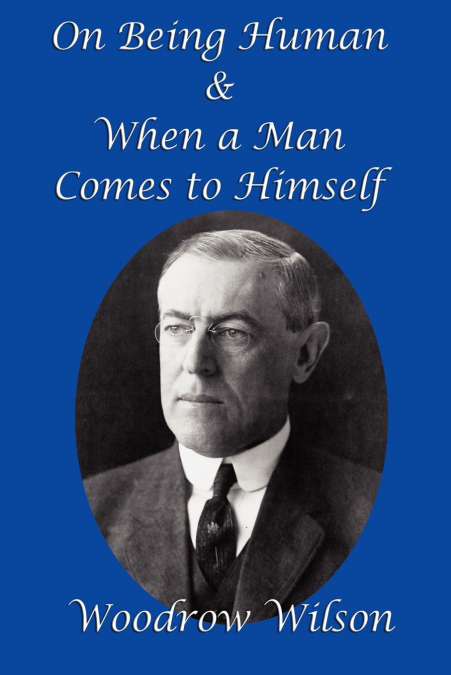
  • On Being Human and When a Man Comes to Himself
    Woodrow Wilson
    Before he became the 28th President of the United States (1913-21), the 34th Governor of New Jersey (1911-13), or even the 13th President of Princeton University (1902-10), Woodrow Wilson (1856-1924) was a scholar and professor. In 1885, he received his Ph.D. in history and political science from Johns Hopkins University, and in 1897, he was granted tenure at Princeton Universi...
    Disponible

    6,28 €

  • Bridge Over The River Why
    David Cooper / Deborah Cooper
    'In Bridge Over the River Why, the Coopers have succeeded in a dual task documenting their own journey through the grief of losing their son Eli by suicide, while at the same time providing a valuable resource for anyone who has had to face the same terrible tragedy. They start with the premise that 'doing and feeling' are the key components of moving forward and have a core me...
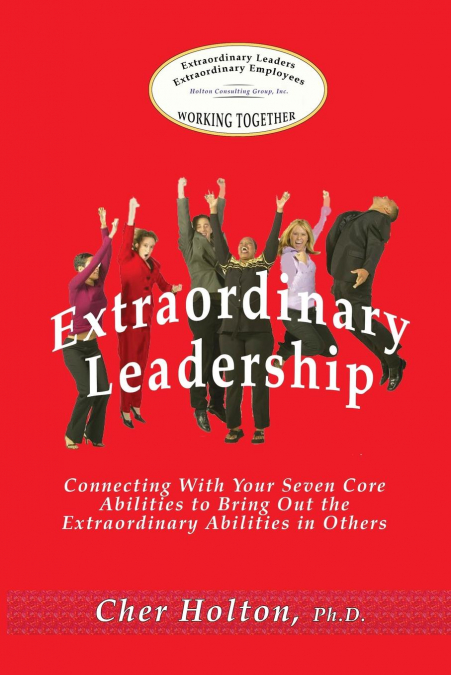
  • Extraordinary Leadership
    Cher Holton
    This transformational leadership book, grounded in state-of-the-art research and proven by real-life application in the trenches, moves beyond traditional leadership theories to introduce you to seven incredible Core Abilities and shows you how to connect with them to become an Extraordinary Leader who can bring out the very best in your people.All the techniques in the world w...
    Disponible

    23,85 €

Otros libros del autor

  • From Metaphysics to Culture
    Sven Hroar Klempe
    This book is a follow-up to the book Tracing the Emergence of Psychology, 1520-1750: A Sophisticated Intruder to Philosophy (Springer 2020). In contrast, this new book covers the period 1750-1900. Whereas the previous book focused on how psychology intervened in philosophy and theology, the perspective now is how philosophy and psychology tried to free themselves from each othe...
  • Sound and Reason
    Sven Hroar Klempe
    This book is about the human mental capacities that are mostly veiled in the use of language yet can be revealed through music activities. In speech, just one word is articulated at the time, whereas in music different pitches sound simultaneously. This conflict demonstrates that rationality must be regarded as relative, as rationality in music may create chaos in speech. Moreo...
    Disponible

    145,82 €

  • Sound and Reason
    Sven Hroar Klempe
    This book is about the human mental capacities that are mostly veiled in the use of language yet can be revealed through music activities. In speech, just one word is articulated at the time, whereas in music different pitches sound simultaneously. This conflict demonstrates that rationality must be regarded as relative, as rationality in music may create chaos in speech. Moreo...
  • Tracing the Emergence of Psychology, 1520-⁠1750
    Sven Hroar Klempe
    This book pursues the very first use of the term 'psychology', which is traced back to 1520. The appearance of the term was not as a part of philosophy. Thus, the main hypothesis of this book is that psychology from the very beginning was a stranger to philosophy. It demonstrates that even Aristotle used his thesis on the soul to delineate philosophy from psychological aspects....