 Librería Samer Atenea
 Kálamo Books
 Librería Elías (Asturias)
 Librería Kolima (Madrid)
 Librería Proteo (Málaga)
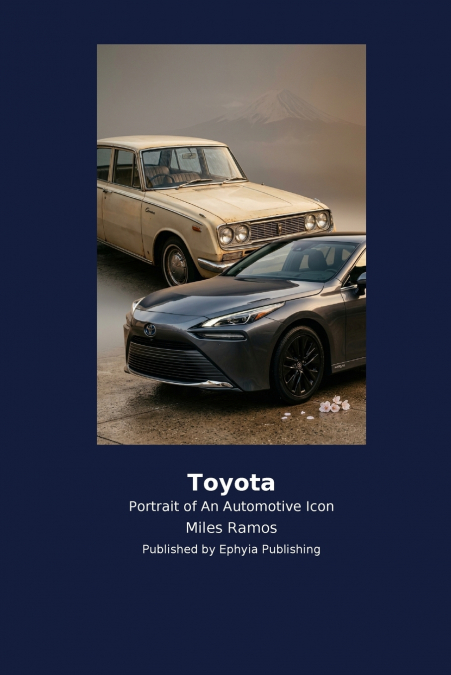
Toyota: Portrait of an Automotive Icon takes readers on a sweeping journey from a humble wooden loom in early‑20th‑century Japan to the cutting‑edge streets of Woven City, revealing how a single family’s inventive spirit forged the world’s largest automaker. Through meticulously researched chapters, you’ll witness Sakichi Toyoda’s breakthrough automatic loom, the daring pivot by his son Kiichiro into automobile manufacturing, and the birth of the Toyota Motor Company amid war, scarcity, and relentless ambition. Each page uncovers the philosophical foundations-jidoka, kaizen, genchi genbutsu-that transformed a struggling workshop into a global manufacturing powerhouse.The narrative follows Toyota’s most iconic vehicles and milestones: the rugged Land Cruiser that conquered deserts and jungles, the Corolla that put millions on wheels, the Corona that broke into the American market, and the Camry that became America’s best‑selling sedan. You’ll learn how the company turned crises-oil shocks, recalls, natural disasters-into opportunities for innovation, and how the relentless pursuit of perfection gave rise to Lexus, the Prius hybrid revolution, and the breathtaking LFA supercar. Motorsports triumphs, from rally championships to Le Mans victories, illustrate Toyota’s hidden passion for performance, while chapters on Gazoo Racing and the GR lineup show how that passion now fuels everyday driving excitement.Beyond automobiles, the book explores the broader Toyota Group-Hino’s truck dominance, Daihatsu’s mastery of kei cars, and the intricate web of strategic alliances with Subaru, Mazda, BMW, and BYD that keep the company at the forefront of electrification, hydrogen, and autonomous mobility. You’ll gain insight into the Toyota Production System’s global expansion, the evolution of design philosophies like Vibrant Clarity and L‑finesse, and the company’s foray into robotics, connected cars, and sustainable factories. Each section connects past lessons to present challenges, showing how Toyota balances tradition with a bold vision for the future.Readers will also experience the human side of the corporation: the leadership of Akio Toyoda, his return to the driver’s seat to reignite passion, the lessons learned from recalls and the Tōhoku earthquake, and the inspiring story of Woven City-a prototype living laboratory where mobility, robotics, and AI are tested in a real‑world setting. By the end, you’ll understand not just how Toyota built cars, but how it built a culture of continuous improvement, respect for people, and an unending drive to create ever‑better machines that shape the way the world moves. This is the definitive portrait of an icon, offering both inspiration and a roadmap for anyone fascinated by engineering, business, and the relentless pursuit of excellence.