Inicio > Economía, finanzas, empresa y gestión > Economía > Macroeconomía > Toxic Economic Theory, Fraudulent Accounting Standards, and the Bankruptcy of Economic Policy
Toxic Economic Theory, Fraudulent Accounting Standards, and the Bankruptcy of Economic Policy

Toxic Economic Theory, Fraudulent Accounting Standards, and the Bankruptcy of Economic Policy

R. A. Rayman

65,03 €
IVA incluido
Consulta disponibilidad
Editorial:
Springer Nature B.V.
Año de edición:
2013
Materia
Macroeconomía
ISBN:
9781137302014

Selecciona una librería:

  • Librería Samer Atenea
  • Librería Aciertas (Toledo)
  • Kálamo Books
  • Librería Perelló (Valencia)
  • Librería Elías (Asturias)
  • Donde los libros
  • Librería Kolima (Madrid)
  • Librería Proteo (Málaga)

Toxic economic theory originates from its ’schizophrenic’ division into separate macro- and macro- compartments. The microeconomic market-value fallacy - by ignoring the macroeconomic repercussions - fosters the delusion that an increase in market value necessarily represents a gain in real wealth. This fallacy is responsible for fraudulent ’fair value’ accounting standards and for an epidemic of ’balance-sheet myopia’. In creating an unsustainable pyramid of ever-increasing loans secured on ever-rising house-prices, it is the root cause of the current economic crisis.The macroeconomic single-gear fallacy - by disregarding the microeconomic foundations - encourages the misconception that the economy is a single-gear machine requiring no more than the lubrication of free competition for operation at its full employment potential. This fallacy is the product of a forty-year-old consensus manufactured to cover up a theoretical schism between squabbling Keynesian and monetarist sects. By inducing misplaced confidence in structural reform as the only long-term cure for unemployment, it continues to prevent a solution to the crisis.The legacy of toxic economic theory is the bankruptcy of economic policy. The accounting system (burdened by unhelpful and occasionally fraudulent standards) is hardly ’fit for purpose’; it is not reliable for assessing or comparing corporate performance and has become an almost overpowering incentive to ’short-termism’. The tax system has evolved (through a series of historical accidents) into a dysfunctional ’non-system’ that obstructs the goals of economic policy. Single-gear macroeconomic policy, having failed to deliver full employment without inflation, now offers little more than a choice of evils: either single-gear ’austerity’ - which jeopardises growth; or else single-gear ’growth’ - which risks fuelling inflation.A Multi-Gear Strategy for Economic Recovery is outlined in the companion volume.
Artículos relacionados

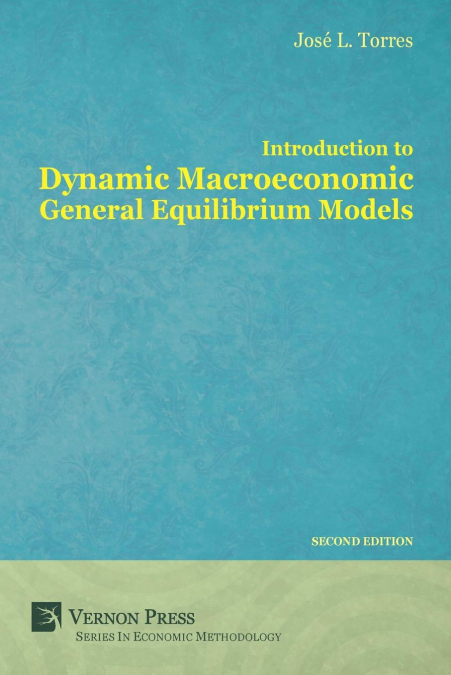
  • Introduction to Dynamic Macroeconomic General Equilibrium Models
    José Luis Torres Chacon
    This book offers an introductory step-by-step course in Dynamic Stochastic General Equilibrium modelling. Modern macroeconomic analysis is increasingly concerned with the construction, calibration and/or estimation and simulation of Dynamic General Equilibrium (DGE) models. The book is intended for graduate students as an introductory course to DGE modelling and for those econo...
    Disponible

    61,40 €

  • International Education and the Next-Generation Workforce
    Wei Wang
    Education is the first stage in developing a viable, dynamic, and long-lived global economy. Unfortunately, in times of economic hardship, educational programs, teacher salaries, and extracurricular opportunities are often the first to be cut. International Education and the Next-Generation Workforce: Competition in the Global Economy presents a detailed discussion of present e...
  • Macroeconomic Policies of Developed Democracies
    Robert J Franzese Jr
    ...
  • End Of The Road
    Louis Holder
    This book is about the mismanagement of Western economies in pursuit of political power, which resulting devastation will have to be borne by future generations. The book establishes that postponement is no longer doable and lays out the hard choices ahead causing much misery and agony.Although not fully recognized because of masking by asset bubbles, which are spun/sold as in...
    Disponible

    16,42 €

  • The Darwin Economy
    Robert H. Frank
    What Charles Darwin can teach us about building a fairer societyWho was the greater economist-Adam Smith or Charles Darwin? The question seems absurd. Darwin, after all, was a naturalist, not an economist. But Robert Frank, New York Times economics columnist and best-selling author of The Economic Naturalist, predicts that within the next century Darwin will unseat Smith as the...
    Disponible

    22,42 €

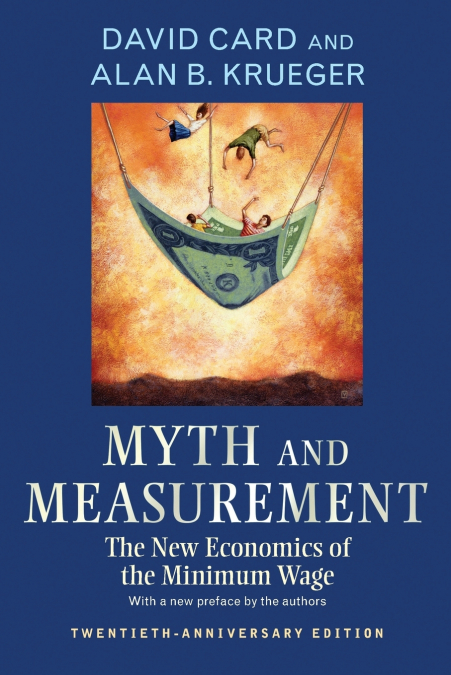
  • Myth and Measurement
    Alan B. Krueger / David Card
    From David Card, winner of the Nobel Prize in Economics, and Alan Krueger, a provocative challenge to conventional wisdom about the minimum wageDavid Card and Alan B. Krueger have already made national news with their pathbreaking research on the minimum wage. Here they present a powerful new challenge to the conventional view that higher minimum wages reduce jobs for low-wage ...
    Disponible

    39,64 €