
Towards Reunion in Ethics

Towards Reunion in Ethics

Jan Österberg

78,70 €
IVA incluido
Disponible
Editorial:
Springer Nature B.V.
Año de edición:
2020
Materia
Ética y filosofía moral
ISBN:
9783030124120
78,70 €
IVA incluido
Disponible

Selecciona una librería:

  • Librería Samer Atenea
  • Librería Aciertas (Toledo)
  • Kálamo Books
  • Librería Perelló (Valencia)
  • Librería Elías (Asturias)
  • Donde los libros
  • Librería Kolima (Madrid)
  • Librería Proteo (Málaga)

This posthumous publication attempts to answer the question of what moral code is the most reasonable. Philosophers often turn to consequentialism or deontological ethics to address this issue. As the author points out, each has valid arguments but each is unable to get the other side to agree. To rectify this, he proposes a third way. Inside, readers will discover a theory that tries to do justice to both sides. The author first details consequentialism and deontological ethics. He also explains their fundamental conflict. One holds the view that you should do what has the best consequences. The other believes that there are actions which are wrong to do even if they have the best consequences. Next, the volume considers various ways to solve this conflict. Would rejecting one theory work? Or, is it possible to somehow reconcile them. The author shows why these solutions fail. He then goes on to present his own. The resulting contractual theory brings together the two opposing ethical convictions. It proposes that what is right and wrong depends on what norms people would agree to. Throughout, coverage explores the psychological, sociological, and historical background of the moral theories discussed. The reason is that moral theories are embedded in social and psychological contexts. They are better understood when the contexts are explicit. This key feature distinguishes the volume from other works in moral philosophy.At the time of his death in July 2011, Jan Österberg was close to completing this manuscript. It was taken up and fully completed by Erik Carlson and Ryszard Sliwinski, both of Uppsala University.
Artículos relacionados

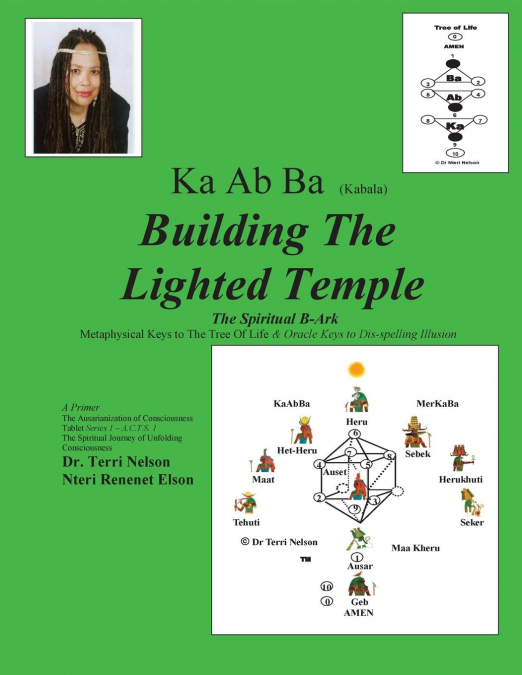
  • Ka Ab Ba Building The Lighted Temple
    Dr Terri R. Nelson / Dr Terri RNelson
    The book KaAbBa Building The Lighted Temple/Metaphysical Keys to the Tree of Life draws a circle that is inclusive of the Afrikan origin of the Ancient Kemetic/Egyptian wisdom. It reveals the undeniable root and link of Ancient Africa to all the religious systems that would develop worldwide. This book is explosive in its power to convey the meaning of KaAbBa, the Medu Neter  (...
    Disponible

    37,41 €

  • Technoethics and the Evolving Knowledge Society
    Rocci Luppicini
    Recently, there has been a major push to rediscover the ethical dimension of technology across the sciences, social sciences, and humanities. Technoethics and the Evolving Knowledge Society: Ethical Issues in Technological Design, Research, Development, and Innovation examines human processes and practices connected to technology embedded within social, political, and moral sph...
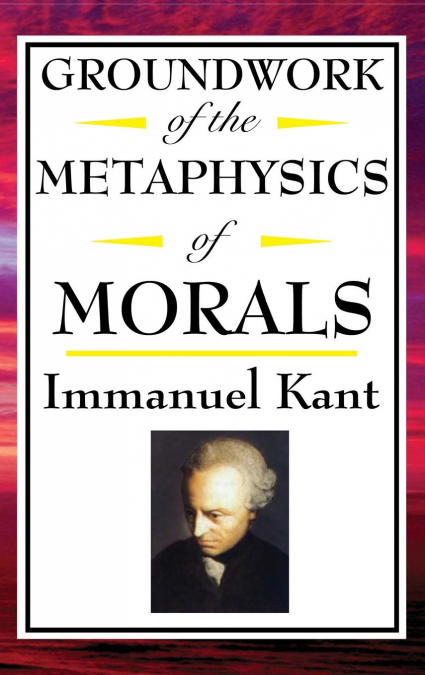
  • Kant
    Immanuel Kant
    Kant’s Groundwork of the Metaphysics of Morals is one of the most important works in modern moral philosophy. It belongs beside Plato, Aristotle, Machiavelli, and Hobbes. Here Kant sets out to articulate and defend the Categorical Imperative - the fundamental principle that underlies moral reasoning - and to lay the foundation for a comprehensive account of justice and human vi...
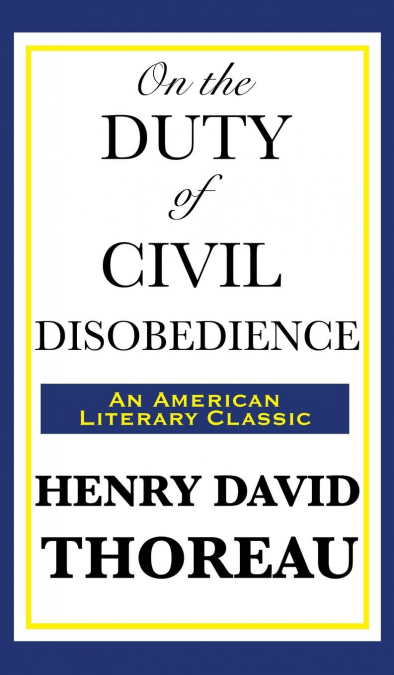
  • On the Duty of Civil Disobedience
    HENRY DAVID THOREAU
    Civil Disobedience argues that citizens should not permit their governments to overrule their consciences, and that they have a duty to avoid allowing their acquiescence to enable the government to make them the agents of injustice. Thoreau was motivated in part by his disgust with slavery and the Mexican-American War, but the sentiments he expresses here are just as pertinent ...
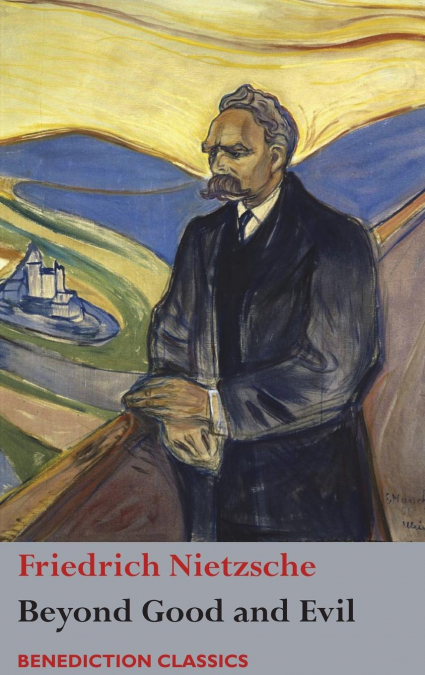
  • Beyond Good and Evil
    Friedrich Nietzsche
    Nietzsche, though primarily a philosopher, wrote widely on art, philology, history, religion, tragedy, culture, and science.  In 1886, at the height of his powers, he published Beyond Good and Evil.  Here he examines much of the best of human thought--dogmatic philosophy, Judeo-Christian morality, science and democracy – and finds it lacking.  Rejecting “slave-morality” he pres...
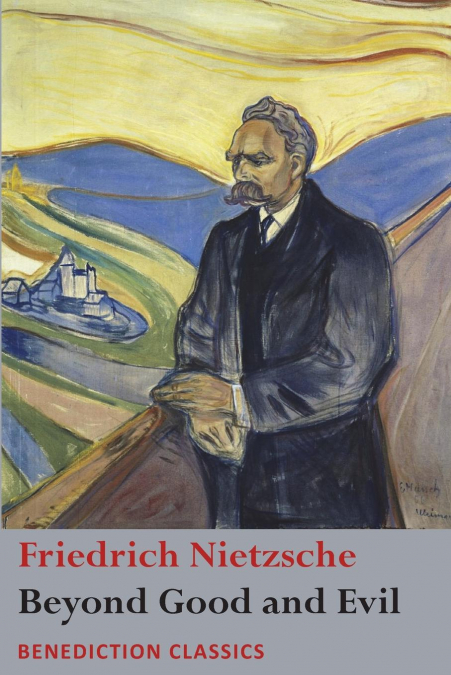
  • Beyond Good and Evil
    Friedrich Nietzsche
    Nietzsche, though primarily a philosopher, wrote widely on art, philology, history, religion, tragedy, culture, and science.  In 1886, at the height of his powers, he published Beyond Good and Evil.  Here he examines much of the best of human thought--dogmatic philosophy, Judeo-Christian morality, science and democracy – and finds it lacking.  Rejecting “slave-morality” he pres...
    Disponible

    9,99 €

Otros libros del autor

  • Towards Reunion in Ethics
    Jan Österberg
    This posthumous publication attempts to answer the question of what moral code is the most reasonable. Philosophers often turn to consequentialism or deontological ethics to address this issue. As the author points out, each has valid arguments but each is unable to get the other side to agree. To rectify this, he proposes a third way. Inside, readers will discover a theory tha...
  • Self and Others
    Jan Österberg
    1. The Aim of This Essay Ethical Egoism, the doctrine that, roughly speaking, one should promote one’s own good, has been a live issue since the very beginnings of moral philosophy. Historically, it is the most widely held normative theory, and, next to Utilitarianism, it is the most intensely debated one. What is at stake in this debate is a fundamen...
    Disponible

    133,94 €

  • Self and Others
    Jan Österberg
    1. The Aim of This Essay Ethical Egoism, the doctrine that, roughly speaking, one should promote one’s own good, has been a live issue since the very beginnings of moral philosophy. Historically, it is the most widely held normative theory, and, next to Utilitarianism, it is the most intensely debated one. What is at stake in this debate is a fundamen...