 Librería Samer Atenea
 Kálamo Books
 Librería Elías (Asturias)
 Librería Kolima (Madrid)
 Librería Proteo (Málaga)
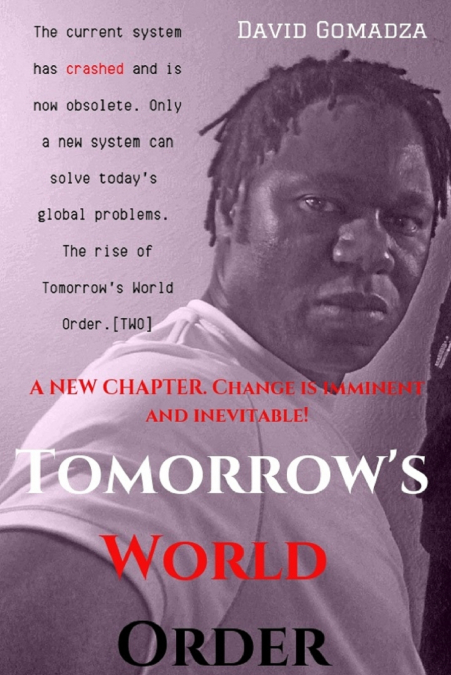
We are sovereign in our own right as we are independent of any nation and do not belong to any nation, institution or cult, nor do we represent any nation. We have rights to write our own laws and print our own currency and can enforce our laws which are to be followed and adhered to by everyone. Laws that are universal and meant for all mankind and as such laws that MUST be acknowledged and observed by all mankind. We are a global phenomenon to lead mankind out of the defensive stages towards networking and cooperation as nature intended. We strongly believe that mankind has failed. The current system has crashed and now not fit for purpose and we are here to lead mankind out of the defensive stages simply because for the past seventy years global issues have worsened with global debt in excess of $244 trillion, with all recent financial crises, poverty, unemployment, climatic change, wars and political instability and all issues to do with inadequate global finances. We strongly believe that the current system has crashed and as such only a new system will ultimately solve today’s global problems hence the rise of Tomorrow’s World Order. We are here to guide mankind and act as overseer to lay the correct path for mankind to take in order to solve all current and future global problems. For the past 2000 years, mankind has been stuck in the defensive stages where defense plays a key role in whatever mankind does. Where $1.7 trillion is plowed yearly globally into defense, making weapons and relying on weapons and defense as the drivers of the economy. This has meant mankind opting for the cheaper ways of doing things yet the most destructive ones; killing innocent women and children in the process, making cheaper weapons and using these to get the most expensive resources he can’t afford. We strongly think this is not only barbaric but shows that mankind has failed to think out of the box. We as a people are operating below our potential. Mankind’s current system is very wasteful, with $trillion globally plowed into weapons manufacturing and the military at the expense of other areas. Humanity is changing nevertheless at a slow pace and everyone has now realized that we all ought to be networking and cooperating and working towards becoming friends for global peace’s sake. Yet mankind still manufactures weapons and invests heavily in the military when the world is moving toward global peace. Who are we going to use the weapons on especially when sworn enemies like the USA and North Korea are now in talking terms? We know the current system crashed years ago with the last financial crises, yet mankind has stuck to this system that is not fit for purpose. We have come up with a global solution to all global problems and our method will emancipate all nations and create wealth levels never witnessed before. Our system is the only answer to global problems, and we are going to take mankind to the next stage of development creating wealth never witnesses before.