 Librería Samer Atenea
 Kálamo Books
 Librería Elías (Asturias)
 Librería Kolima (Madrid)
 Librería Proteo (Málaga)
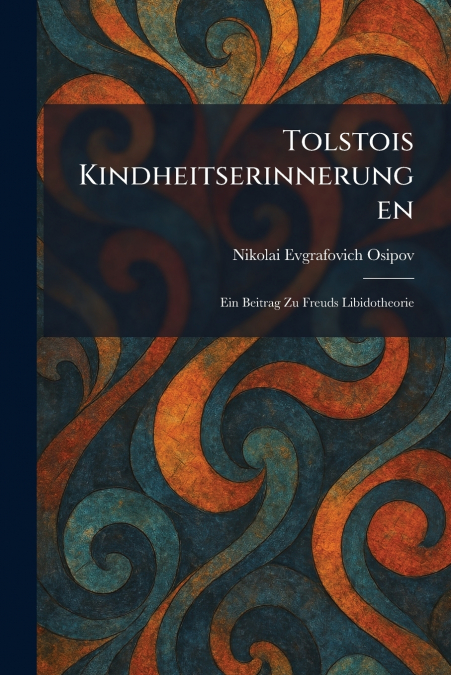
'Tolstois Kindheitserinnerungen; Ein Beitrag Zu Freuds Libidotheorie' ist eine tiefgreifende psychoanalytische Untersuchung, die das Leben und die psychologische Entwicklung des berühmten russischen Schriftstellers Leo Tolstoi beleuchtet. Nikolai Evgrafovich Osipov, ein bedeutender Pionier der Psychoanalyse, wendet hierbei die damals revolutionäre Libidotheorie von Sigmund Freud auf die autobiografischen Aufzeichnungen des Autors an.Die Studie analysiert die emotionalen und psychischen Wurzeln von Tolstois literarischem Schaffen und untersucht, wie prägende Kindheitserfahrungen seine spätere Philosophie, seine moralischen Krisen und seine Weltanschauung beeinflussten. Osipov arbeitet heraus, wie persönliche Triebkonflikte und familiäre Dynamiken in die Struktur von Tolstois groÃen Werken einflossen und dort ihre künstlerische Transformation fanden. Damit bietet das Buch eine faszinierende Brücke zwischen der klinischen Psychologie und der Literaturwissenschaft.Als wichtiges Dokument der frühen psychoanalytischen Literaturkritik bleibt dieses Werk ein unverzichtbarer Beitrag für alle, die sich für die verborgenen psychischen Mechanismen hinter der literarischen Genialität interessieren. Es ist eine wertvolle Quelle für Forscher der russischen Literaturgeschichte sowie für Leser, die ein tieferes Verständnis für die komplexe menschliche Natur in den Werken Tolstois gewinnen möchten.This work has been selected by scholars as being culturally important, and is part of the knowledge base of civilization as we know it. This work was reproduced from the original artifact, and remains as true to the original work as possible. Therefore, you may see the original copyright references, library stamps (as most of these works have been housed in our most important libraries around the world), and other notations in the work.This work is in the public domain in the United States of America, and possibly other nations. Within the United States, you may freely copy and distribute this work, as no entity (individual or corporate) has a copyright on the body of the work.As a reproduction of a historical artifact, this work may contain missing or blurred pages, poor pictures, errant marks, etc. Scholars believe, and we concur, that this work is important enough to be preserved, reproduced, and made generally available to the public. We appreciate your support of the preservation process, and thank you for being an important part of keeping this knowledge alive and relevant.