Thus Spake Zarathustra

Thus Spake Zarathustra

Friedrich Nietzsche

20,65 €
IVA incluido
Disponible
Editorial:
Atlas Vista Publisher
Año de edición:
2024
Materia
Ética y filosofía moral
ISBN:
9781805475460
20,65 €
IVA incluido
Disponible

Selecciona una librería:

  • Librería Samer Atenea

  • Kálamo Books
  • Librería Elías (Asturias)
  • Librería Kolima (Madrid)
  • Librería Proteo (Málaga)

Zarathustra is a sage and a prophet who has a great love of humanity. Because of this love, he desires to leave the solitude of his mountain home to teach others the great truth he has the truth of the overman.  Zarathustra first comes to a village where he makes his pronouncement that God is dead. He goes on to say that the overman is the true state of being for which mankind should strive. The people reject him as a madman, however, and Zarathustra realizes that his teachings must take a different route.Zarathustra then finds disciples who are willing to listen to his teachings. He teaches them in private, grooming them to attain the state of overman so that they may eventually carry on his teaching to the rest of the world. Zarathustra teaches them the key points of his knowledge.  To become the overman, one must have envy, be a warrior, and not take pity on the world. But, just as disciples of other religious leaders do not at first understand their master’s teachings, Zarathustra’s disciples do not understand what he is trying to teach them. With much sadness, Zarathustra leaves his disciples to return to his mountain of solitude, encouraging them to go out and spread the word of his teachings. 
Artículos relacionados

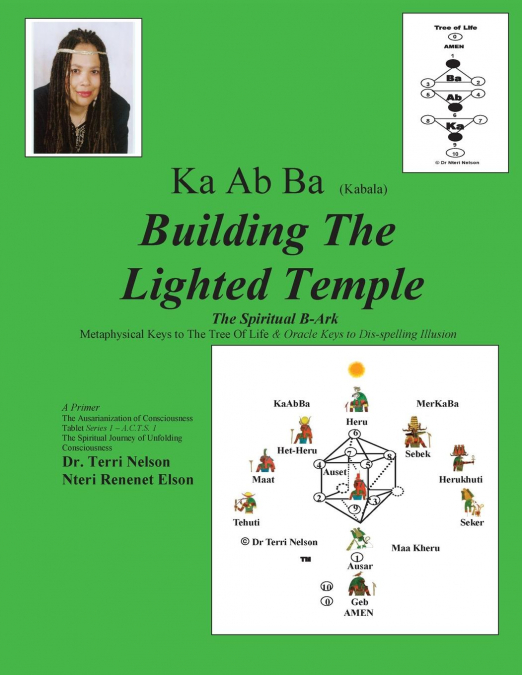
  • Ka Ab Ba Building The Lighted Temple
    Dr Terri R. Nelson / Dr Terri RNelson
    The book KaAbBa Building The Lighted Temple/Metaphysical Keys to the Tree of Life draws a circle that is inclusive of the Afrikan origin of the Ancient Kemetic/Egyptian wisdom. It reveals the undeniable root and link of Ancient Africa to all the religious systems that would develop worldwide. This book is explosive in its power to convey the meaning of KaAbBa, the Medu Neter  (...
    Disponible

    37,41 €

  • Technoethics and the Evolving Knowledge Society
    Rocci Luppicini
    Recently, there has been a major push to rediscover the ethical dimension of technology across the sciences, social sciences, and humanities. Technoethics and the Evolving Knowledge Society: Ethical Issues in Technological Design, Research, Development, and Innovation examines human processes and practices connected to technology embedded within social, political, and moral sph...
  • Kant
    Immanuel Kant
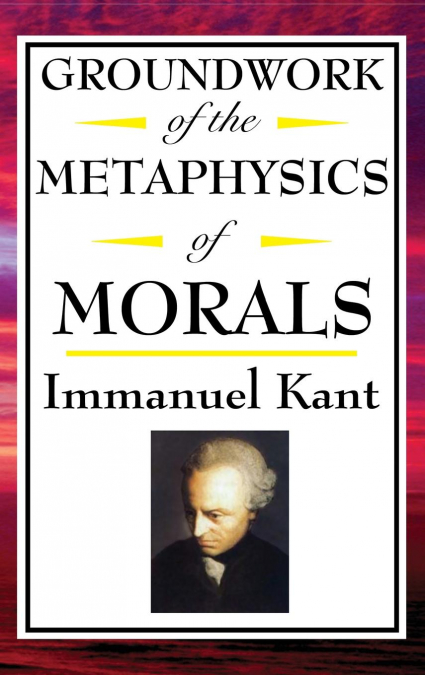
    Kant’s Groundwork of the Metaphysics of Morals is one of the most important works in modern moral philosophy. It belongs beside Plato, Aristotle, Machiavelli, and Hobbes. Here Kant sets out to articulate and defend the Categorical Imperative - the fundamental principle that underlies moral reasoning - and to lay the foundation for a comprehensive account of justice and human vi...
  • On the Duty of Civil Disobedience
    HENRY DAVID THOREAU
    Civil Disobedience argues that citizens should not permit their governments to overrule their consciences, and that they have a duty to avoid allowing their acquiescence to enable the government to make them the agents of injustice. Thoreau was motivated in part by his disgust with slavery and the Mexican-American War, but the sentiments he expresses here are just as pertinent ...
  • Beyond Good and Evil
    Friedrich Nietzsche
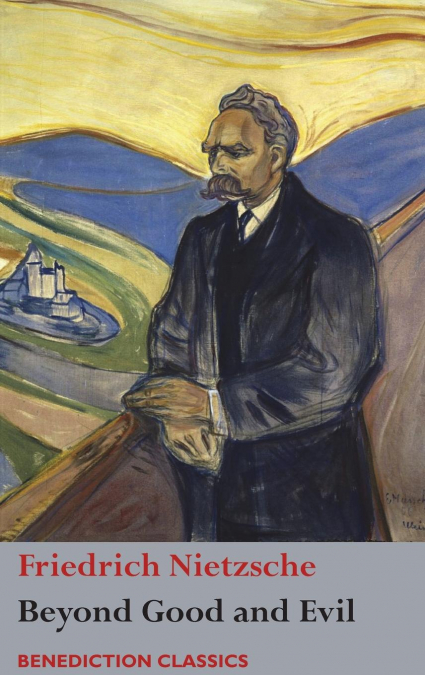
    Nietzsche, though primarily a philosopher, wrote widely on art, philology, history, religion, tragedy, culture, and science.  In 1886, at the height of his powers, he published Beyond Good and Evil.  Here he examines much of the best of human thought--dogmatic philosophy, Judeo-Christian morality, science and democracy – and finds it lacking.  Rejecting “slave-morality” he pres...
  • Beyond Good and Evil
    Friedrich Nietzsche
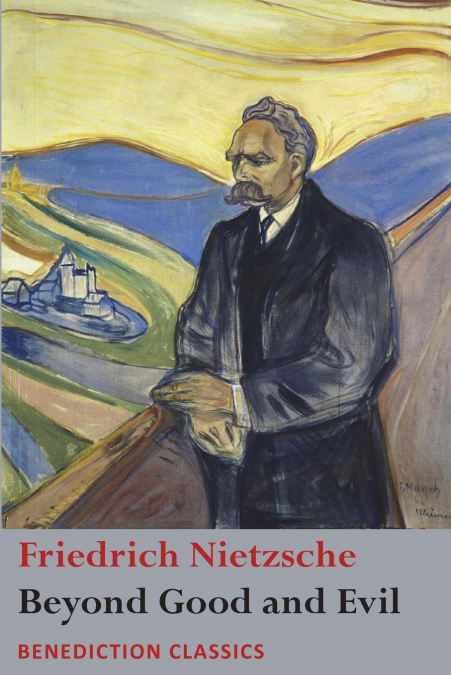
    Nietzsche, though primarily a philosopher, wrote widely on art, philology, history, religion, tragedy, culture, and science.  In 1886, at the height of his powers, he published Beyond Good and Evil.  Here he examines much of the best of human thought--dogmatic philosophy, Judeo-Christian morality, science and democracy – and finds it lacking.  Rejecting “slave-morality” he pres...
    Disponible

    9,99 €

Otros libros del autor

  • Beyond Good and Evil
    Friedrich Nietzsche
    Nietzsche, though primarily a philosopher, wrote widely on art, philology, history, religion, tragedy, culture, and science.  In 1886, at the height of his powers, he published Beyond Good and Evil.  Here he examines much of the best of human thought--dogmatic philosophy, Judeo-Christian morality, science and democracy – and finds it lacking.  Rejecting “slave-morality” he pres...
  • Beyond Good and Evil
    Friedrich Nietzsche
    Nietzsche, though primarily a philosopher, wrote widely on art, philology, history, religion, tragedy, culture, and science.  In 1886, at the height of his powers, he published Beyond Good and Evil.  Here he examines much of the best of human thought--dogmatic philosophy, Judeo-Christian morality, science and democracy – and finds it lacking.  Rejecting “slave-morality” he pres...
    Disponible

    9,99 €

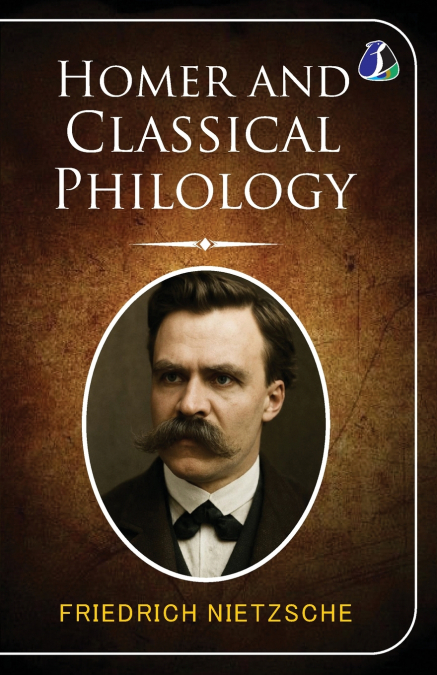
  • Homer and the Classical Philology
    Friedrich Nietzsche
    Friedrich Nietzsche’s Homer and Classical Philology (1869) is his inaugural lecture at the University of Basel. It diagnoses a crisis in 19th-century philology, calling for a shift from dry data collection toward a synthesis of aesthetics, history, and philosophy. Using the 'Homeric question', he argues that epics are not the work of a single historical genius, but the collecti...
    Disponible

    12,34 €

  • The Twilight of the Idols
    Friedrich Nietzsche
    NA ...
    Disponible

    15,68 €

  • Twilight of the Idols, The Antichrist, Ecce Homo by Friedrich Nietzsche | Modern Philosophy | Existentialism
    Friedrich Nietzsche
    NA ...
    Disponible

    29,64 €

  • Ecce Homo
    Friedrich Nietzsche
    NA ...
    Disponible

    18,93 €