 Librería Samer Atenea
 Librería Aciertas (Toledo)
 Kálamo Books
 Librería Perelló (Valencia)
 Librería Elías (Asturias)
 Donde los libros
 Librería Kolima (Madrid)
 Librería Proteo (Málaga)
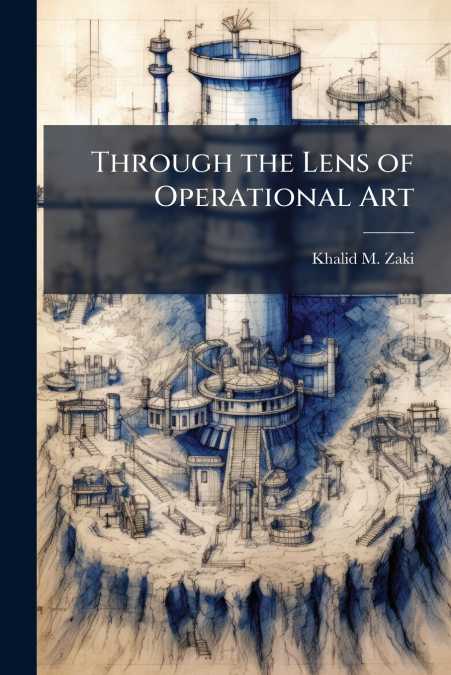
The Indian Army’s decisive victory in East Pakistan in 1971 is a widely acknowledged as a sterling example of operational excellence. The Bangladesh campaign, as it is commonly known, is often compared with the German blitzkrieg campaign in World War 2, exhibiting multiple lightening maneuvers striking deep at the enemy’s center of gravity, in this case Dacca, to overwhelm and disintegrate the entrenched Pakistani defenses. Resulting in the dismemberment of Pakistan and the creation of the new nation of Bangladesh, it altered the balance of power in South Asia, heralding India’s rise as a regional power. As India aspires for a greater role in the region and beyond, commensurate with its growing economic and demographic profile, India’s military, of necessity, has to transform itself to match rising national aspirations. Operational art forms the doctrinal foundation for this ongoing transformation, seeking to transcend the divide between the military’s current tactical focus, limited operational horizon and the emerging strategic role. Drawing upon the evolutionary and contemporary understanding of the subject synthesized from the courseware, the monograph employs the 1971 Bangladesh campaign as a model to study the application of operational art in the Indian context. Its validation in a successful Indian campaign will help imbibe operational art in the Indian military doctrine, and thereby facilitate the transformation of the Indian military.This work has been selected by scholars as being culturally important, and is part of the knowledge base of civilization as we know it. This work was reproduced from the original artifact, and remains as true to the original work as possible. Therefore, you will see the original copyright references, library stamps (as most of these works have been housed in our most important libraries around the world), and other notations in the work.This work is in the public domain in the United States of America, and possibly other nations. Within the United States, you may freely copy and distribute this work, as no entity (individual or corporate) has a copyright on the body of the work.As a reproduction of a historical artifact, this work may contain missing or blurred pages, poor pictures, errant marks, etc. Scholars believe, and we concur, that this work is important enough to be preserved, reproduced, and made generally available to the public. We appreciate your support of the preservation process, and thank you for being an important part of keeping this knowledge alive and relevant.