

 Librería Samer Atenea
 Kálamo Books
 Librería Elías (Asturias)
 Librería Kolima (Madrid)
 Librería Proteo (Málaga)
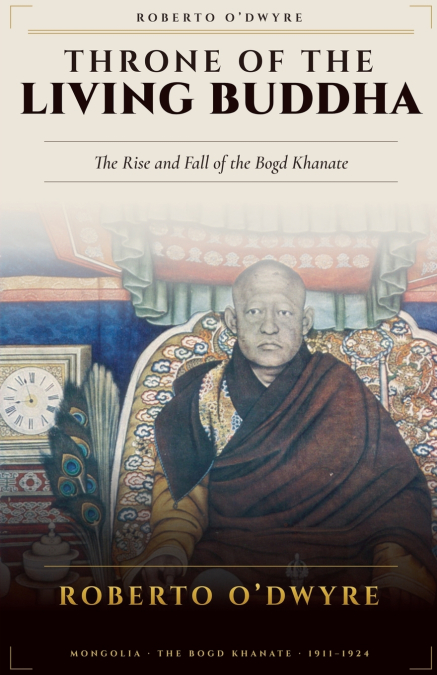
In December 1911, as the Qing empire collapsed, the princes and lamas of Mongolia expelled the imperial Amban from Urga and raised a living Buddha to the throne. The Bogd Khan, eighth incarnation of the Jebtsundamba Khutukhtu, became the holy emperor of a new Mongol state, one of the strangest and most fragile nations of the twentieth century.This narrative history follows the Bogd Khanate from its birth to its end in 1924. It moves from the siege of Khovd and the doomed campaign to liberate Inner Mongolia to the treaty tables of Kyakhta, where Russia and China decided Mongolia’s fate without asking its people. It follows the collapse of the Russian Empire that had guaranteed Mongol autonomy, the humiliation of the Bogd Khan before a Chinese president’s portrait, and the arrival of Baron Ungern-Sternberg, whose Asiatic Cavalry Division freed the Holy One and then filled Urga with corpses. Finally it follows the young revolutionaries who rode south with Soviet backing to build a new order in his name.Drawing on the scholarship of three continents, The Holy Emperor restores a forgotten chapter of Asian history. It tells of a theocracy that asserted sovereignty amid the ruins of empire and gave Mongolia the first form of the independence it holds today.





