Think Least of Death

Think Least of Death

Steven Nadler

23,89 €
IVA incluido
Disponible
Editorial:
Princeton University Press
Año de edición:
2022
Materia
Ética y filosofía moral
ISBN:
9780691233956
23,89 €
IVA incluido
Disponible

Selecciona una librería:

  • Librería Samer Atenea
  • Librería Aciertas (Toledo)
  • Kálamo Books
  • Librería Perelló (Valencia)
  • Librería Elías (Asturias)
  • Donde los libros
  • Librería Kolima (Madrid)
  • Librería Proteo (Málaga)

From Pulitzer Prize-finalist Steven Nadler, an engaging guide to what Spinoza can teach us about life’s big questionsIn 1656, after being excommunicated from Amsterdam’s Portuguese-Jewish community for 'abominable heresies' and 'monstrous deeds,' the young Baruch Spinoza abandoned his family’s import business to dedicate his life to philosophy. He quickly became notorious across Europe for his views on God, the Bible, and miracles, as well as for his uncompromising defense of free thought. Yet the radicalism of Spinoza’s views has long obscured that his primary reason for turning to philosophy was to answer one of humanity’s most urgent questions: How can we lead a good life and enjoy happiness in a world without a providential God? In Think Least of Death, Pulitzer Prize-finalist Steven Nadler connects Spinoza’s ideas with his life and times to offer a compelling account of how the philosopher can provide a guide to living one’s best life.In the Ethics, Spinoza presents his vision of the ideal human being, the 'free person' who, motivated by reason, lives a life of joy devoted to what is most important-improving oneself and others. Untroubled by passions such as hate, greed, and envy, free people treat others with benevolence, justice, and charity. Focusing on the rewards of goodness, they enjoy the pleasures of this world, but in moderation. 'The free person thinks least of all of death,' Spinoza writes, 'and his wisdom is a meditation not on death but on life.'An unmatched introduction to Spinoza’s moral philosophy, Think Least of Death shows how his ideas still provide valuable insights about how to live today.
Artículos relacionados

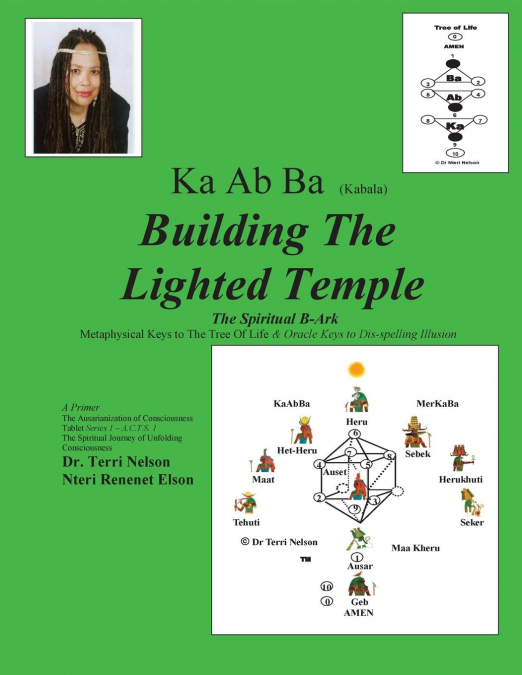
  • Ka Ab Ba Building The Lighted Temple
    Dr Terri R. Nelson / Dr Terri RNelson
    The book KaAbBa Building The Lighted Temple/Metaphysical Keys to the Tree of Life draws a circle that is inclusive of the Afrikan origin of the Ancient Kemetic/Egyptian wisdom. It reveals the undeniable root and link of Ancient Africa to all the religious systems that would develop worldwide. This book is explosive in its power to convey the meaning of KaAbBa, the Medu Neter  (...
    Disponible

    37,41 €

  • Technoethics and the Evolving Knowledge Society
    Rocci Luppicini
    Recently, there has been a major push to rediscover the ethical dimension of technology across the sciences, social sciences, and humanities. Technoethics and the Evolving Knowledge Society: Ethical Issues in Technological Design, Research, Development, and Innovation examines human processes and practices connected to technology embedded within social, political, and moral sph...
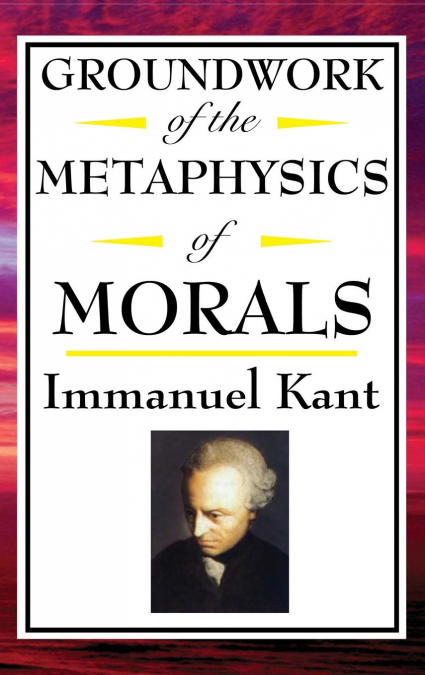
  • Kant
    Immanuel Kant
    Kant’s Groundwork of the Metaphysics of Morals is one of the most important works in modern moral philosophy. It belongs beside Plato, Aristotle, Machiavelli, and Hobbes. Here Kant sets out to articulate and defend the Categorical Imperative - the fundamental principle that underlies moral reasoning - and to lay the foundation for a comprehensive account of justice and human vi...
  • On the Duty of Civil Disobedience
    HENRY DAVID THOREAU
    Civil Disobedience argues that citizens should not permit their governments to overrule their consciences, and that they have a duty to avoid allowing their acquiescence to enable the government to make them the agents of injustice. Thoreau was motivated in part by his disgust with slavery and the Mexican-American War, but the sentiments he expresses here are just as pertinent ...
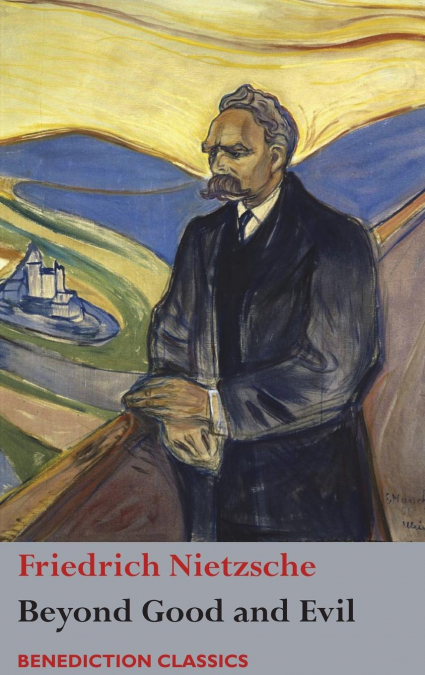
  • Beyond Good and Evil
    Friedrich Nietzsche
    Nietzsche, though primarily a philosopher, wrote widely on art, philology, history, religion, tragedy, culture, and science.  In 1886, at the height of his powers, he published Beyond Good and Evil.  Here he examines much of the best of human thought--dogmatic philosophy, Judeo-Christian morality, science and democracy – and finds it lacking.  Rejecting “slave-morality” he pres...
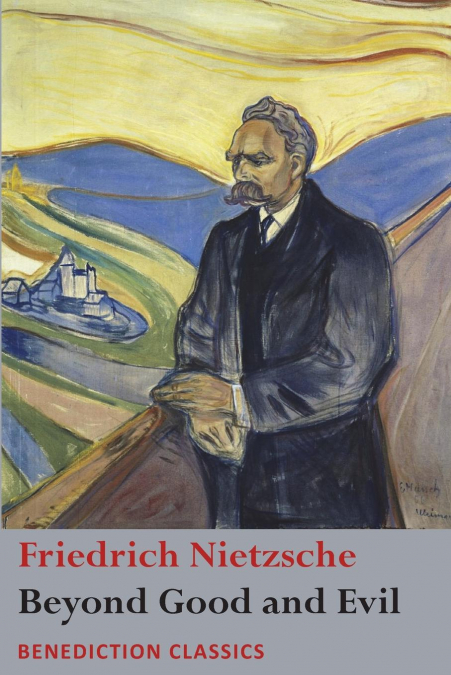
  • Beyond Good and Evil
    Friedrich Nietzsche
    Nietzsche, though primarily a philosopher, wrote widely on art, philology, history, religion, tragedy, culture, and science.  In 1886, at the height of his powers, he published Beyond Good and Evil.  Here he examines much of the best of human thought--dogmatic philosophy, Judeo-Christian morality, science and democracy – and finds it lacking.  Rejecting “slave-morality” he pres...
    Disponible

    9,99 €

Otros libros del autor

  • Spinoza
    Steven Nadler
    ...
    Disponible

    34,76 €

  • Spinoza and Medieval Jewish Philosophy
    Steven Nadler
    ...
    Disponible

    54,22 €

  • Spinoza
    Steven Nadler
    ...
  • Geraud de Cordemoy
    Steven Nadler
    Steven Nadler presents the first English translation of a seminal work in the history of early modern philosophy. Geraud de Cordemoy’s Six Discourses on the Distinction Between the Soul and the Body (originally published in French in 1666) offers an account of the mind and the body in a human being. Cordemoy is an unorthodox Cartesian who opts for an atomist conception of body ...
  • Spinoza and Medieval Jewish Philosophy
    Steven Nadler
    ...
  • Occasionalism
    Steven Nadler
    ...